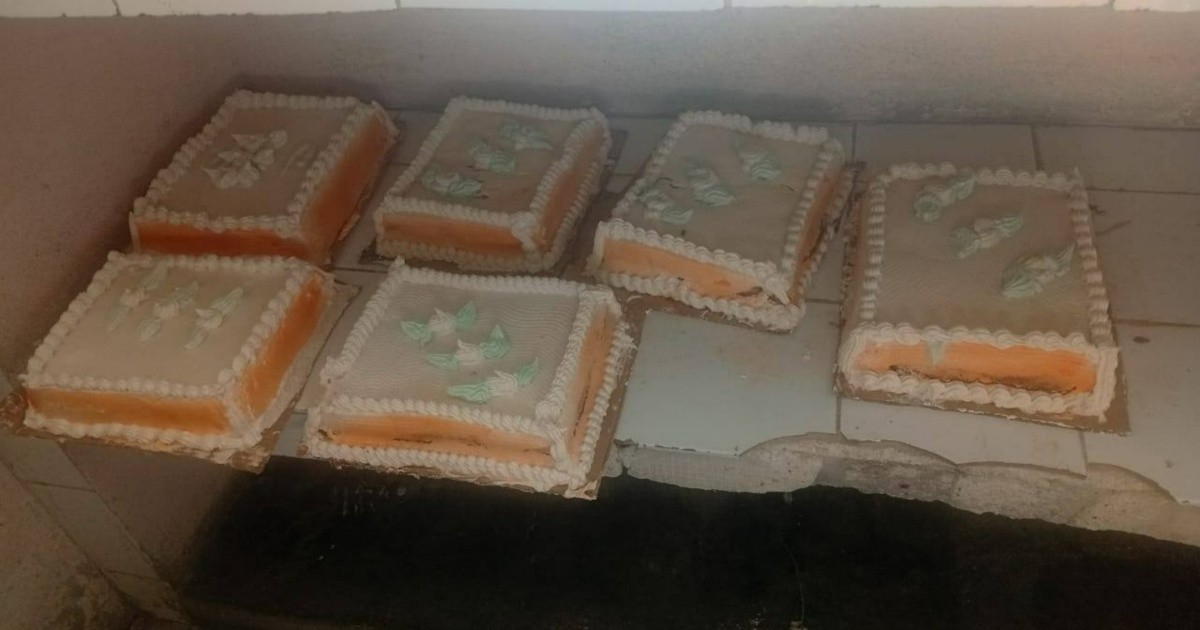
The state-run bakery "La Teresita," located at the corner of Carlos Manuel and Pintó streets in Guantánamo, has been slapped with a hefty fine of 8,000 Cuban pesos. This penalty, along with additional administrative measures, was imposed due to the "withholding of cakes" meant for sale on Mother's Day. This information comes from a report by the Mi Guantánamo page on Facebook.
This incident unfolds just a day before Cuba is set to celebrate Mother's Day—falling on Sunday, May 10—and starkly highlights the paradox the nation currently faces. In Guantánamo, where a staggering 78.7% of households suffer from food insecurity, government workers are found to be hoarding the scarce resources meant for the public.
The images accompanying the complaint reveal the cakes stored under alarming sanitary conditions—displayed in cases with peeling paint and stained tiles.
The fine of 8,000 pesos is nearly four times the Cuban minimum wage, which is set at 2,100 pesos. This illustrates the harshness of the penalties amid an economic collapse that the regime itself seems helpless to reverse.
The authorities treat the concept of "withholding" products as a form of speculation or hoarding, which is punishable under Decree-Law 91. However, it remains unclear whether the cakes eventually reached consumers or what their fate was after the intervention.
This is not the first time the regime has responded to shortages with fines instead of solutions. In March 2025, a wave of sanctions in Havana imposed fines ranging from 5,000 to 16,000 pesos on private entrepreneurs and businesses for speculation, unauthorized pricing, and selling expired products. The small business "Río Luz" and the sales outlet "To' Rico" were each fined 8,000 pesos for similar violations.
Guantánamo has a history of extreme scarcity. In May 2025, the province rationed bread exclusively for children under 14 and priority institutions due to a lack of flour. Months later, in November, an agricultural market opened in the area only to find its shelves empty due to structural shortages.
Nationally, a recent survey indicates that one in three Cuban households reported at least one member went to bed hungry in the past 30 days, marking a 9.3 percentage point increase from 2024, according to the Food Monitor Program.
A staggering 79.75% of Cubans surveyed blame the shortages on "poor state administration," an increase of 18 points from 2024, as reported by the same organization.
The image of a bakery fined for having cakes stored away—while millions of Cuban women will not receive even a simple treat for Mother's Day—paints the most accurate picture of what 67 years of dictatorship have done to the island: a system that punishes those with food instead of ensuring it reaches those in need.
FAQs on Cuba's Economic Situation and Food Scarcity
What was the reason for the fine imposed on the bakery in Guantánamo?
The bakery was fined 8,000 pesos for "withholding cakes" intended for sale on Mother's Day, which authorities viewed as a form of speculation or hoarding.
How does food insecurity affect households in Guantánamo?
In Guantánamo, 78.7% of households experience food insecurity, one of the highest rates on the island, exacerbating the struggle for basic necessities.
What actions have been taken by the Cuban government in response to shortages?
The Cuban government has responded to shortages by imposing fines on businesses for practices such as speculation and unauthorized pricing, rather than addressing the root causes of scarcity.
How has the economic collapse in Cuba affected the average citizen?
The economic collapse has led to severe hardships for citizens, with many experiencing increased food insecurity and a greater dependency on a failing state-run system.