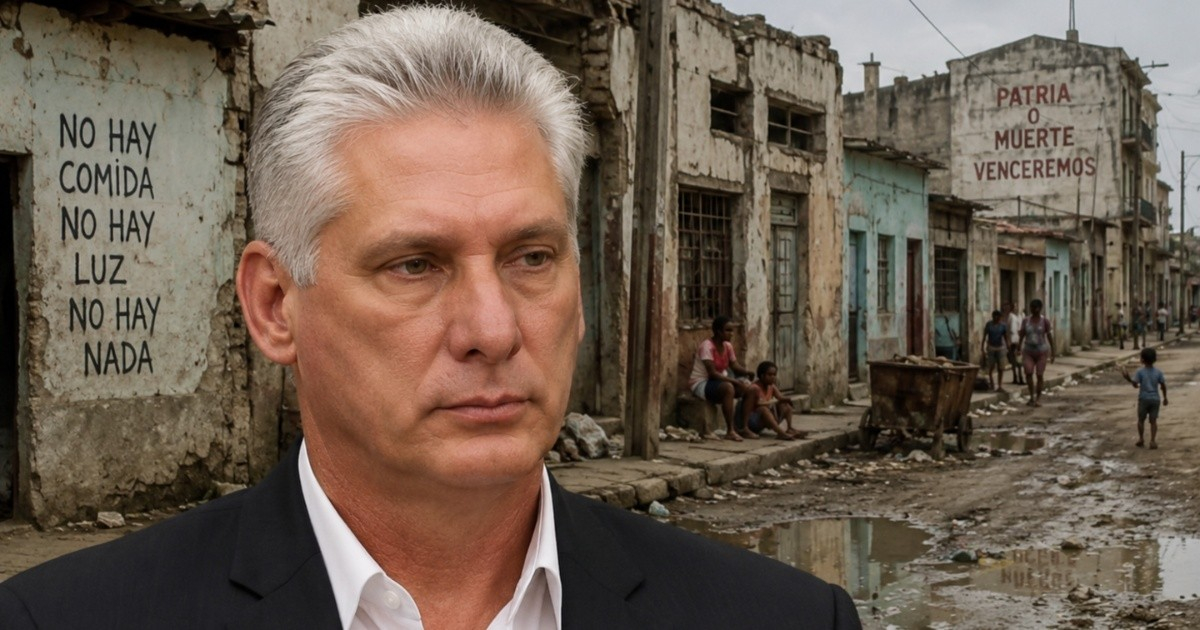
In a speech last Thursday during the International Workers' Day march in Havana, Miguel Díaz-Canel declared that Cuba has moved beyond its "Special Period." Despite ongoing challenges like power outages, food shortages, and a lack of medication, he expressed confidence that the Cuban people remain hopeful, as reported by the Spanish outlet Público.
The Cuban leader led the procession from the Plaza de la Revolución to the Anti-Imperialist Tribune near the U.S. embassy. Although the regime labeled the event as "historic," independent sources noted a significantly low turnout.
Public Trust Amidst Persistent Challenges
When questioned about whether power cuts and scarcity could undermine social support, Díaz-Canel stated, "Our processes have deteriorated, but people trust us because this isn't the revolution's first tough moment. It overcame the Special Period, the early years of the revolution... And the country has always grown."
However, many Cubans feel differently; according to the Food Monitor Program, 78-80% believe the current crisis is worse than the 1990s Special Period.
The Absence of External Support
Unlike previous crises, Cuba lacks an external ally capable of intervening. Venezuela, once a key supporter, lost this role after Nicolás Maduro's capture in January 2026, halting the crucial supply of 25,000 to 30,000 barrels of oil per day—around two-thirds of Cuba's imports.
The impact has been severe. Over 55% of the nation faces power outages lasting 20 to 30 hours daily, with an electricity generation shortfall exceeding 1,900 MW.
Escalating Tensions with the United States
Since December 2025, a U.S. executive order under Donald Trump has blocked fuel shipments to Cuba. The island went without fuel from January to April 2026, a fact confirmed by Díaz-Canel on April 23.
On the same day as the march, Trump signed another executive order expanding sanctions on Cuba's energy, financial, mining, and defense sectors, declaring to his supporters in Florida, "We're going to take Cuba almost immediately."
Díaz-Canel warned of a potential military assault, invoking the "War of All the People" doctrine: "If we're attacked, there will be combat here."
Economic Realities and Calls for Unity
The leader also emphasized unity as a response to external pressure: "Unity is key to resilience and victory," he said, adding that "within that unity lies the source of victory."
Raúl Castro made his first public appearance since December 2025, overseeing the official event.
As the regime continues to call for historical resistance, Cuba's economy has shrunk by 23% of its GDP since 2019, with a projected additional contraction of 7.2% for 2026. Over 600,000 Cubans have emigrated since 2022, a mass exodus that no unity speech has managed to halt.
Cuban Crisis and Leadership
What is the Special Period that Díaz-Canel refers to?
The Special Period was a time of economic crisis in Cuba during the early 1990s following the collapse of the Soviet Union, which had been a major ally and economic supporter.
How has the relationship between Cuba and Venezuela changed?
Venezuela was once a crucial ally, providing significant oil supplies to Cuba. However, after Nicolás Maduro's capture in 2026, this support ceased, worsening Cuba's current economic struggles.
What are the impacts of the U.S. sanctions on Cuba?
The U.S. sanctions have severely restricted fuel imports to Cuba, contributing to widespread power outages and further straining the island's economy.