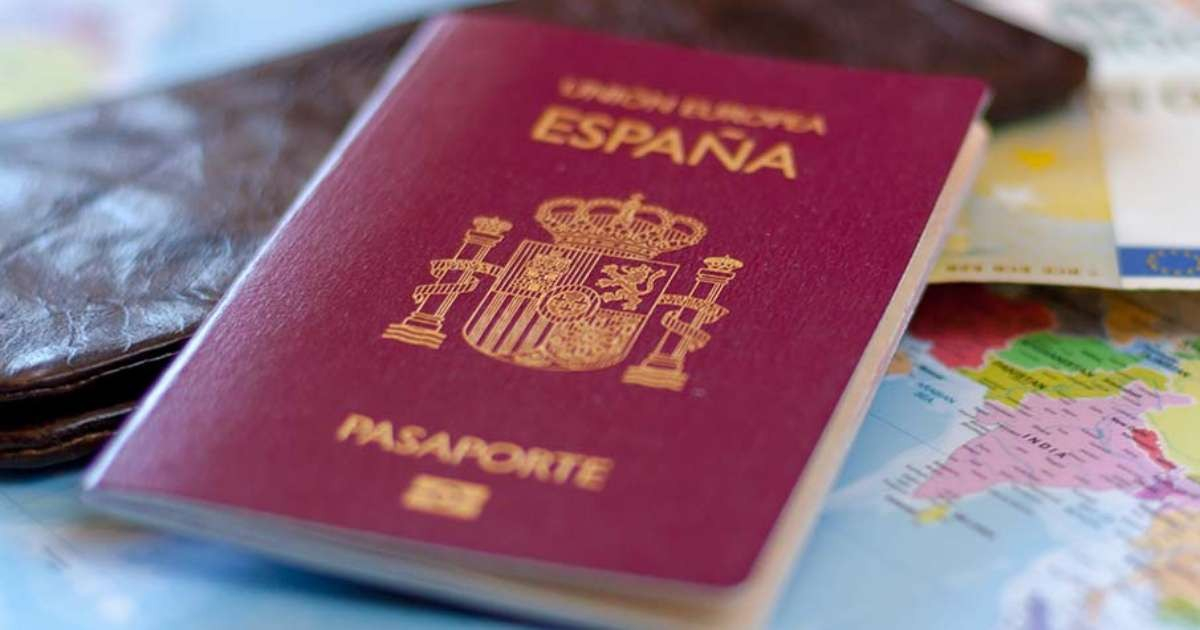
Since the "Law of Democratic Memory," commonly referred to as the "Grandchildren's Law," came into effect in October 2022, nearly 2.45 million people have applied for Spanish citizenship.
According to Violeta Alonso, president of the General Council of Spanish Citizenship Abroad (CGCEE), the countries leading in these applications are Argentina and Mexico.
Argentina accounts for about 40% of the total applications, with around 650,000 requests originating from Buenos Aires alone. This influx might make Buenos Aires the third-largest Spanish population hub globally, after Madrid and Barcelona.
Mexico follows in second place with 117,226 applications.
The hierarchy of consulates by application volume positions Buenos Aires at the top, followed by Mexico. São Paulo in Brazil ranks third, La Habana fifth, and Miami sixth, reflecting the significant Cuban community there.
In Cuba, over 107,000 formal applications have been submitted—12.24% of the global total. Estimates suggest more than 350,000 Cubans have initiated the process, making the Consulate in La Habana one of the busiest worldwide.
However, the process has been fraught with irregularities, technical failures, and consular bottlenecks. Many Cubans faced obstacles in completing their paperwork on time and criticized the consulate for lacking transparency.
Future Outlook for Applicants
By March 31, consulates had processed 1.2 million applications in person, with 545,000 approvals and 306,500 already registered in the Civil Registry.
"Few applications are denied," Violeta Alonso noted.
Denials are minimal, at just 2%, leading to expectations that over 2 million new nationalities will be granted when the process concludes.
The current figures more than double the approximately 503,000 applications recorded under the earlier 2007 Historical Memory Law.
The implications are significant: from 1.5 million Spaniards living abroad in 2010, numbers have surged to 3.2 million today. The government projects that overseas Spanish citizens will exceed five million once all applications are processed.
Completion Timeline and Challenges
While the goal is to complete the process within four to five years—a "reasonable timeframe," according to the CGCEE president—the bureaucratic backlog remains daunting.
Violeta Alonso indicated last October that, at the current pace, it could take 20 years to resolve all citizenship applications.
The deadline for new applications was set for October 22, 2025, following a two-year law duration and an additional year extension.
The CGCEE has warned that the system creates legal uncertainty, unequal opportunities, and a bureaucratic logjam that could last decades. It has proposed a formal reform to the Congress and Senate to make citizenship by descent a permanent right, without generational limits or deadlines.
Spain is considering granting indefinite citizenship to descendants, though Minister Ángel Víctor Torres noted that "any structural change must secure broad political consensus."
The Spanish government has allocated 115 million euros to modernize consular services and added 150 positions to the most affected consulates. Yet, the scale of the backlog means a definitive solution remains elusive.
Key Insights into Spanish Citizenship Applications
Which countries have the most applications for Spanish citizenship under the 'Grandchildren's Law'?
Argentina and Mexico lead in applications, with Argentina accounting for about 40% and Mexico following in second place.
Why is Buenos Aires significant in the context of Spanish citizenship applications?
Buenos Aires has received approximately 650,000 applications, potentially making it the third-largest hub of Spaniards globally, after Madrid and Barcelona.
What challenges are faced in the citizenship application process?
The process is hindered by irregularities, technical failures, and consular congestion, particularly impacting Cuban applicants.