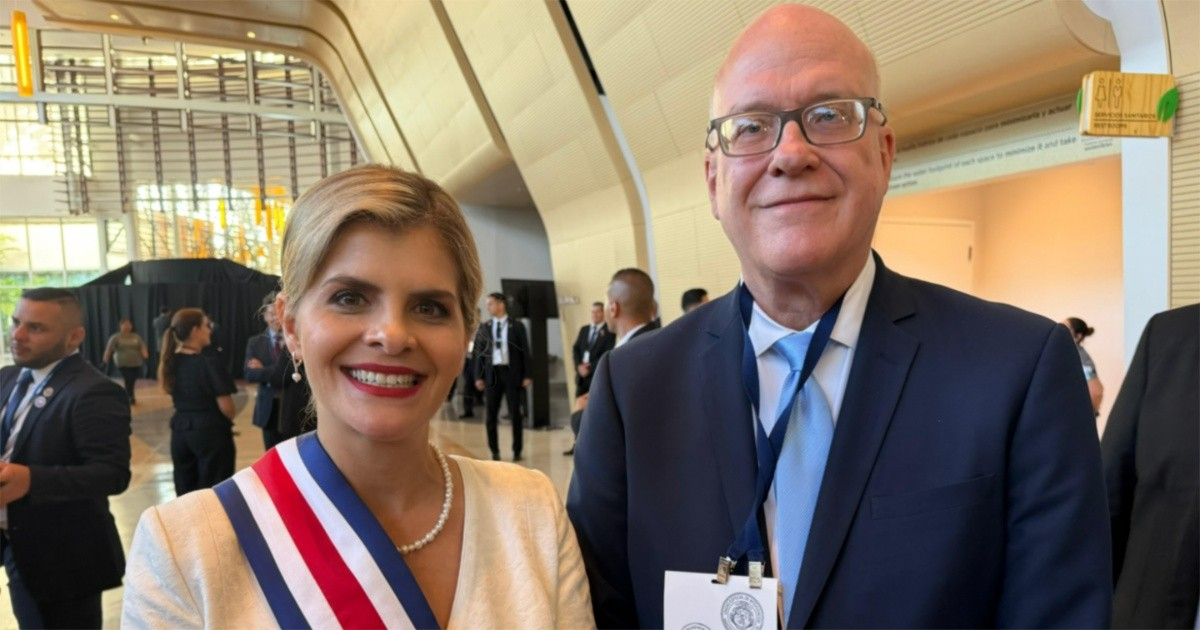
On Friday, Costa Rica's newly inaugurated President, Laura Fernández, extended a special invitation to Cuban opposition leader Orlando Gutiérrez Boronat to attend her swearing-in ceremony in San José. This move underscores the Central American nation's support for the cause of freedom in Cuba.
Orlando Gutiérrez Boronat, who serves as the Secretary General of the Cuban Resistance Assembly (ARC), engaged in discussions with President Fernández and Foreign Minister Manuel Tovar about the current situation in Cuba. They talked about the Cuban people's struggle for human rights and the global efforts to bring about genuine change on the island, as reported by Martí Noticias.
In a statement, Gutiérrez Boronat expressed, "We have conveyed to President Fernández and Foreign Minister Tovar the Cuban people's deepest gratitude for Costa Rica's decision to sever ties with the Castro communist regime and support the Cuban people's fight for freedom."
The human rights advocate also addressed international media inquiries concerning Cuba's situation and Costa Rica's solidarity with the island's residents.
Laura Fernández: The New Leadership
At 39, Laura Fernández was sworn in as Costa Rica's 50th constitutional president for the 2026-2030 term, marking her as the second woman to hold this position in the nation's history. The inauguration ceremony took place at San José's National Stadium, attended by delegations from 71 countries and 18 international organizations.
President Fernández pledged to launch "a relentless war, a hardline fight against organized crime," while aiming to establish what she termed a "Third Republic."
Costa Rica's Diplomatic Stance on Cuba
The reception of the Cuban opposition leader was not coincidental. In March, the administration of Rodrigo Chaves announced the closure of Costa Rica's embassy in Havana and demanded the withdrawal of Cuban diplomatic staff from San José, stating that Costa Rica "does not recognize the legitimacy of Cuba's communist regime."
Prior to taking office, Fernández publicly supported this diplomatic break, asserting, "I was part of the decision to eliminate our embassy in Cuba," and argued that Costa Rica would not tolerate human rights violations or "subhuman" conditions caused by socialism and communism.
The Cuban regime reacted harshly. Foreign Minister Bruno Rodríguez Parrilla labeled the decision as "arbitrary" and accused it of being "submissive to the U.S.," while Díaz-Canel attributed it to "obvious pressures from the United States government."
International Diplomatic Efforts by Cuban Resistance
Gutiérrez Boronat's visit to San José is part of a vigorous international diplomatic campaign by the Cuban resistance. In the weeks leading up to this, the opposition leader met with Paraguay's President Santiago Peña and Chile's President-elect José Antonio Kast.
This international tour aligns with the promotion of the "Liberation Accord," signed on March 2 in Miami by the ARC, Rosa María Payá's Pasos de Cambio, and over thirty exile organizations. The agreement outlines a three-phase roadmap: the release of more than 1,000 political prisoners and dismantling of the Cuban Communist Party, stabilization with a provisional government, and democratization through free elections.
On April 29, the Florida Senate officially recognized the Liberation Accord through a proclamation by Senator Alexis Calatayud, an institutional endorsement that the Cuban resistance considers a crucial step toward an international diplomatic encirclement of the Havana regime.
"In a robust international effort by Cuban democratic forces to achieve a diplomatic encirclement and support for Cuba's freedom, the Liberation Accord has been signed, laying the groundwork for a transitional provisional government on the island," stated the ARC in a communiqué.
Understanding Costa Rica's Support for Cuban Freedom
Why did Costa Rica sever diplomatic ties with Cuba?
Costa Rica decided to cut diplomatic relations with Cuba to protest the human rights abuses and "subhuman" conditions caused by the socialist and communist policies of the Cuban regime.
What is the "Liberation Accord"?
The "Liberation Accord" is a three-phase plan aimed at the release of over 1,000 political prisoners, dismantling the Cuban Communist Party, establishing a provisional government, and democratizing Cuba through free elections.
How did the Cuban government respond to Costa Rica's actions?
The Cuban government reacted by labeling Costa Rica's decision as "arbitrary" and accused it of being "submissive to the U.S.," attributing the move to pressure from the United States.