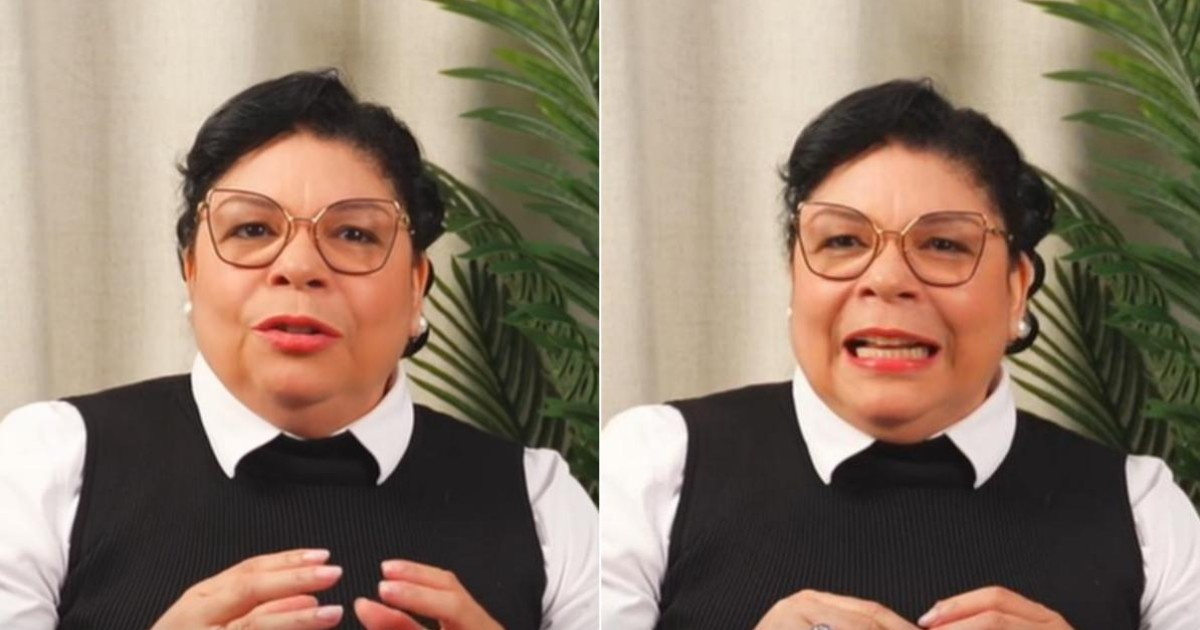
Cuban actress María Teresa Pina recently shared a video on her Facebook page where she draws a sharp comparison between the political philosophies of José Martí and Fidel Castro, concluding that the moral chasm between the two is "enormous."
In her video, Pina contends that Martí envisioned an inclusive nation: "Martí never imposed conditions on humanity when discussing the nation. He spoke of a compassionate nation where all individuals could participate equally."
Conversely, Pina critiques Castro's imposed model as a nation constrained by political thought: "If you align with my views, you are part of this accepted society. If not, you are rejected, ostracized, and even expelled from the country."
María Teresa identifies this as the root of their historical divergence: "Here lies the first dichotomy in the political thought of both men. One envisions an integrated Cuban, actively part of societal change. The other excludes, punishes, and diminishes."
The video is tagged with #freedomforpoliticalprisoners, linking her historical reflection to Cuba's current human rights crisis, where over 1,000 political prisoners have been documented.
This statement adds to Pina's ongoing vocal activism from exile.
Back in January 2026, Pina publicly condemned the regime for "ruthlessly and cynically destroying a nation," describing the damage from decades of repression as an "irreversible human deterioration" that lingers even after emigration.
Pina's contrast is historically substantiated. In 1892, José Martí founded the Cuban Revolutionary Party under the motto "With all and for the good of all," defining the homeland as "a community of interests, unity of traditions, unity of purposes."
Meanwhile, in 1961, Fidel Castro established the doctrine "Within the Revolution, everything; against the Revolution, nothing," which became a directive for cultural and political exclusion.
Pina left Cuba in 2017, moving to Mexico with her partner, broadcaster Niro de la Rúa, before settling in Florida.
Known for telenovelas like "El eco de las piedras," "A pesar de todo," and "El balcón de los helechos," she resumed her television career in Miami in November 2023 alongside actor Armando Tomey in the series "Crimen en Miami."
"A respected Cuban must feel pain and anger as their people are slowly being destroyed," Pina declared in January, capturing the essence of her activism, which echoes powerfully in each of her public statements.
Understanding the Political Contrast Between José Martí and Fidel Castro
What did José Martí envision for Cuba?
José Martí envisioned an inclusive nation where all individuals could participate equally, emphasizing a compassionate and unified community.
How did Fidel Castro's political model differ from José Martí's vision?
Fidel Castro's model was based on political conformity, accepting only those who aligned with his revolutionary views and excluding those who did not.
How has María Teresa Pina been involved in activism?
María Teresa Pina has been actively vocal from exile, criticizing the Cuban regime and highlighting the human rights abuses and political repression in Cuba.