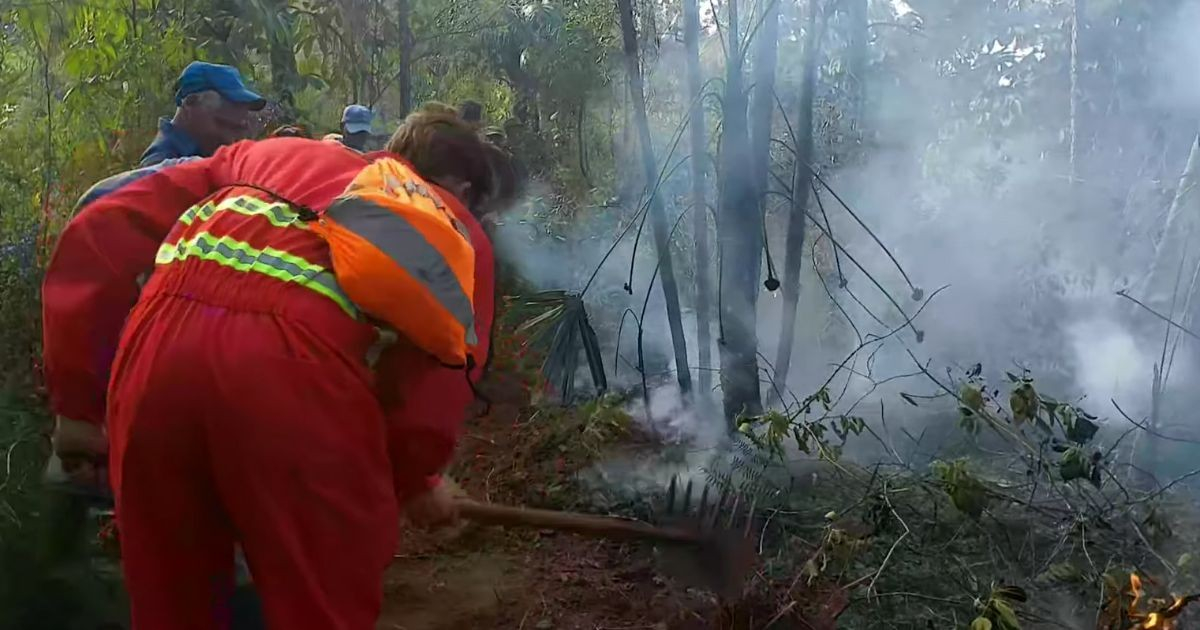
The Cuban Forest Rangers Corps (CGC) has reported a total of 111 wildfires across most provinces from January to April 30, 2026. These fires have preliminarily damaged approximately 3,174.55 hectares of both natural and cultivated forests.
A report, shared exclusively with the Cuban News Agency by the CGC's Fire Management Department, highlights that four regions bore the brunt of the incidents and the accumulated damage.
Leading the statistics is Pinar del Río, which suffered 46 fires affecting 2,912.60 hectares. Following are Matanzas and Isla de la Juventud, each with 16 fires damaging 58 and 34.21 hectares, respectively. Artemisa reported 14 incidents impacting 67.74 hectares. These areas collectively accounted for 162 fires impacting a total of 3,072.55 hectares.
Notably, the provinces of Havana, Mayabeque, Camagüey, and Guantánamo reported no wildfires during this period.
Pinar del Río's Devastating Blaze
The most severe incident occurred on April 10 in La Lanza, located in the Minas de Matahambre municipality, Pinar del Río. This extensive fire raged for 12 days, devastating approximately 1,700 hectares of predominantly pine forests in challenging mountainous terrain, complicating firefighting efforts.
By April 14, the blaze had already consumed over 200 hectares in Minas de Matahambre; by April 15, it had spread to over 400 hectares. On April 16, it reached 540 hectares affected in Pinar del Río, while a second outbreak in La Güira, San Juan y Martínez, added another 60 hectares.
By April 17, with six active wildfires in the province, La Lanza alone saw 612 hectares of pine destroyed. By April 19, the area burned reached 1,700 hectares, and the forest fire in Pinar del Río remained uncontrollable. Over 200 CGC personnel and agriculture system employees worked tirelessly to extinguish the blaze by April 22.
Human Factors and Climate Change
According to Rubén Guerra Corrales, head of fire management at the CGC, this incident was the largest recorded since January, warning of the need for vigilance: "This has been the largest reported since January, and we must remain vigilant as we continue in the critical period for wildfires."
The CGC warns that 90% of these fires are human-induced, with climate change exacerbating the risk. "Studies and over 25 years of experience indicate that regions in Cuba are susceptible to more intense and larger fires, not only due to climate variability but also because of human negligence," noted the Fire Management Department.
The agency also alerts to a shift in historical patterns: although the official campaign runs from January to May, wildfires now extend into June, July, and August due to prolonged dry spells.
In comparison, the highly active fire season predicted for 2026 has been less destructive than 2025 when 290 fires nationwide affected 9,456 hectares between January and May. Pinar del Río led with 97 fires and 8,691 hectares damaged.
The official critical season extends until May 31, suggesting that the final tally may still rise.
Key Questions on Cuba's Wildfire Crisis
What caused the majority of wildfires in Cuba in 2026?
Most wildfires in Cuba in 2026 were caused by human activities, with climate change also playing a significant role in increasing the risk.
Which Cuban province was most affected by wildfires in 2026?
Pinar del Río was the most affected province, experiencing 46 wildfires that damaged 2,912.60 hectares of forested land.
How did the 2026 wildfire season in Cuba compare to the previous year?
The 2026 wildfire season has been less severe compared to 2025, which saw 290 fires affecting 9,456 hectares during the same period.