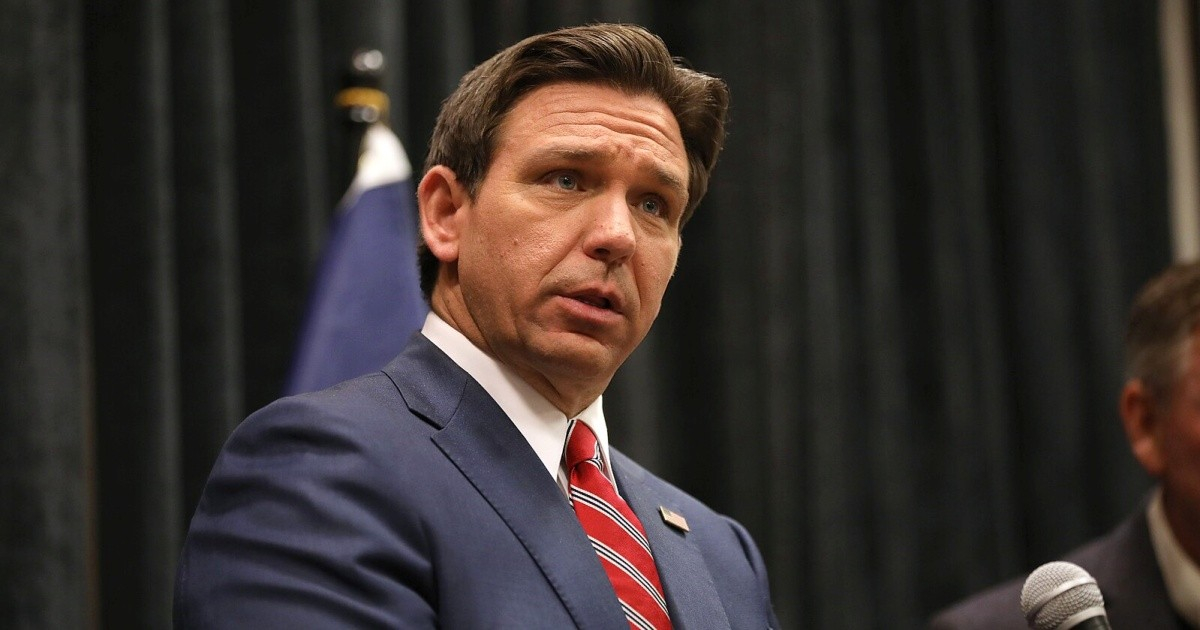
Florida's Governor, Ron DeSantis, took a bold stance against the Cuban government while officially enacting the HB 905 legislation at the newly opened Bay of Pigs Museum and Library in Miami's Little Havana. He didn't hold back, delivering one of his most forceful statements against the regime in Havana.
Before the bill's signing, DeSantis emphasized the necessity for Florida to have a "good neighbor" just 90 miles away.
"The time has come to consign the Cuban communist dictatorship to the ash heap of history once and for all," declared the governor.
DeSantis further stated, "If Cuba were free, it would be an incredibly prosperous nation."
Symbolic Political Gathering
The event was rich in political symbolism. It was attended by veterans from Brigade 2506, who played crucial roles in the failed invasion attempt of April 1961. DeSantis assured them they were on the "right side of history."
Legislation Targeting Foreign Interference
The official title of the legislation is the "Foreign Influence Restriction and Enforcement Act" (FIRE). It tightens Florida's state restrictions against nations labeled as "countries of concern," including Cuba, China, Russia, Iran, North Korea, Venezuela, and Syria.
Key provisions of the law prevent state agencies from entering into contracts with these governments, restrict public officials from accepting gifts or benefits from these regimes, and authorize local governments and tax collectors to revoke business licenses for companies operating in Cuba if they violate federal or state laws.
Additionally, the law bans the use of school voucher funds for schools associated with terrorist organizations and imposes restrictions on adoption and surrogacy agreements involving citizens or residents from any of the countries on the list.
DeSantis remarked during the ceremony, as reported by Martí Noticias, "You cannot do business with criminals."
Jenna Persons-Mulicka, the Republican representative from Fort Myers who sponsored the bill, strongly defended it: "We must remain vigilant and continue ensuring the protection of our great state of Florida from attacks by our foreign adversaries."
The FIRE Act sends a clear message that we are watchful and that these entities should think twice before targeting our great state," she added.
Support for a Free Cuba
Among the law's most innovative elements is the "Support for a Free and Independent Cuba" section. It includes an unprecedented clause: if the federal government changes Cuba's diplomatic status, the governor is authorized to issue a temporary executive order suspending certain state restrictions to facilitate commercial interactions with a post-regime Cuba.
This provisional suspension cannot be renewed without the explicit approval of the state Legislature, as detailed by Martí Noticias.
DeSantis was clear about his vision: "What is needed is the end of the regime, not just rearranging the deck chairs on the Titanic." He reiterated, "If Cuba were free, it would be an incredibly prosperous country."
Coordinated Pressure from Washington and Tallahassee
The signing of this law comes during a week of significant pressure on Havana. On May 1, former President Donald Trump signed Executive Order 14404, which expands sanctions against the Cuban regime and declares a national emergency over Cuba's policies, labeling them an "unusual and extraordinary threat" to the United States.
On May 7, Secretary of State Marco Rubio announced targeted sanctions against GAESA, the military conglomerate controlling 40% to 70% of the Cuban economy, its CEO Ania Guillermina Lastres Morera, and the state-owned mining company Moa Nickel S.A.
Foreign companies have until June 5, 2026, to cease operations with sanctioned Cuban entities, part of a maximum pressure strategy coordinated between the Trump administration and the Florida government.
The HB 905 law will take effect on July 1, 2026. With this legislation, Florida solidifies its role as an anti-communist stronghold and, according to its legislators, becomes the state most prepared to swiftly respond to any potential regime change in Havana.
Key Questions About Florida's New Legislation on Cuba
What is the primary aim of the FIRE Act?
The Foreign Influence Restriction and Enforcement Act (FIRE) seeks to enhance and enforce restrictions against countries considered "of concern" by Florida, including Cuba, to prevent foreign interference and protect state interests.
How does the new law impact businesses operating with Cuba?
The law prohibits state agencies from contracting with governments of the listed countries and allows local authorities to revoke business licenses for companies operating in Cuba that violate federal or state laws.
What is the significance of the "Support for a Free and Independent Cuba" clause?
This clause allows the Florida governor to issue temporary executive orders to lift certain restrictions and encourage economic engagement with a post-regime Cuba, contingent on changes in federal diplomatic status with Cuba.