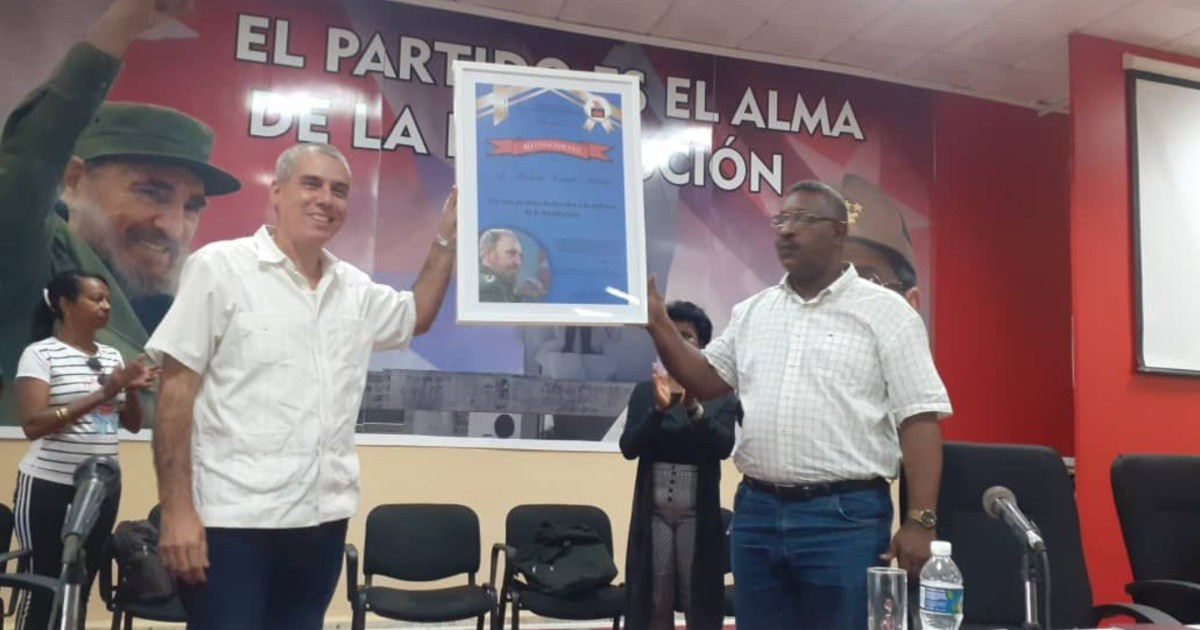
The Provincial Committee of the Communist Party of Cuba (PCC) in Camagüey has decided to remove Roberto Conde Silverio from his position within the Provincial Bureau. This decision was reported by the province's official media, Cadena Agramonte, which euphemistically described the move as "releasing him from his duties."
Conde Silverio, who held the role of Second Secretary in the provincial PCC, has been identified by the Cuban Repressors project as a key organizer of two hostile demonstrations against Mike Hammer, the U.S. Chargé d'Affaires in Cuba. These incidents occurred on January 31 and February 1 in Camagüey.
According to the project, Conde Silverio orchestrated these events alongside Yaymir Victoria Basulto, head of the PCC provincial Ideological Department, and Yurisney Gil Monteagudo, Provincial First Secretary of the Young Communist League (UJC).
"They rallied potential mob participants—members of the PCC and UJC—and directed them on where to ambush Hammer and what insults to shout," the Cuban Repressors project details.
The initial demonstration took place in front of the Hotel Santa María, in Plaza del Gallo, during a widespread blackout. The second followed the next day.
Hammer faced derogatory chants such as "Trump's puppet," "imperialist," "murderer," "terrorist," and "genocidal." In response, the diplomat asserted that his harassers "do not represent the Cuban people" and vowed to continue his tour of the island.
Cadena Agramonte framed Conde Silverio's departure as a nod to his career, highlighting his 30 years as a political leader within the Federation of High School Students and the UJC, noting that the assembly recognized his "loyalty to the Communist Party and the Revolution."
Unveiling the Real Reasons Behind the Dismissal
However, exiled journalist José Luis Tan Estrada offers a starkly different perspective. In a video shared on social media, he claims Conde Silverio was "fired, not released," citing corruption as the underlying cause: "Due to being corrupt and a prominent figure in the mafia of corruption in Camagüey, involving the diversion and resale of fuel intended for hospitals, polyclinics, and production centers."
This accusation gains traction given that Camagüey was experiencing a severe fuel crisis at the time, with interprovincial transportation and gasoline sales in foreign currency suspended, exacerbating public hardship.
Tan Estrada argues that the pressure from independent media and social networks led to Conde Silverio's removal, and that the PCC's use of euphemisms is an attempt to mask the true reason: "They 'released' him to supposedly prevent independent media from turning this into news and making it viral on social networks."
Conde Silverio is no stranger to allegations of repression. In August 2022, while serving as the first secretary of the PCC in Nuevitas, he was accused of ordering the persecution and intimidation of protesters, including assaults on two young girls.
The three officials involved in the anti-Hammer demonstrations—Conde Silverio, Victoria Basulto, and Gil Monteagudo—have been added to the Cuban Repressors database for their role in orchestrating harassment in Camagüey.
"We will continue to expose them because corruption is rampant; all their leaders are drenched in it. They all have a mess hidden under their beds," Tan Estrada concluded.
Understanding the Political Turmoil in Camagüey
What were the reasons behind Roberto Conde Silverio's removal?
Roberto Conde Silverio was removed due to allegations of corruption and his involvement in organizing protests against U.S. diplomat Mike Hammer. The use of a euphemism like "release from duties" by the PCC was an attempt to downplay the real reasons behind his dismissal.
How did Mike Hammer respond to the protests organized against him?
Mike Hammer responded to the protests by stating that the harassers did not represent the Cuban people and affirmed his intention to continue his visit across the island despite the hostile reception.
What was the impact of the fuel crisis in Camagüey?
The fuel crisis in Camagüey led to the suspension of interprovincial transportation and halted the sale of gasoline in foreign currency, worsening living conditions for the residents.