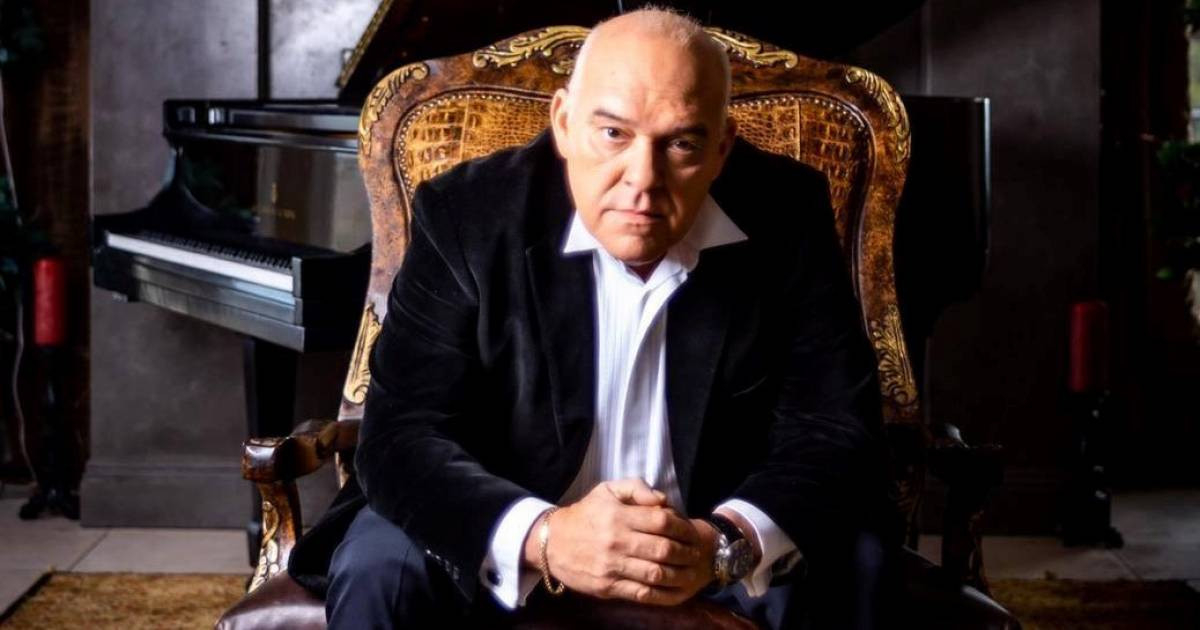
On Friday, Cuban baritone Ulises Aquino Guerra shared a poignant reflection on Facebook regarding the ongoing crisis in Cuba. His post delves into the effects of power outages, social silence, despair, and the lack of meaningful avenues for dialogue, sparking a wave of critical comments directed at the government.
In his post titled "What We Have Right Now," Aquino paints a grim picture of Havana as a city enveloped in a "sinister silence" and "perpetual darkness," highlighting the daily degradation and the pervasive uncertainty plaguing the country.
The text criticizes the authorities' failure to provide concrete solutions and condemns the lack of public involvement in decisions impacting their lives. "We, who have no say, are left to bear the financial burdens imposed by those who decide for us," Aquino wrote, while also rejecting violence, foreign intervention, or armed conflict as viable solutions.
The singer argued that "the real war" has been lost since "only one viewpoint matters, not us," and urged for internal reforms before external forces dictate changes.
Calls for Dialogue Amidst Social Discontent
Aquino emphasized that most Cubans today are trapped in "uncertainty" and "desperation." In the face of the government's inertia, the founder of the Opera de la Calle advocates for internal dialogue as the only viable exit: "Let's talk among ourselves and modify everything that needs to be changed."
His post attracted numerous reactions from users, reflecting the growing social unrest on the island. Julio César Valcárcel Gregorio suggested that the authorities are merely "buying time to return to Stalinism by 2028," while Blanca Ramona Borges lamented that people only discuss issues "behind closed doors" as "everything collapses without solutions."
Other responses were even harsher. Hansel Portuondo stated that "in Cuba, there is no dialogue other than what is imposed from above," and Tanya AR questioned the feasibility of negotiating with "a dictatorship."
Meanwhile, Rolando Castellanos described the current living conditions as "unacceptable and unheard of," labeling the Cuban political system as "a totalitarian regime disguised as socialist."
International Pressure and Economic Strain
Aquino's reflection and the reactions it provoked underscore the cumulative social strain following years of economic crisis, power outages, mass emigration, and the government's failure to offer visible solutions.
The post coincided with an announcement from the administration of President Donald Trump, confirming that all options remain on the table for Cuba, as they maintain unprecedented economic pressure, resulting in over 240 sanctions since January 2026 and the interception of at least seven tankers.
A day earlier, Sherritt International's withdrawal deprived Cuba of 10-15% of its independent power generation capacity, exacerbating an existing crisis that leads to power outages lasting over 24 hours in various regions of the country, with an escalating electricity deficit.
Aquino's voice has been consistent. In April, he urged the regime to halt the persecution of dissenters, describing the economy as a "narrow dead end." In July 2025, he denounced the betrayal by those who managed the Revolution and called for profound ideological changes earlier that year, cautioning that no solutions would be achieved without radical transformation.
Understanding Cuba's Current Crisis
What are the main issues highlighted by Ulises Aquino in his post?
Aquino points out power outages, social silence, despair, and the absence of real opportunities for dialogue as the main issues facing Cuba.
How has the international community, particularly the U.S., responded to Cuba's situation?
The U.S., under President Trump's administration, has maintained all options open regarding Cuba, applying unprecedented economic pressure through over 240 sanctions since January 2026.
What solution does Aquino propose for Cuba's crisis?
Aquino advocates for internal dialogue and changes from within as the only feasible solution to Cuba's issues.