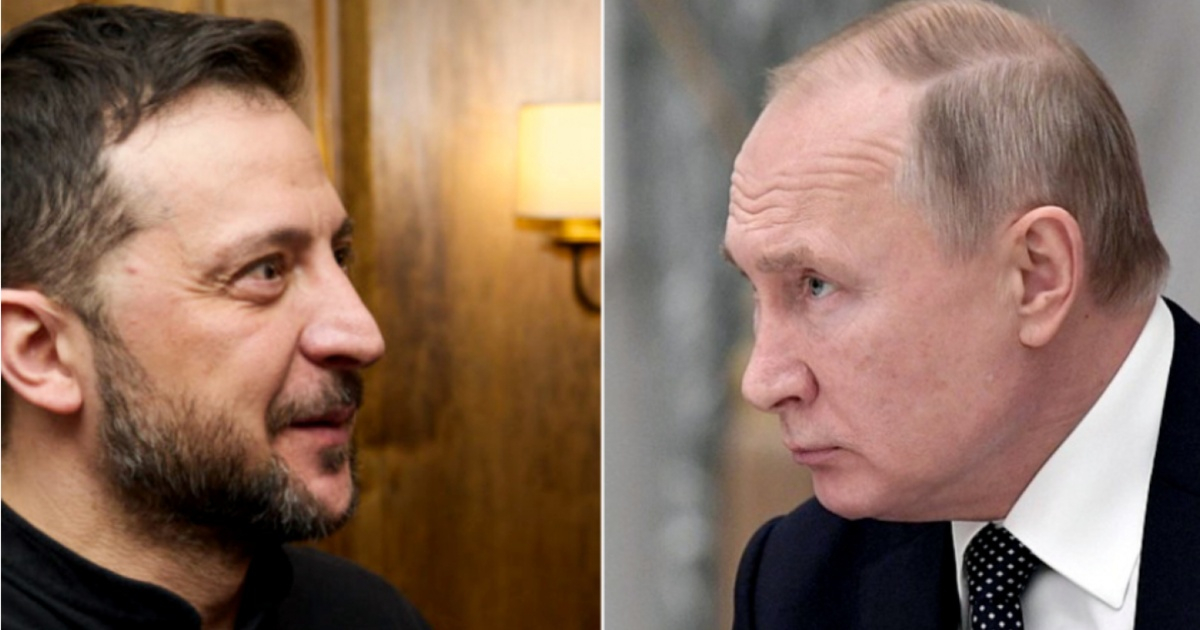
On Friday, U.S. President Donald Trump announced a brief ceasefire between Russia and Ukraine set to last for 48 hours, from May 9 to May 11, featuring two significant components.
First, the agreement mandates a complete halt to all military operations between the two nations, according to Trump's statement.
Additionally, the deal includes a swap of around 1,000 prisoners of war from each side, as detailed in Trump's social media posts.
Trump stated that he initiated the proposal, which was accepted by both Vladimir Putin and Volodymyr Zelensky.
He characterized the accord as "the beginning of the end of a very long, bloody, and hard-fought war, the largest conflict since World War II."
Trump also mentioned ongoing discussions aimed at reaching a permanent resolution to the conflict.
Symbolic Timing for Ceasefire
The timing of the ceasefire is symbolic, coinciding with May 9, known as Victory Day in Russia, marking the 81st anniversary of the Nazi Germany defeat in World War II—an event of profound symbolic significance, often used by Putin for impactful diplomatic or military gestures.
Background and Skepticism
This announcement arises amidst mutual distrust. Russia had previously declared a unilateral ceasefire for May 8 and 9, related to its military parade in Red Square, warning that any breach would provoke "a strong response," potentially involving large-scale retaliatory strikes on Kiev.
Ukraine responded with skepticism. On April 30, Zelensky questioned the Russian proposal, suggesting it aimed at ensuring a calm parade and then resuming attacks. Ukrainian Foreign Minister Andrii Sybiha labeled the May 9 Russian offer as "manipulation," stating Kiev received no official proposal.
Trump's Diplomatic Involvement
The groundwork for this announcement was laid on April 29, when Trump, during a more than 90-minute phone call with Putin, endorsed the idea of a May 9 ceasefire. The Kremlin described the call as "friendly and professional." Trump later remarked, "We had a good talk, I've known him for a long time."
This ceasefire marks the most tangible U.S.-backed pause since Trump resumed the presidency in January 2025. In March that year, Ukraine agreed to a 30-day U.S.-proposed ceasefire, which Putin also formally accepted, acknowledging Trump's mediating role.
Negotiations, however, stalled in June 2025 when Russia presented maximalist demands: formal cession of Crimea, Donetsk, Luhansk, Zaporizhzhia, and Kherson, lifting of Western sanctions, and Ukraine's waiver of war reparations. Ukraine, conversely, demanded Russian withdrawal and the return of deported children.
Challenges to a Lasting Solution
The Orthodox Easter ceasefire on April 11-12, 2026, also failed; both sides accused the other of violations, though analysts noted no frontline advancements or major drone attacks occurred. Zelensky criticized the lack of even symbolic ceasefire attempts.
A fundamental disparity continues to obstruct a lasting agreement: Ukraine seeks a temporary ceasefire as a stepping stone towards negotiations, while Russia and the U.S. aim for a permanent peace deal involving territorial concessions. The Russia-Ukraine war, now exceeding 1,500 days, sees Putin proposing direct talks with Ukraine on May 15 in Turkey, potentially testing whether this ceasefire leads to more than a symbolic pause.
Key Aspects of the Russia-Ukraine Ceasefire
What are the main components of the ceasefire between Russia and Ukraine?
The ceasefire includes a complete halt to military activities and an exchange of approximately 1,000 prisoners of war from each side.
Why is May 9 significant in the context of the ceasefire?
May 9 is Victory Day in Russia, commemorating the defeat of Nazi Germany in World War II, a date with strong symbolic meaning that Putin often uses for diplomatic or military gestures.
What challenges have hindered a lasting peace agreement?
The main obstacles include Russia's demands for territorial concessions and Ukraine's insistence on Russian withdrawal and the return of deported children, alongside mutual distrust and strategic differences between the involved parties.