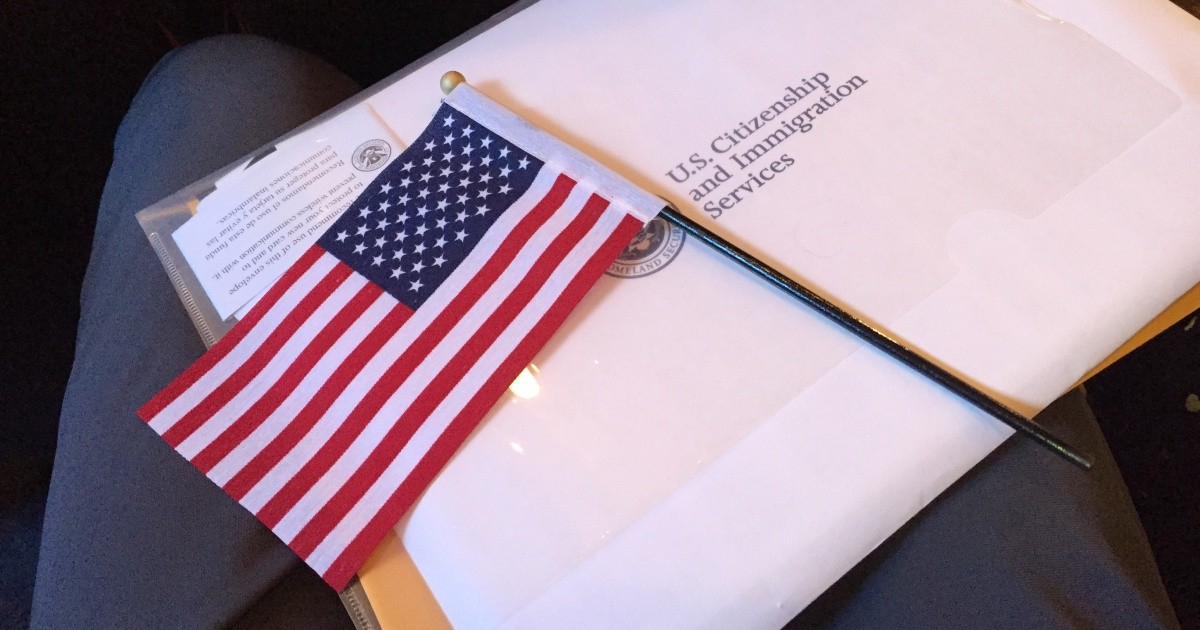
The Trump administration announced a significant expansion of its denaturalization campaign this Friday, filing federal court cases against around a dozen naturalized citizens born abroad. These individuals are accused of fraudulently obtaining citizenship, committing serious crimes, or having ties to terrorism.
Those affected hail from countries such as Bolivia, China, Colombia, Gambia, India, Iraq, Kenia, Morocco, Nigeria, Somalia, and Uzbekistan, with cases being simultaneously initiated in various courts across the United States.
Among the most notable cases is a Colombian-born Catholic priest convicted of sexual assault on a minor, a Moroccan-born citizen allegedly linked to Al Qaeda, and a Somali immigrant who admitted to providing material support to Al Shabaab, a group designated as a terrorist organization by the U.S.
High-Profile Cases and Legal Actions
The group also includes a former Gambian police officer allegedly involved in war crimes, individuals who used fake identities to obtain immigration benefits, and a man engaged in fraudulent marriages for immigration fraud.
In a separate announcement, the Department of Justice filed a civil lawsuit to strip citizenship from former ambassador and confessed Cuban spy Víctor Manuel Rocha. Born in Colombia, Rocha began working for Cuban intelligence in 1973 and acquired U.S. citizenship in 1978 by concealing these connections.
Arrested in December 2023, Rocha pleaded guilty in April 2024 and received a sentence of 15 years imprisonment along with a $500,000 fine. The lawsuit seeks to annul his 1978 naturalization, revoke his citizenship certificate, seize his passports, and bar him from claiming citizen benefits.
Government's Stance and Public Concerns
Acting Attorney General Todd Blanche highlighted the campaign during a CBS News interview last Wednesday, stating that there are "many individuals who are citizens and should not be."
Blanche clarified that only "a very small percentage" of the approximately 24 million naturalized citizens in the U.S. should be concerned, assuring that those who did not obtain their citizenship illegally "have nothing to worry about."
"We must deter people from committing fraud when they are becoming citizens of this great nation," stated Blanche. "It's a drastic consequence to commit fraud for citizenship, just as it is a drastic action to commit that fraud."
The announcement marks an unprecedented escalation: from 1990 to 2017, the federal government pursued just over 300 denaturalization cases, averaging 11 annually.
Strategic Expansion and Future Plans
This current escalation is rooted in previous administration decisions. In June 2025, Deputy Attorney General Brett A. Shumate issued a memorandum prioritizing these procedures "to the maximum."
By February 2026, the U.S. Citizenship and Immigration Services (USCIS) set a target of 100 to 200 monthly referrals to the Department of Justice for litigation.
Experts and civil rights organizations warn that this policy could create a "two-tier" citizenship system, leaving naturalized citizens more vulnerable compared to those born on U.S. soil.
In civil cases, the government's burden of proof is lower than in criminal proceedings, expanding the state's scope of action.
In January 2026, President Trump had already announced plans to revoke citizenship from naturalized immigrants convicted of fraud, emphasizing that "citizenship is a privilege, not a right."
The Department of Justice plans to further expand these revocations in the coming months.
Key Questions About Denaturalization Efforts
What is denaturalization?
Denaturalization is the process of revoking the citizenship of a naturalized citizen, often due to fraud, criminal activity, or ties to terrorism.
Why is the Trump administration focusing on denaturalization?
The administration aims to ensure that only those who lawfully obtained citizenship retain it, deterring fraud and enhancing national security.
Who might be affected by these denaturalization efforts?
While the campaign targets a small percentage of naturalized citizens, those who obtained citizenship through unlawful means are most at risk.