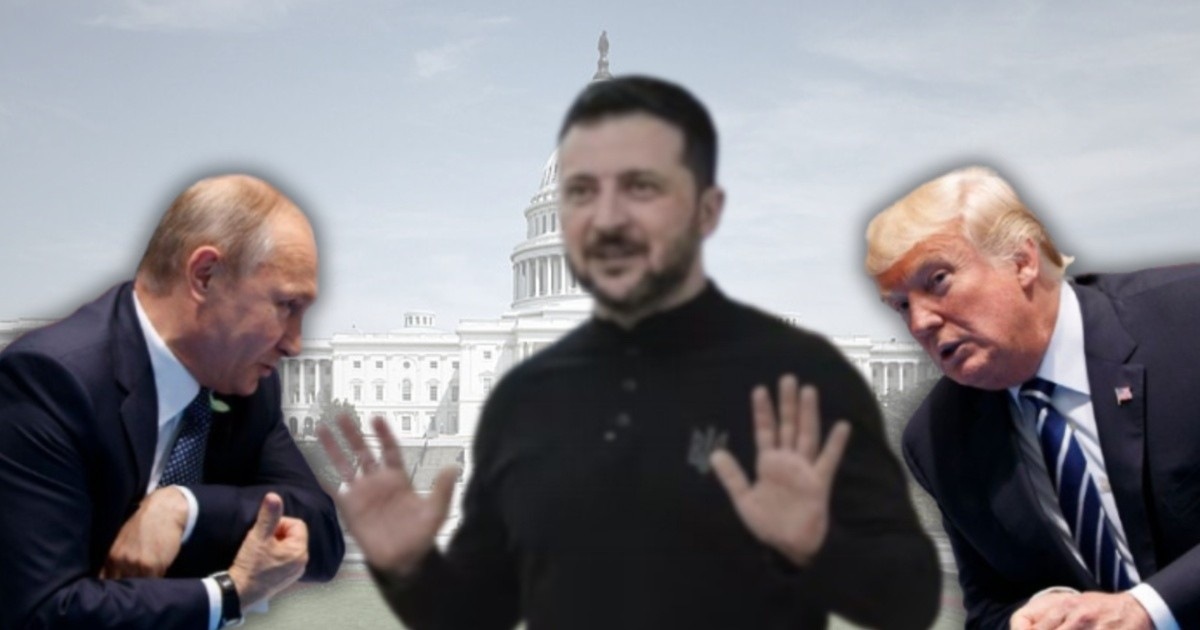
On Friday, Donald Trump revealed that Russian President Vladimir Putin and Ukrainian President Volodymyr Zelensky have agreed to a three-day ceasefire he proposed. This temporary truce is set to occur from May 9 to May 11, coinciding with the Victory Day celebrations.
The former U.S. president shared this development on his social media platform, Truth Social, mentioning that the agreement involves "halting all military activities and an exchange of 1,000 prisoners from each country."
"I personally made this request, and I am deeply grateful for its acceptance by both President Vladimir Putin and President Volodymyr Zelensky," Trump stated. He expressed hope that this could mark "the beginning of the end of a long, bloody, and hard-fought war."
On the same day, Zelensky confirmed that Ukraine had received Moscow's approval for the prisoner swap, highlighting that "a ceasefire regime should also be established on May 9, 10, and 11."
Victory Day, observed on May 9, holds significant symbolic importance in both Russia and Ukraine, as it commemorates their pivotal roles in the defeat of Nazi Germany during World War II.
Diplomatic Efforts Intensify
This announcement follows intense diplomatic activities. On Thursday, Ukraine's chief negotiator, Rustem Umerov, met in Florida with Trump's special envoy, Steve Witkoff, and the president's son-in-law, Jared Kushner, in an effort to reignite peace talks.
The immediate context has been fraught with mutual accusations. Russia's Defense Ministry had unilaterally declared a limited ceasefire for May 8 and 9, accusing Ukraine of non-compliance, while Zelensky reported over 140 documented Russian attacks on the frontline overnight from Thursday to Friday.
Historical Attempts at Peace
This is not the first symbolic ceasefire attempt. In April, Russia declared an Easter ceasefire, which Ukraine accused Russian forces of violating almost immediately.
The idea of a Victory Day truce was initially proposed by Putin during a 90-minute phone call with Trump on April 29. Zelensky had previously dismissed the proposal as "manipulation," demanding an unconditional cessation of hostilities for at least 30 days.
Negotiation efforts have a longer history: In March 2025, Ukraine accepted a U.S.-brokered 30-day ceasefire proposal, which Putin agreed to the next day. However, talks stalled over Russia's territorial demands regarding Crimea, Donbas, Zaporizhzhia, and Kherson, which Kyiv deemed unacceptable.
Trump emphasized that discussions to resolve the broader conflict remain ongoing, concluding his message with a hopeful note: "Every day we are getting closer to achieving it."
Frequently Asked Questions About the Russia-Ukraine Ceasefire
What does the ceasefire agreement between Russia and Ukraine entail?
The agreement includes a complete halt of military activities and an exchange of 1,000 prisoners from each side during the ceasefire period from May 9 to May 11.
Why is Victory Day significant in Russia and Ukraine?
Victory Day, celebrated on May 9, is significant as it commemorates the defeat of Nazi Germany in World War II, a historic event in which both Russia and Ukraine played crucial roles.
Have there been previous attempts at a ceasefire between Russia and Ukraine?
Yes, there have been earlier attempts to establish a ceasefire, such as the one during Easter, which Ukraine claimed was violated by Russian forces.