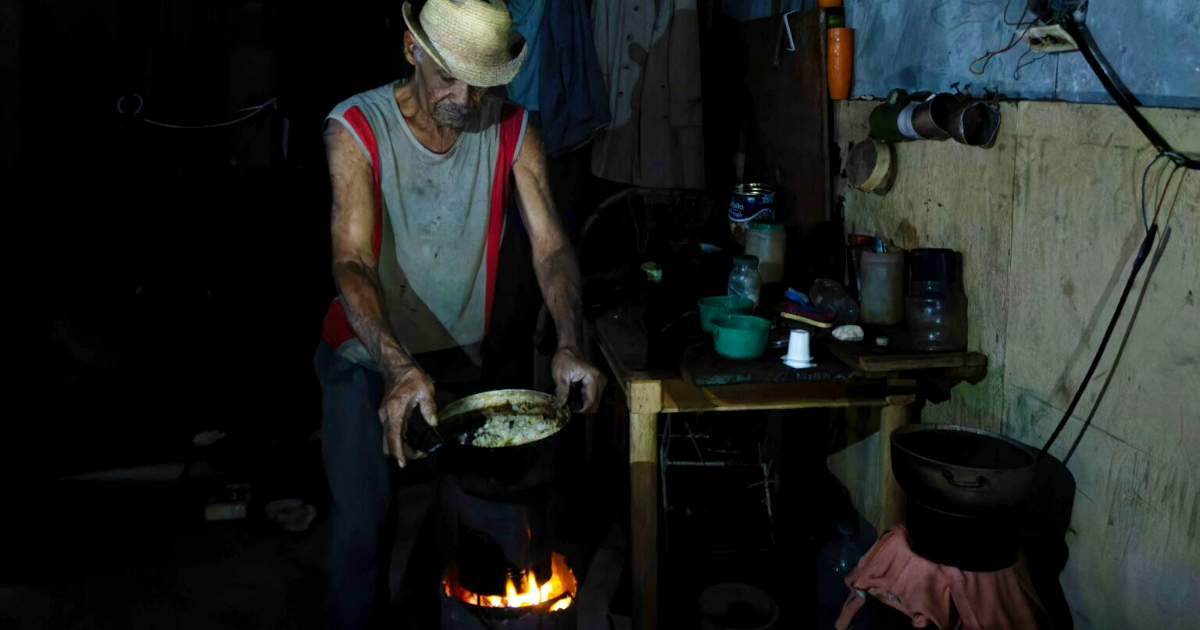
The Cuban Electric Union (UNE) has projected a severe power shortage for Friday night, estimating a deficit of 1,720 MW during peak demand hours. The available power stands at just 1,510 MW, while the demand is expected to reach 3,200 MW.
This results in a shortfall of 1,690 MW, which is significant enough to impact more than half of the country's population.
The crisis began early in the day; by 6:00 a.m., the National Electric System (SEN) was operating with a mere 1,400 MW against a demand of 2,740 MW, leaving 1,340 MW affected. For midday, the UNE anticipated a deficit of 1,350 MW.
Limited Relief Efforts
In an attempt to ease the situation slightly, the UNE plans to bring online unit three of the CTE Renté, which is in the start-up phase with a potential 50 MW output, unit five of Energás Jaruco with 30 MW, and the completion of unit six of Energás Jaruco with an additional 30 MW.
Major Outages and Maintenance Issues
Key power disruptions include malfunctions at a unit of the CTE Antonio Guiteras, unit two of the CTE Lidio Ramón Pérez, and units three and five of the CTE Antonio Maceo. Maintenance is ongoing for unit five of the CTE Mariel, unit six of the CTE Renté, and unit five of the CTE Nuevitas, with 345 MW out of service due to limitations in thermal generation.
The Antonio Guiteras plant, Cuba's largest single power generator with a capacity of up to 340 MW, was taken offline last Tuesday due to a boiler failure, losing 140 MW. This marks its eighth outage in 2026, and the plant, commissioned in 1988 in Matanzas, has never undergone major maintenance in over 36 years.
Extended Power Outages and Regional Impacts
On Thursday, power service was disrupted for a full 24 hours, including overnight, peaking at a 1,876 MW deficit at 8:40 p.m. Matanzas experienced over 40 hours of continuous blackout by the end of that day, while Santiago de Cuba faced a complete loss of radio and television signals due to the power generation shortfall.
Although the 54 newly installed photovoltaic solar parks produced 4,232 MWh on Friday, delivering a peak power of 598 MW at midday, this energy is not available during the critical nighttime peak when the crisis intensifies.
Fuel Shortages Underpinning the Crisis
The root of the emergency is a severe fuel shortage. Venezuela halted its shipments in January, followed by Mexico the same month. The only significant fuel delivery this year came from the Russian tanker Anatoli Kolodkin, which arrived on March 31 with approximately 730,000 barrels; these reserves have now been exhausted. A second Russian vessel, the Universal, remains adrift in the Atlantic with no confirmed destination.
Cuban leader Miguel Díaz-Canel acknowledged the situation on May 2, stating to international solidarity delegates, "That oil is running out these days, and we do not know when more fuel will enter Cuba."
Understanding Cuba's Power Crisis
What is causing the power crisis in Cuba?
The crisis is primarily due to a shortage of fuel, exacerbated by halted shipments from Venezuela and Mexico, and compounded by aging infrastructure and maintenance issues.
How are power outages affecting Cuban citizens?
Citizens are experiencing extended blackouts, impacting daily life and essential services, with some regions suffering continuous outages for over 40 hours.
What measures are being taken to mitigate the power shortage?
The UNE is attempting to bring additional power units online, but these efforts provide only limited relief due to the scale of the deficit.