Last Thursday, Secretary of State Marco Rubio revealed a fresh round of sanctions targeting Cuba, which notably placed Ania Guillermina Lastres Morera, the executive president of GAESA, and the mining company Moa Nickel S.A., on the SDN List. This list included 12 officials and seven military and security entities.
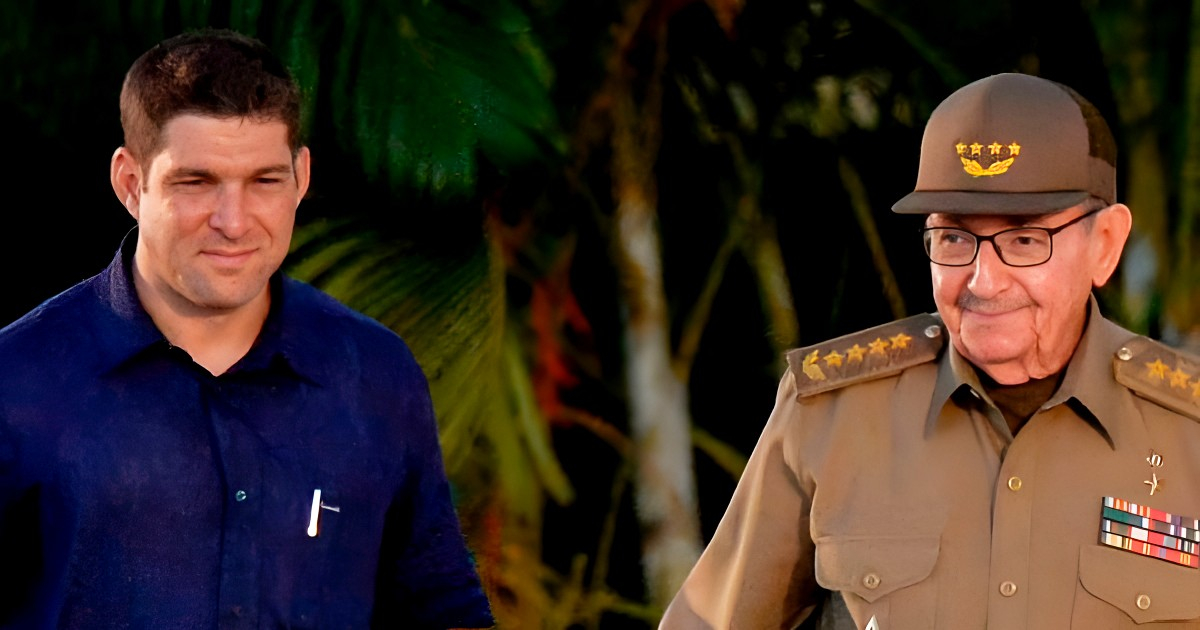
Yet, the absence of one key figure, Raúl Guillermo Rodríguez Castro, known as "El Cangrejo," is particularly striking. As the grandson of Raúl Castro and head of his personal security, he is speculated to be the "heir" to the financial assets of the Business Administration Group S.A. (GAESA), a conglomerate that wields considerable economic power within the regime's elite circles.
This omission is puzzling for several reasons. Currently, only eight Cubans are listed on the SDN List—the most severe sanction by the U.S. Treasury Department, which involves asset freezes and financial blocks—and El Cangrejo is not among them. This is despite his connection as the son of the late General Luis Alberto Rodríguez López-Calleja, the former president of GAESA and the first Cuban individually sanctioned by Washington back in 2020.
Additionally, Raúl Castro, Miguel Díaz-Canel, and Alejandro Castro Espín—Raúl's son and a key player in the regime's intelligence operations—are missing from the SDN List. They only face travel restrictions under Section 7031(c), barring them from entering the United States but not affecting their financial assets or transactions.
The disparity with other sanctioned regimes is glaring. Russia has over 1,500 individuals on the SDN List due to the conflict in Ukraine; Venezuela has surpassed 100. Despite over six decades of dictatorship, the events of July 11, and thousands of documented arbitrary arrests, Cuba's list comprises merely eight names.
The Role of "El Cangrejo" in U.S.-Cuba Dynamics
One theory for El Cangrejo's exclusion suggests his role as an active communication channel between Washington and Raúl Castro's inner circle. Since February 2026, Rubio's advisors have engaged in meetings with Rodríguez Castro in Basseterre, the capital of Saint Kitts and Nevis, described as "surprisingly friendly" and focused on Cuba's "future."
In April, a State Department delegation made the first official U.S. trip to Havana since 2016, where a senior official held a separate meeting with El Cangrejo.
Shortly afterward, Rodríguez Castro attempted to establish direct contact with Donald Trump through a letter delivered by Roberto Carlos Chamizo González, a MININT agent, to Miami on April 18, although this effort was unsuccessful.
Should the U.S. Apply the Venezuelan Model to Cuba?
This strategy might be reversing the model Washington applied in Venezuela with Delcy Rodríguez. The Venezuelan head of state remained on the SDN List from September 2018 and was only removed on April 1, 2026, as a conditional gesture from the Trump administration following signs of cooperation in the transition process.
In essence, the U.S. initially used maximum sanctions as a pressure mechanism and later offered their removal as a political incentive for compliance. Trump once stated that Rodríguez was "doing a good job."
However, the process has stagnated. The Penal Forum has confirmed only 768 releases compared to the 8,616 claimed by the Venezuelan government, and Rodríguez announced the end of the Amnesty Law just two months after its enactment.
In light of these events, Senator Rick Scott demanded on Friday that the Trump administration immediately reinstate sanctions against Rodríguez, whom he labeled as the "head of a cartel," following the confirmed death of political prisoner Víctor Hugo Quero Navas.
The question arises: Should Washington employ this same formula in Cuba? By initially including Raúl Castro, Alejandro Castro Espín, and Raúl Guillermo Rodríguez Castro on the SDN List, the aim would be to compel them to negotiate, offering removal from the list as a genuine incentive for transition.
In such a case, the same logic used in Venezuela would apply: increasing the personal and financial cost of the regime's resistance by adding them to the SDN List, while keeping the possibility of lifting these sanctions open solely upon verifiable progress toward a real transition, thereby functioning as an "incentive."
Although the Cuban opposition has demanded that the Castro family be excluded from any transition process, the Venezuelan model suggests that if SDN sanctions are effectively applied—and accompanied by a strong show of force like the surgical operation carried out on January 3 in Caracas—they could become the leverage needed to force a negotiation that the regime currently lacks real incentives to accept.
Rubio, upon announcing the new measures, left this option open: "More sanctions against the Cuban regime will come in the days and weeks ahead."
Understanding U.S. Sanctions on Cuba
Why wasn't Raúl Guillermo Rodríguez Castro included in the SDN List?
One theory is that Rodríguez Castro serves as an active communication link between Washington and Raúl Castro's circle, possibly explaining his exclusion from the SDN List.
What is the SDN List?
The SDN List, or Specially Designated Nationals List, is a list maintained by the U.S. Treasury Department that includes individuals and entities subject to asset freezes and financial transaction blocks due to their association with targeted regimes or activities.
How does the U.S. use sanctions as a political tool?
The U.S. uses sanctions as a means to apply pressure on regimes or individuals, with the possibility of lifting these sanctions offered as an incentive for compliance and cooperation in political processes, as seen in cases like Venezuela.