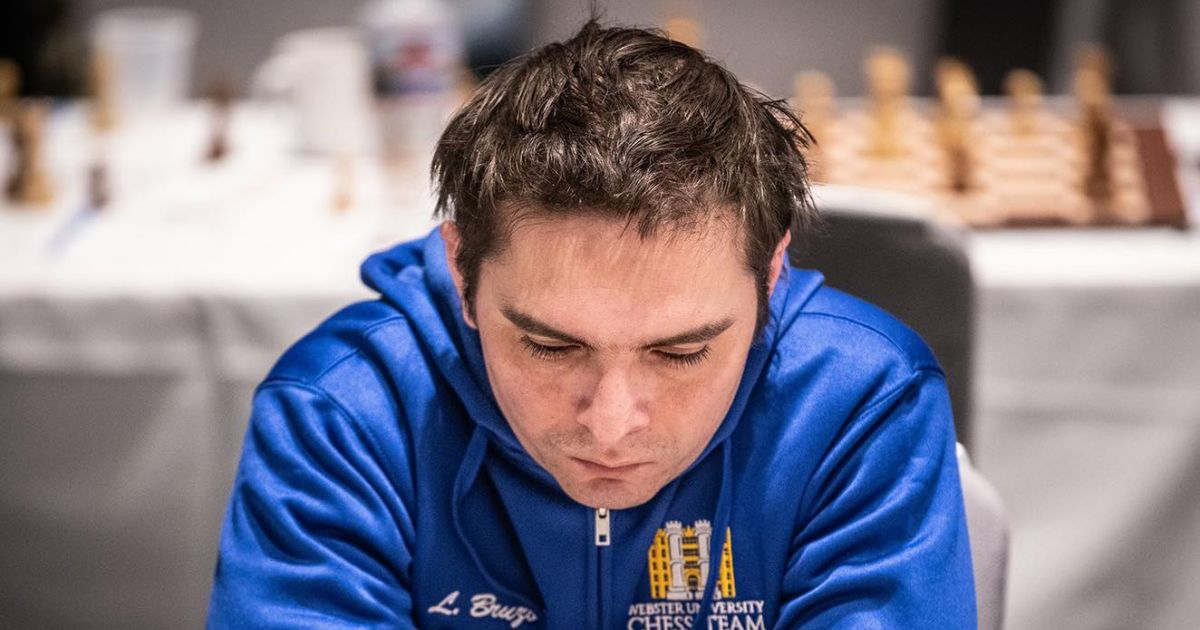
On Thursday, International Chess Grandmaster Lázaro Bruzón expressed his thoughts on Facebook about the ideological indoctrination he endured while living in Cuba. He asserted that this process "leads to fanaticism, cripples critical thinking, and often even logic."
Bruzón, born in Holguín in 1982 and residing in the United States since 2018, described indoctrination as "creating a mold: constantly feeding us ideas and teaching us to accept them as good without questioning or reasoning for ourselves."
To illustrate his point, the chess player recounted a personal experience from his first visit to the United States in 2013, when he arrived in Washington and New York feeling deeply uncertain.
"I must confess that initially, I felt insecure, prejudiced against people; I thought I would be treated harshly, offensively, and I even avoided openly saying I was Cuban," he wrote.
Bruzón acknowledged that these perceptions lacked any real basis and were a direct result of decades of regime propaganda: "I quickly realized that all this was a consequence of the indoctrination we were subjected to over the years, where the United States and its people were presented as the enemy. Undoubtedly, I was mistaken."
His perceptions shifted dramatically after multiple visits and six years of living and studying in American universities, in environments where "Spanish is hardly spoken." "I never experienced any rejection for being Cuban; on the contrary, I have been welcomed with open arms," he affirmed.
Bruzón's testimony holds particular weight because it comes not from a historical dissident but from someone who once took part in the system's structures before emigrating. Before leaving Cuba, he was a member of the Union of Young Communists and the Assembly of People's Power in Las Tunas. He even tattooed Che Guevara, a reflection of his youthful indoctrination, which he confessed in February.
This statement is part of a series of critical declarations Bruzón has made in recent months. In February, he accused the regime of dragging the country down since 1959 and called for transitions toward private property and a free market. In April, he claimed that "every Cuban who leaves Cuba becomes an enemy of the regime," and labeled Cuban authorities as "power-hungry."
Bruzón's reflection aligns with documented allegations about the Cuban education system as an instrument of indoctrination. In April, reports emerged that preschool children in Havana were forced to chant slogans like "Fidel," "socialism," and "militiaman" during school activities. In March, students staged "anti-imperialist tribunals" judging the U.S. government in city schools. In September 2025, it was revealed that first-grade math books included images of Fidel Castro in basic exercises.
The Grandmaster concluded his post with a thought on those still trapped in this mindset: "And so, there are still many in Cuba, repeating slogans and speaking fanatically about things they have only heard about. The significant difference today is the existence of the internet and access to information."
The chess player, who became a Grandmaster at 17 and won the World Junior Championship in 2000, has publicly stated he will only return to Cuba "when the country is free and democratic."
Insights into Lázaro Bruzón's Criticism of Cuban Indoctrination
What prompted Lázaro Bruzón to speak out about Cuban indoctrination?
Lázaro Bruzón was motivated to discuss Cuban indoctrination after reflecting on his personal experiences with the ideological conditioning he encountered in Cuba and its impact on critical thinking and logic.
How did Lázaro Bruzón's perception of the United States change over time?
Initially, Bruzón felt insecure and prejudiced upon his first visit to the United States due to decades of propaganda. However, after living and studying in the U.S. for several years, he realized these perceptions were unfounded and found himself welcomed with open arms.