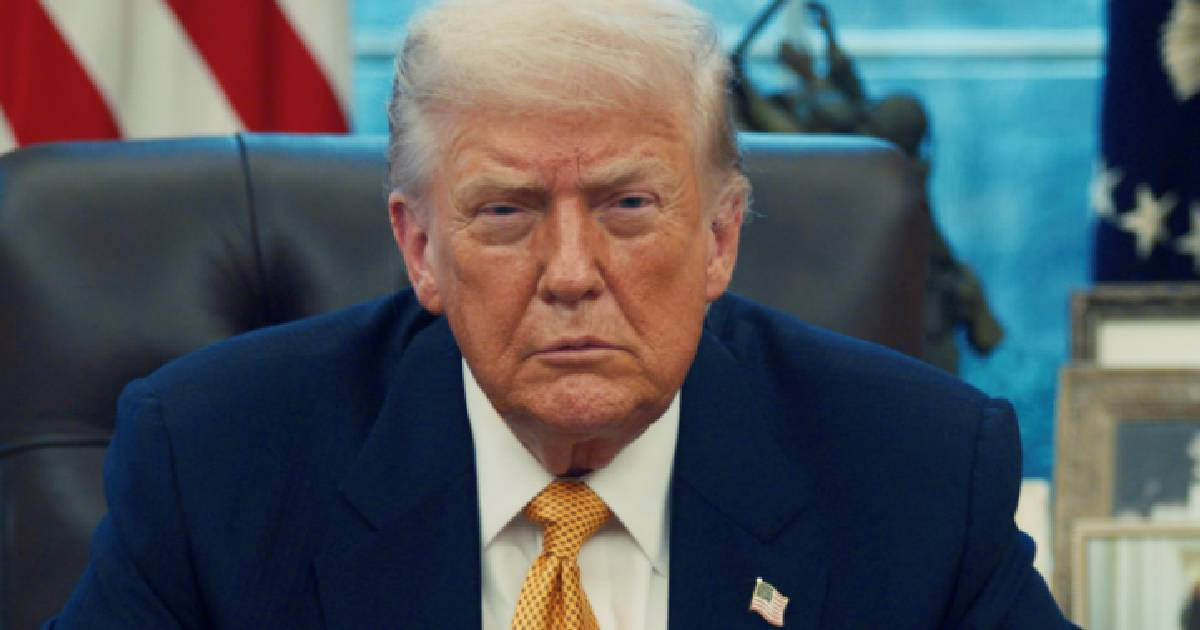
Washington is not currently planning any immediate military action against Cuba, despite President Donald Trump's repeated threats and the ongoing maximum pressure campaign his administration maintains against Havana, according to sources cited by the AP on Friday.
Officials also expressed skepticism that the Cuban government will accept an offer of tens of millions of dollars in humanitarian aid, two years of free Starlink internet access for all Cubans, agricultural assistance, and infrastructure support.
Nevertheless, they noted that the Cuban government has not outright rejected the offer and still has time to consider its decision. The identities of these sources were not disclosed by AP.
This clarification comes amid a week of mixed signals. Trump has frequently stated, "Cuba is next" following military operations against Iran.
Last Monday, he reportedly claimed at a private dinner in West Palm Beach that the U.S. would "take Cuba almost immediately" after concluding those operations.
On Wednesday, he did not rule out applying the "Venezuela formula" to the island, referencing the capture of Nicolás Maduro in January 2026.
However, when directly asked about potential military action, Trump responded, "Depends on your definition of military action," a phrase encapsulating the deliberate ambiguity with which the administration has handled the Cuban issue.
Secretary of State Marco Rubio announced on Thursday a new round of sanctions under Executive Order 14404, signed by Trump on May 1.
Rubio described GAESA as "the heart of Cuba's kleptocratic communist system," a military conglomerate controlling between 40% and 70% of the formal Cuban economy, with assets estimated at over $18 billion.
He also warned that "additional designations can be expected in the coming days and weeks."
On the same day, Canadian mining company Sherritt International suspended all operations in Cuba and began repatriating its employees, citing that sanctions make it "materially impossible" to continue.
Their departure deprives the regime of 10% to 15% of its electricity generation capacity, a direct blow to an island already experiencing power outages of up to 25 hours daily in more than 55% of its territory.
The U.S. has set a June 5 deadline for foreign companies to end their operations with GAESA under threat of secondary sanctions.
Since January 2026, the Trump administration has imposed over 240 sanctions against the regime and intercepted at least seven tankers, reducing Cuba's energy imports by 80% to 90%.
Concurrently, the State Department began deploying personnel to the Southern Command in Doral, Florida, in anticipation of potential hostilities.
The Pentagon quietly accelerated contingency plans for a possible intervention from mid-April, although the USS Abraham Lincoln — which Trump threatened to position "a few hundred meters" off the Cuban coast — remains deployed in the Northern Arabian Sea as part of Operation Epic Fury against Iran.
Díaz-Canel responded last Sunday before delegates from 36 countries by invoking the "War of All the People" doctrine.
"Every Cuban man and woman has a rifle, a position in defense, and a mission to fulfill," he declared, adding that "no aggressor will find surrender in Cuba."
Rubio, meanwhile, summed up Washington's stance on the regime: "The only thing worse than a communist is an incompetent communist. They don't know how to fix it."
Key Insights on U.S.-Cuba Relations
What is the current U.S. stance on military action against Cuba?
The U.S. is currently not planning any immediate military action against Cuba, despite President Trump's previous threats. The approach remains ambiguous, with all options still on the table.
What are the implications of new U.S. sanctions on Cuba?
The new U.S. sanctions target GAESA, a major military conglomerate in Cuba, potentially affecting a significant portion of the Cuban economy. These sanctions are expected to further strain Cuba's energy imports and economic stability.
How has the Cuban government responded to U.S. threats?
Cuban President Díaz-Canel has invoked the "War of All the People" doctrine, emphasizing that every citizen is prepared for defense and that there will be no surrender to aggressors.