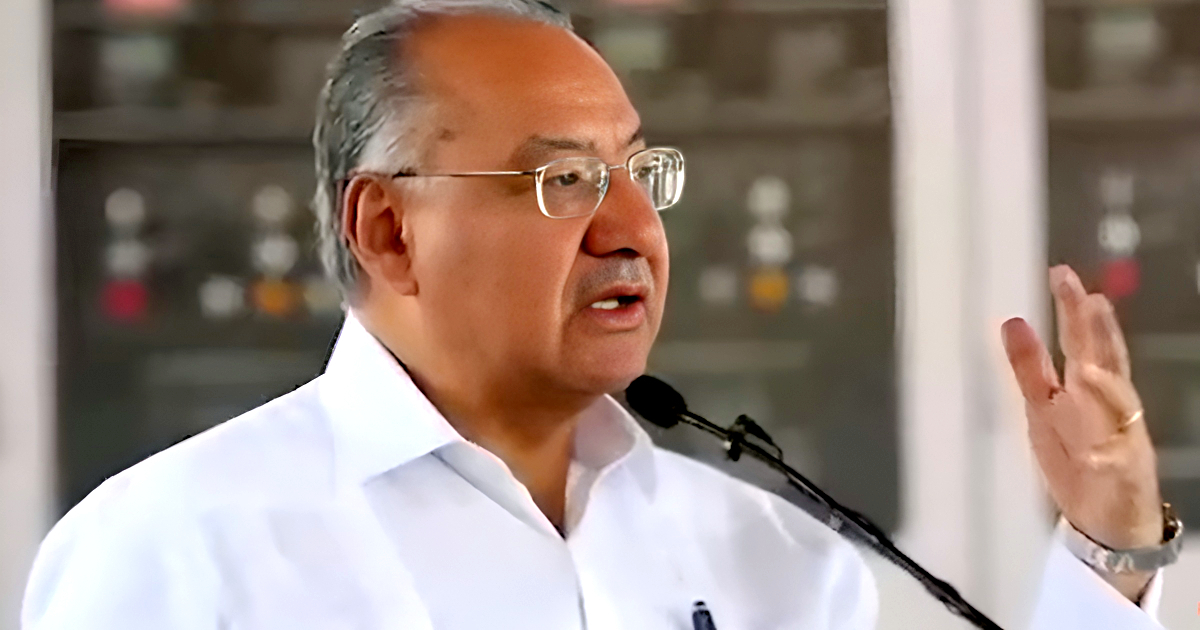
The United States government has initiated a civil lawsuit aiming to revoke the American citizenship of former ambassador Víctor Manuel Rocha. He has been accused and convicted of serving as a covert operative for the Cuban regime over several decades while holding significant diplomatic positions in Washington and across Latin America.
Filed in the U.S. District Court for the Southern District of Florida, the judicial action claims that Rocha unlawfully gained his naturalization in 1978 by concealing his work for Cuban intelligence, which began in 1973, and his connections to the Communist Party of Cuba.
According to the court documents, Rocha lied throughout his immigration process, falsely asserting under oath that he had not committed any crimes, had no communist affiliations, and was a believer in the U.S. Constitution and its system of governance.
"None of these were true," states the lawsuit from the Department of Justice.
Born in Colombia and becoming a naturalized U.S. citizen in September 1978, Rocha carved out a distinguished career within the State Department. From 1981 to 2002, he held sensitive diplomatic roles in countries such as the Dominican Republic, Honduras, Mexico, Argentina, and Bolivia, and also served on the National Security Council and at the U.S. Interests Section in Havana.
U.S. authorities allege that Rocha exploited these roles to clandestinely assist the Cuban General Directorate of Intelligence (DGI), acquiring access to sensitive and classified information.
The case against Rocha gained public attention in December 2023 when he was arrested in Miami on charges of conspiring to act as an unlawful agent of a foreign government and defrauding the United States.
In April 2024, Rocha pled guilty as part of a plea agreement with federal prosecutors, admitting to secretly aiding the Cuban regime since 1973 and deliberately concealing his role as an agent.
During his sentencing hearing, federal judge Beth Bloom declared that Rocha "betrayed the United States for 51 years" and described his citizenship as "a privilege obtained unlawfully."
The former diplomat was sentenced to 15 years in prison and fined $500,000. He is currently serving his sentence at the federal prison FCI Coleman in Florida.
Legal Grounds for Revoking Rocha's Citizenship
The new denaturalization lawsuit argues that Rocha never fulfilled the legal criteria to become a U.S. citizen due to:
- his lack of "good moral character";
- his ties to communism;
- the perjury he committed during the immigration process;
- his disloyalty to the U.S. Constitution.
The government also maintains that had immigration authorities been aware of Rocha's true affiliations with Cuba, his citizenship application would have been denied.
In addition to revoking his naturalization, the U.S. seeks to permanently annul his citizenship certificate, compel him to surrender any U.S. documents — including passports — and bar him from claiming benefits tied to the citizenship he obtained in 1978.
This case stands as one of the most severe incidents of Cuban infiltration identified within the U.S. diplomatic and national security framework.
Key Questions on the Rocha Espionage Case
What charges led to Rocha’s arrest in 2023?
Rocha was arrested on charges of conspiring to act as an illegal agent for a foreign government and defrauding the United States.
How did Rocha allegedly misuse his diplomatic roles?
Rocha allegedly used his diplomatic positions to secretly assist Cuban intelligence by gaining access to sensitive and classified information.
What are the consequences of the denaturalization lawsuit against Rocha?
If successful, the lawsuit would revoke Rocha's naturalization, cancel his citizenship certificate, and prevent him from claiming any U.S. citizenship benefits obtained in 1978.