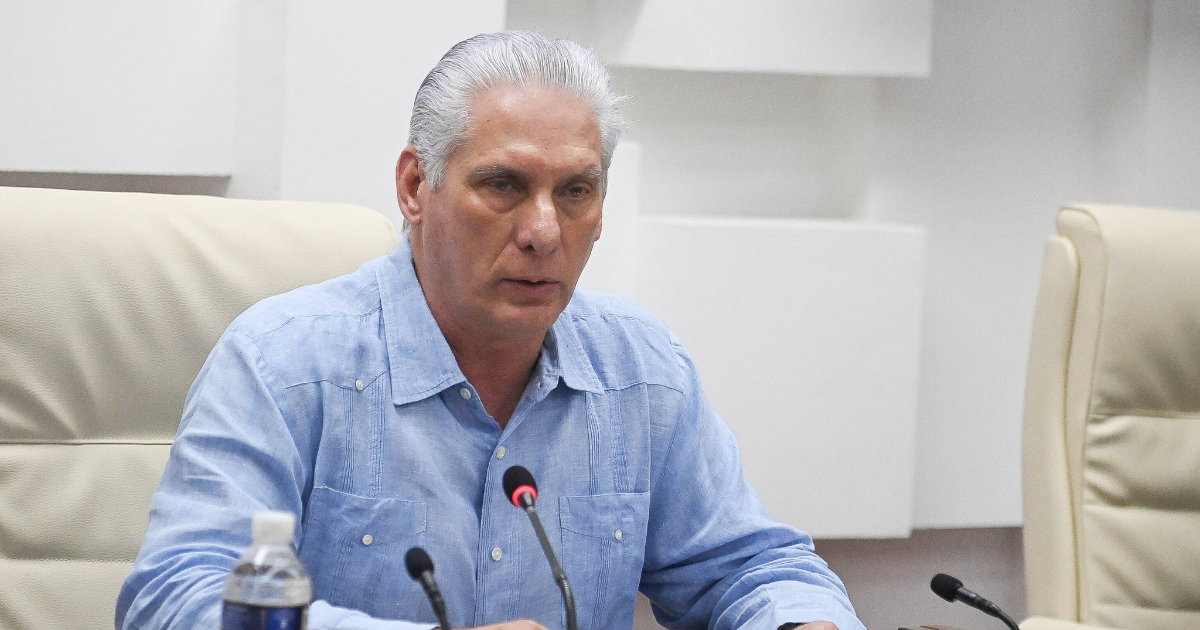
The recent statement from Miguel Díaz-Canel, addressing new sanctions from Washington targeting GAESA, has sparked a wave of criticism from Cubans who dismissed the official rhetoric and turned the government's own language about "cruelty" back on them.
In his message, Díaz-Canel claimed that "our people are already familiar with the cruelty behind the actions of the U.S. government," arguing that these measures "worsen the already difficult situation our country faces, strengthening our resolve to defend our Homeland, the Revolution, and Socialism."
The online backlash was swift and overwhelming, with most responses opposing the regime.
One particularly poignant comment encapsulated the general sentiment: "Now the measures affect you; the ones affecting the people started 67 years ago."
Many users were just as direct in dismantling the official narrative regarding U.S. sanctions.
"These measures aren't against the people; they're against GAESA, and even you don't have access to that money. Stop creating smokescreens. Let go of power; you have nothing to offer," wrote another user.
Several Cubans illustrated their daily hardships as evidence that "cruelty" stems not from Washington but from Havana: "After over 20 hours without power, no water, no medicine, and skyrocketing food prices, I don't even know what to say. What I do know is that after 67 years with the same problems, a radical change is needed and soon. SOS CUBA."
Highlighting Economic Struggles
The sale of liquefied gas at $29 per tank was a frequent target in the comments, cited as an example of the government's policies against its own people.
One user was blunt: "Before pointing out the cruelty of others, you should first show the Cuban people where the billions of dollars in profits from 30 years of nickel and cobalt exports have gone."
The sanctions announced on Thursday by Secretary of State Marco Rubio specifically target GAESA, its CEO Ania Guillermina Lastres Morera, and the mining company Moa Nickel S.A., under Executive Order 14404 signed by Trump on May 1.
Washington accuses GAESA of managing an illicit network of assets worth up to $20 billion diverted to foreign accounts, while the Cuban populace suffers from a lack of electricity, water, and medicine.
The new measures also set a deadline of June 5 for foreign companies to cease operations with GAESA, under threat of secondary sanctions.
Historical Context and Future Implications
Many commenters also recalled the "order of combat" Díaz-Canel issued during the July 11, 2021 protests, where the regime responded with thousands of arrests to the largest demonstrations since 1959, using this as further evidence against the official narrative of "living in peace."
The most common demands among the hundreds of comments on the post were for free elections, the release of political prisoners, freedom of expression, and the government's resignation.
There were also those who pointed out the underlying contradiction: "Stop playing the victim. Cuba's biggest problems weren't created by the people or some external excuse; they were created by a failed communist system and those who've maintained it for decades while the country falls apart."
Since January 2026, the Trump administration has imposed over 240 sanctions against the Cuban regime and intercepted at least seven oil tankers, reducing the island's energy imports by 80% to 90%, according to official U.S. figures.
Rubio warned in his statement that "further sanctions are anticipated in the coming days and weeks."
Understanding the Impact of U.S. Sanctions on Cuba
What are the recent U.S. sanctions against Cuba?
The recent U.S. sanctions target GAESA, its CEO Ania Guillermina Lastres Morera, and Moa Nickel S.A., under Executive Order 14404. These sanctions are part of a broader effort to curb a network of illicit assets managed by GAESA.
How have Cubans responded to Díaz-Canel's statement?
Cubans have largely criticized Díaz-Canel's statement, turning the government's rhetoric on "cruelty" back on them and highlighting their own daily struggles as evidence of the regime's failings.
What is GAESA, and why is it significant?
GAESA is a conglomerate that controls significant assets in Cuba, accused of managing a network of illicit assets. It plays a crucial role in the Cuban economy, which is why the U.S. sanctions target it directly.