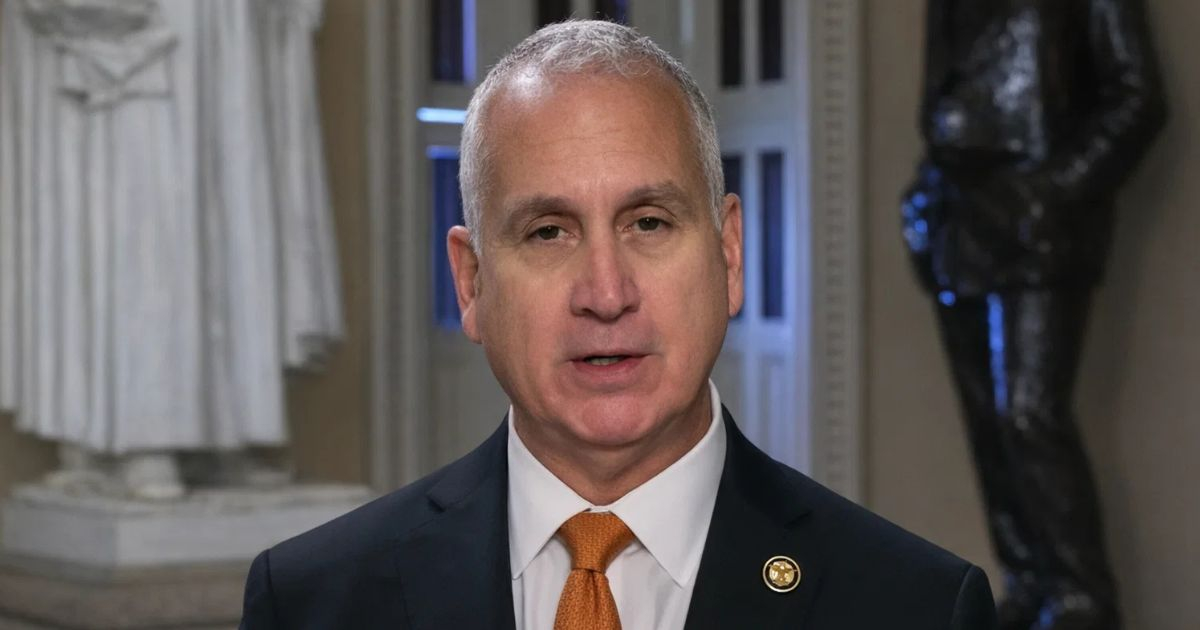
Cuban-American Republican Congressman Mario Díaz-Balart publicly expressed his gratitude on Thursday via X, acknowledging President Donald Trump and Secretary of State Marco Rubio for their newly announced sanctions targeting the Cuban regime. He hailed these measures as "another significant step" in holding the dictatorship accountable for its long-standing oppression.
“The newly announced sanctions against the brutal Cuban regime represent another crucial step in making the dictatorship accountable for decades of repression, corruption, and threats to U.S. national security and regional stability,” stated the representative from Florida’s 26th district.
Díaz-Balart explicitly thanked both officials, saying, “Thank you to @POTUS and @SecRubio for steadfastly supporting the Cuban people and opposing the murderous regime’s support for malign actors, transnational repression, intelligence operations against the U.S., and dangerous alliances with American adversaries.”
The congressman’s message came shortly after Rubio revealed sanctions against GAESA, the military conglomerate controlling a substantial portion of Cuba’s formal economy, with assets estimated over $18 billion.
The Secretary of State described GAESA as "the heart of Cuba's kleptocratic communist system" and targeted the regime's financial core by including its president, Ania Guillermina Lastres Morera, and the state-owned mining company Moa Nickel S.A. in the sanctions list.
These sanctions, enacted under Executive Order 14404 signed by Trump on May 1, 2026, encompass 12 current and former officials, seven military and security entities, and three vessels.
The U.S. set June 5 as the deadline for foreign companies to cease operations with GAESA or face secondary sanctions.
The impact was immediate: on the same day, Canadian mining firm Sherritt International—a partner of Moa Nickel since 1994—halted all operations in Cuba and began repatriating its expatriate employees, marking one of the most significant economic blows to the regime in recent years.
These measures are part of a maximum pressure policy that, since January 2026, has imposed over 240 new sanctions on Cuba, exacerbating an economic crisis already marked by power outages lasting up to 22 hours daily following the capture of Nicolás Maduro on January 3, 2026, which cut off 80% to 90% of Venezuela's oil supply to the island.
Díaz-Balart, a leading advocate of this policy alongside Congress members María Elvira Salazar and Carlos Giménez, had foreseen the trajectory of events on April 9: “I am convinced this dictatorship will not survive President Trump’s term.”
FAQs on the Impact of Sanctions on Cuba
What are the new sanctions against Cuba?
The new sanctions target GAESA, a key military conglomerate in Cuba, and include 12 officials, seven military and security entities, and three vessels. The sanctions also aim at individuals and entities tied to the regime's financial operations.
Why were these sanctions implemented?
These sanctions were implemented as part of a broader strategy to hold the Cuban dictatorship accountable for its oppressive practices, corruption, and alliances with adversaries of the United States.
How has the Cuban economy been affected by these sanctions?
The sanctions have exacerbated Cuba's economic crisis, which includes severe power outages and significant economic disruptions, such as the withdrawal of Canadian company Sherritt International from the island.