This Thursday, Cuba's Ministry of Foreign Affairs issued a statement vehemently opposing the Executive Order signed by former President Donald Trump on May 1st. The ministry condemned the new sanctions from the U.S. Treasury Department, which added GAESA and Moa Nickel S.A. to the list of Specially Designated Nationals. Cuba accused Washington of attempting to "subdue the Cuban population through starvation and desperation."
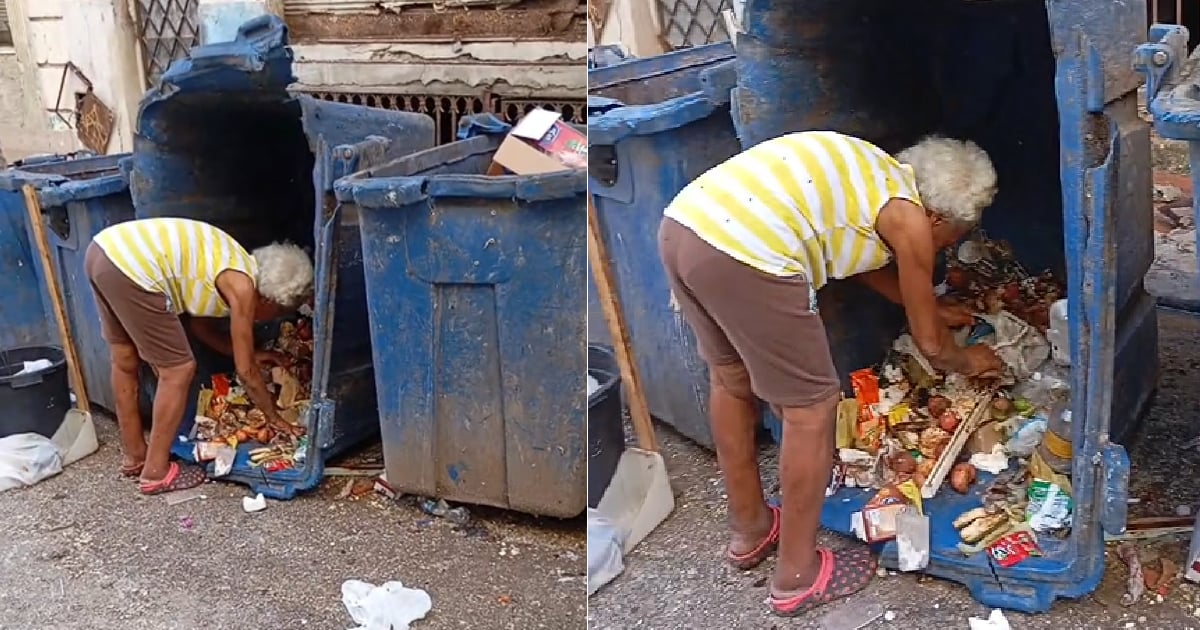
What the regime conveniently leaves out is that hunger in Cuba didn't begin with Trump's sanctions. It is a direct result of over sixty years of communist dictatorship and a centralized economic model that has decimated national agricultural production.
The statement emphasized that "the measure will further impede the functioning of the national economy, which has been grappling since January 29, 2026, with the severe impacts of the oil embargo that halted fuel exports to Cuba."
The communiqué also "denounced the criminal nature of these aggressive measures aimed at rendering the Cuban population hungry and desperate," despite the fact that the Cuban economy was on the brink of collapse long before. It accused the U.S. of trying to create a national social, economic, and political catastrophe.
The Realities Behind Cuba's Crisis
Additionally, they rejected "the U.S. government's intention to fabricate a humanitarian crisis scenario to justify more dangerous actions, including military aggression against Cuba," seeking external validation for the regime's unpopularity.
According to a hunger survey in Cuba released yesterday, 33.9% of Cuban households reported experiencing hunger in 2025, prior to the May 2026 Executive Order, marking a 9.3-point increase from 2024.
The Food Monitor Program recorded in April 2026 that 96.91% of Cubans lacked adequate access to food due to inflation and dwindling purchasing power.
Data from Cuba's own National Statistics and Information Office revealed a 74% rise in deaths from malnutrition between 2022 and 2023, increasing from 43 to 75 cases.
Systemic Failures of Cuba's Economic Model
Cuba imports between 70% and 80% of its food, a testament to the agricultural collapse under the collectivized model imposed by the regime since 1959.
Cuban Prime Minister Manuel Marrero Cruz acknowledged in October 2024—months before any new measures from Trump—that "fuel shortages are the major factor" in the economic collapse.
In December 2024, the Communist Party of Cuba admitted the failures of the socialist model in food production, and by April of that year, the regime sought assistance from the World Food Program for powdered milk for children for the first time.
A March 2026 survey found that 80% of Cubans believe the current crisis is worse than the Special Period of the 1990s.
GAESA and the Economic Grip on Cuba
Regarding the new sanctions, Secretary of State Marco Rubio described GAESA as "the heart of Cuba's kleptocratic communist system," noting that the military conglomerate controls between 40% and 70% of the island's formal economy and generates over $1 billion annually for the regime.
The sanctions against GAESA announced by Rubio are the first coercive action stemming from Trump's May 1 Executive Order, which expands economic, financial, and trade sanctions against Cuba.
The Ministry of Foreign Affairs warned that the U.S. is attempting to "construct a humanitarian crisis scenario to justify more dangerous actions, including military aggression against Cuba," and urged the international community not to succumb to what it called "blackmail and intimidation."
The regime's strategy of blaming the U.S. for hunger on the island is nothing new, but the facts speak for themselves: Cuba's food crisis is structural, existing long before any recent sanctions, rooted in the very system now issuing the protest communiqué.
Understanding Cuba's Economic Challenges
What are the main causes of the food crisis in Cuba?
The food crisis in Cuba is primarily due to a centralized economic model that has failed to sustain agricultural production, coupled with decades of communist rule that have weakened the country's ability to produce and import food efficiently.
How significant is GAESA's role in the Cuban economy?
GAESA, a military conglomerate, plays a crucial role in the Cuban economy, controlling between 40% and 70% of the formal economy and generating over $1 billion annually for the regime.
Have U.S. sanctions caused the current economic crisis in Cuba?
While U.S. sanctions have added pressure to Cuba's economy, the crisis is rooted in decades of mismanagement under a collectivized economic model that predates recent sanctions.