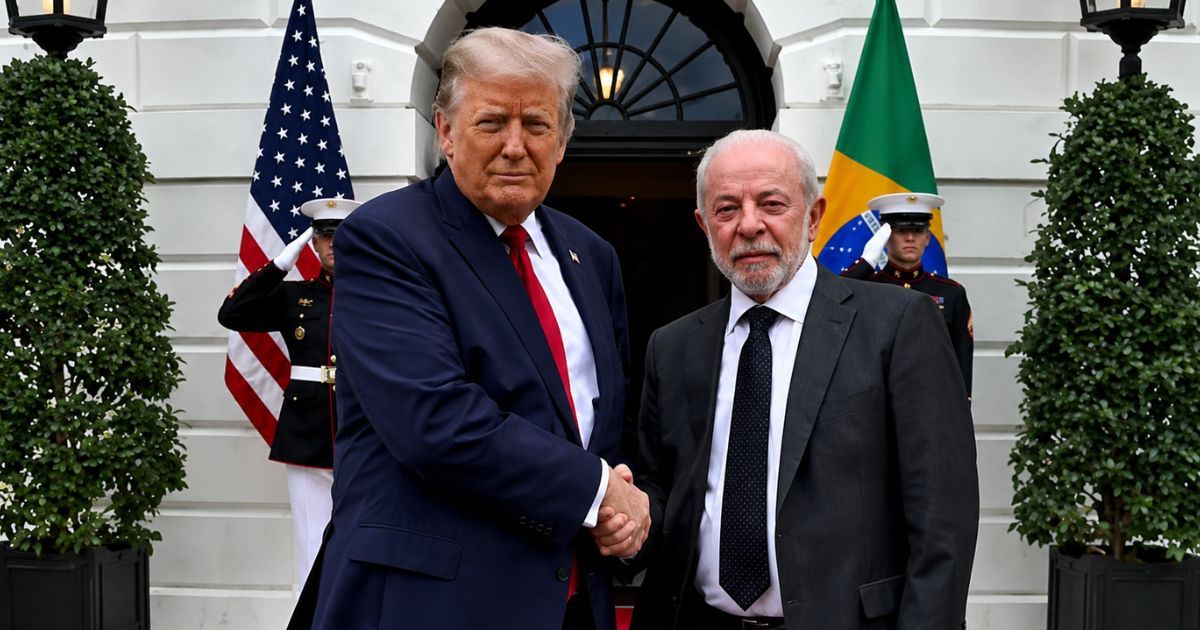
In a surprising revelation, Brazilian President Luiz Inácio Lula da Silva disclosed that former U.S. President Donald Trump privately assured him there were no plans for military action against Cuba. This statement starkly contrasts with the aggressive rhetoric Trump has sustained for months regarding the island nation.
Lula shared, "If the translation was right, he told me he has no intention of invading Cuba," during a press conference at the Brazilian embassy in Washington, shortly after his meeting with Trump at the White House.
The Brazilian leader welcomed this assertion and used the opportunity to advocate for open dialogue with Havana. "Cuba wants to talk, it wants to engage in dialogue, and end a blockade that should never have started. Since Cuba decided to be free, it's faced the longest blockade in human history," Lula added, as reported by David Alandete, a correspondent for ABC and Cope at the White House.
The two presidents' meeting, their first in Washington during Trump's second term, lasted over two hours and primarily addressed tariffs, Brazil's PIX payment system, rare earth elements, and drug trafficking. Nevertheless, the Cuban issue took center stage during the subsequent press briefing.
Lula's comments notably diverge from Trump's public statements about Cuba throughout 2026. On March 16, Trump declared from the White House, "I believe I will have the honor of taking Cuba." Later, on March 27, at a summit in Miami Beach, he remarked, "Cuba is next."
The most striking episode occurred earlier this month when Trump outlined a scenario involving the USS Abraham Lincoln aircraft carrier: "We'd position the carrier a couple of hundred yards off the coast and see how they respond," he mentioned during a private dinner in West Palm Beach.
On Monday, Trump reiterated his threat to position the carrier near Cuba during an interview with Salem News Channel, asserting the regime would capitulate to the warship's presence.
Amid escalating tensions, the United States deployed additional personnel to the Southern Command on Thursday.
The Trump administration has also ramped up economic pressure on Cuba: over 240 new sanctions since January 2026, the interception of at least seven oil tankers, and a reduction of Cuba's energy imports by 80% to 90%.
The Cuban regime has responded with defiant rhetoric. Last Saturday, Díaz-Canel warned of an imminent U.S. military aggression and proclaimed, "No aggressor, no matter how powerful, will find surrender in Cuba."
Lula, a long-time supporter of the Cuban regime and critic of the U.S. embargo, traveled to Washington for a visit postponed since March due to the joint U.S.-Israel incursion into Iran, which Lula publicly criticized. According to Lula, Trump's private words about Cuba suggest there will be no invasion, even if his public stance suggests otherwise.
Understanding U.S.-Cuba Relations and Lula's Involvement
What did Lula reveal about Trump's intentions for Cuba?
Lula disclosed that Trump assured him privately that there are no plans for a military invasion of Cuba.
How does Trump's private conversation with Lula differ from his public statements?
While Trump privately told Lula he didn't intend to invade Cuba, his public statements have been aggressive, suggesting potential military actions.
How has the Trump administration increased pressure on Cuba?
The administration has imposed over 240 new sanctions, intercepted oil tankers, and significantly reduced Cuba's energy imports.