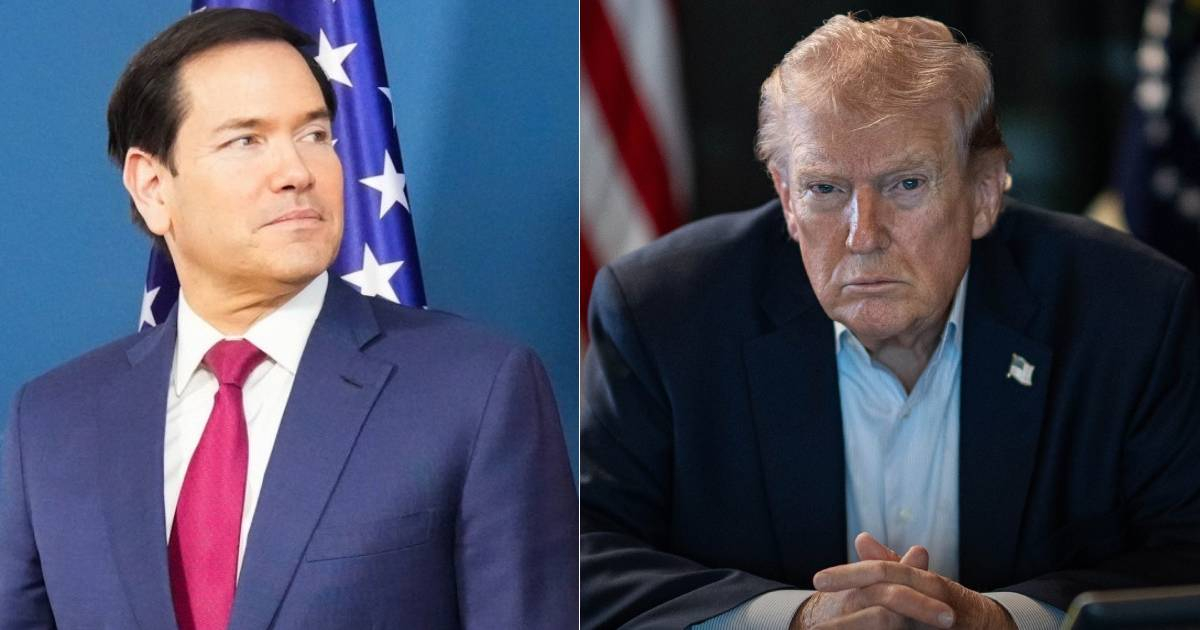
President Donald Trump and Secretary of State Marco Rubio announced on Thursday their continued efforts to escalate a stringent pressure campaign against the Cuban regime. This strategy includes new sanctions targeting the military conglomerate GAESA, its executive president Ania Guillermina Lastres Morera, and the mining company Moa Nickel S.A.
The sanctions effectively freeze all assets and interests of the sanctioned entities within U.S. jurisdiction. They also prohibit any financial or commercial transactions with these entities and extend the risk of secondary sanctions to foreign financial institutions maintaining ties with the blocked entities.
Rubio stated in the official release, "The Trump Administration is taking decisive action to protect U.S. national security and to deprive the Cuban communist regime and its military of access to illicit assets."
The State Department's statement describes GAESA as the core of Cuba's kleptocratic communist system, controlling roughly 40% or more of the island’s economy. Public estimates cited indicate that GAESA’s revenues likely triple the Cuban state budget, potentially managing up to $20 billion in illicit foreign assets.
The Personalities Behind the Sanctions
Lastres Morera, who plays a pivotal role in GAESA, is sanctioned for her responsibility in managing the conglomerate's illicit international assets. A brigadier general in the Revolutionary Armed Forces and a member of the Communist Party Central Committee, she assumed the executive presidency of GAESA after the death of Luis Alberto Rodríguez López-Calleja in July 2022.
Meanwhile, Moa Nickel S.A., a joint venture between Canada’s Sherritt International and Cuba’s state-owned Compañía General del Níquel, faces sanctions for its involvement in the metals and mining sector. The State Department accuses it of profiting from assets "originally expropriated by the Cuban regime from American citizens and corporations."
Economic and Energy Implications
The repercussions were swift: Sherritt’s withdrawal leaves the regime without its primary mining partner, as the Canadian company announced the complete suspension of its operations in Cuba and the repatriation of its expatriate staff. Consequently, Sherritt's stock plummeted by up to 30% on that very day.
This withdrawal is anticipated to affect Cuba’s electricity generation capacity by 10% to 15%, worsening an energy crisis already causing blackouts of up to 25 hours daily.
The Office of Foreign Assets Control (OFAC) has granted a grace period until June 5, 2026, allowing foreign individuals and entities to wind down transactions with GAESA without risking secondary sanctions.
Escalating Tensions and Future Actions
These Thursday sanctions are part of a maximum pressure strategy that the Trump administration has intensified since January 2026. Since then, Trump signed an Executive Order supporting these measures, resulting in over 240 sanctions against the regime and the interception of at least seven tankers, significantly reducing the island's fuel imports by 80% to 90%.
The military dimension of this pressure is also scaling up: the State Department has begun deploying personnel to the Southern Command in Miami in anticipation of potential hostilities. Last Tuesday, Rubio led the 2026 Mission Chiefs Conference at the SOUTHCOM headquarters in Doral, where he was photographed with General Francis L. Donovan next to a map of Cuba under the slogan "Peace Through Strength!"
Rubio warned of "new sanctions expected in the coming days and weeks," indicating that the maximum pressure campaign against Havana is far from over.
Understanding the U.S. Sanctions on Cuba
What is the purpose of the U.S. sanctions against GAESA?
The sanctions aim to cut off access to illicit assets for the Cuban regime and its military, disrupting their economic power and influence.
How might these sanctions affect Cuba's economy?
The sanctions could severely impact Cuba's economy by reducing foreign investment, hindering trade, and exacerbating existing energy shortages.