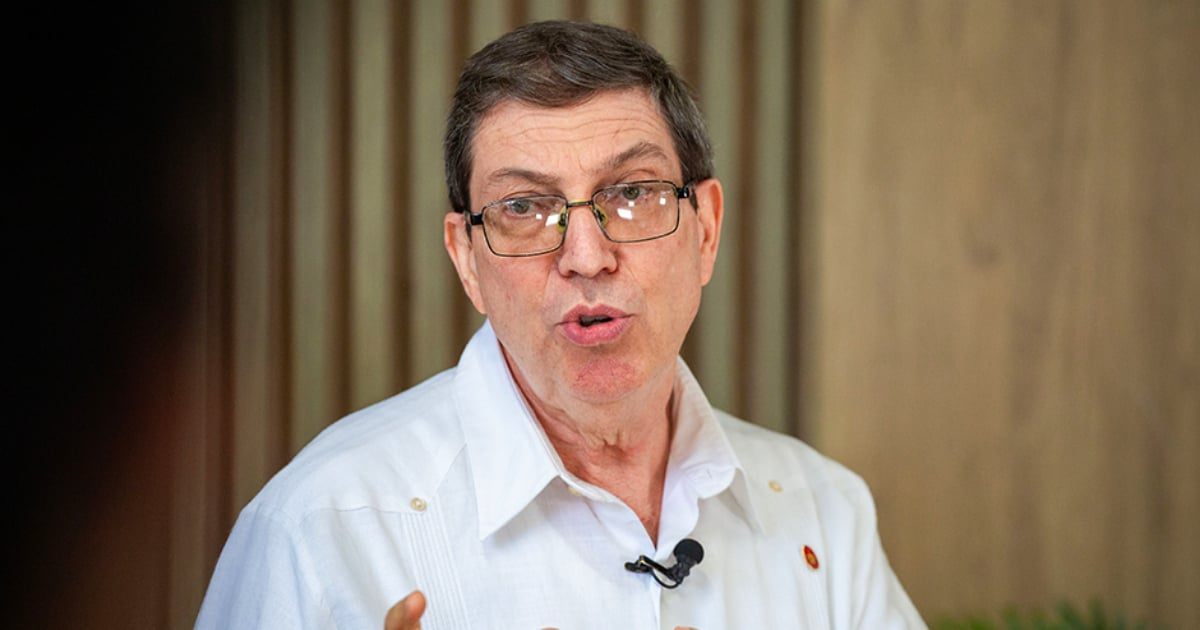
Cuban Foreign Minister Bruno Rodríguez Parrilla condemned the latest sanctions imposed by Washington on Thursday, describing them as a "collective punishment" with "genocidal intent against the Cuban nation." These sanctions target GAESA, the military conglomerate that controls a significant portion of the island's formal economy, estimated between 40% and 70%.
U.S. Secretary of State Marco Rubio announced the specific designation of GAESA, its director Ania Guillermina Lastres Morera, and the state-owned mining company Moa Nickel S.A. (MNSA), labeling them as "the heart of Cuba's kleptocratic communist system."
Rubio further warned of "additional designations in the coming days and weeks."
Escalating Rhetoric and Immediate Consequences
In a post on social media platform X, Rodríguez Parrilla argued that these measures "leave no doubt about the falsehood of their pretexts to attack our country." He accused Washington of acting with "the confidence that it can impose its will on the rest of the world's governments, whose citizens and businesses are threatened by the illegitimate coercion of the U.S. government."
The sanctions fall under an executive order signed by former President Trump on May 1, 2026, which expanded the national emergency declared on January 29 of that year, categorizing the Cuban government as an "unusual and extraordinary threat."
The immediate impact was felt in the mining sector. Canadian company Sherritt International, a partner of Moa Nickel since 1994, announced a complete halt of its operations in Cuba and the withdrawal of all expatriate staff, citing a lack of fuel.
Sherritt's Exit and Economic Repercussions
In its statement, Sherritt highlighted that "the mere issuance of the executive order materially alters the corporation's ability to operate in the ordinary course." Following the announcement, Sherritt's shares plummeted by up to 30%.
Rubio accused Moa Nickel of exploiting natural resources to benefit the regime "at the expense of the people" and profiting from assets expropriated from U.S. citizens and companies.
The departure of Sherritt strips Cuba of its primary foreign mining partner and impacts between 10% and 15% of the island's electricity generation capacity.
GAESA was established in the 1990s by Raúl Castro to fund the Revolutionary Armed Forces following the Soviet collapse. Today, it controls tourism, retail, remittances, ports, and telecommunications, with assets estimated at over $18 billion and shell companies registered in Panama, Cyprus, and Liberia to evade sanctions.
International Reactions and Future Implications
Since January 2026, the Trump administration has imposed more than 240 sanctions against the Cuban regime and intercepted at least seven oil tankers, reducing energy imports by 80% to 90%, leading to power outages lasting up to 25 hours daily in over 55% of Cuban territory.
Meanwhile, China reiterated its "firm support for Cuba" and demanded that Washington "cease sanctions and coercive pressure," consistent with Beijing's ongoing backing of the regime since the escalation began.
Rodríguez Parrilla's rhetoric has intensified over the months: from describing the initial measures in January as a "brutal act of aggression" to now denouncing a "genocidal intent," while Rubio warns that designations against the regime's economic apparatus are far from over.
Understanding the Impact of U.S. Sanctions on Cuba
What is GAESA and why is it significant?
GAESA is a military-run conglomerate in Cuba, controlling substantial portions of the economy, including tourism and telecommunications. It is significant because it represents a major financial pillar for the Cuban government.
How have the U.S. sanctions affected Sherritt International?
The sanctions led Sherritt International to suspend its operations in Cuba and repatriate its expatriate staff due to fuel shortages and altered business conditions, causing a significant drop in their stock value.
What are the potential long-term effects of these sanctions on Cuba?
The sanctions could lead to deeper economic challenges, exacerbating energy shortages and further isolating Cuba from international business partnerships, impacting the daily lives of Cuban citizens.