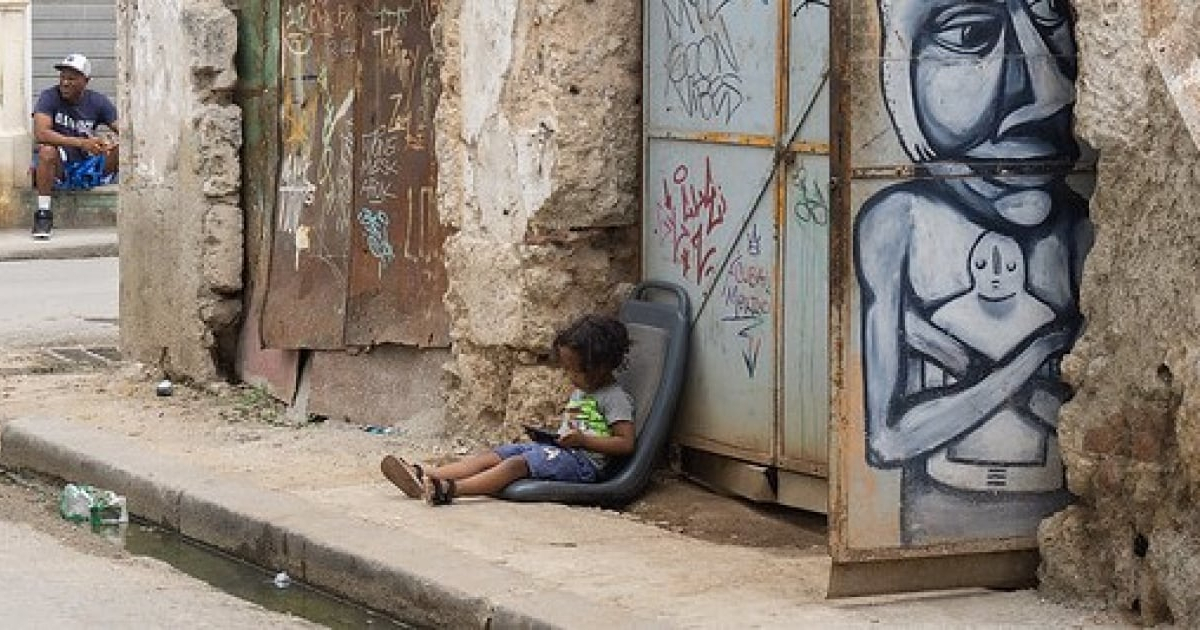
A mother living in Santiago de Cuba penned a heartfelt letter to the ruling leader Miguel Díaz-Canel this Thursday, voicing her frustration over explaining to her seven-year-old child and an elderly relative over 80 why there is no breakfast, lunch, or dinner, while the regime continues to urge the people to "endure."
The letter found its way to the public through social communicator Yosmany Mayeta Labrada, who shared it anonymously on his Facebook page after receiving it.
Fearing backlash, the mother requested to remain unnamed. "You know here everything turns problematic, and the repercussions for speaking up can be dire," she confided to Mayeta in a private message accompanying her letter.
In the letter, she identifies herself as a mother, grandmother, and a diabetic struggling with stress-induced skin issues.
The Reality of "Creative Resistance"
Addressed formally to Díaz-Canel, the letter uses pointed questions to challenge the official narrative of "creative resistance," a term the leader utilized on February 5, 2026, suggesting that Cubans would prevail through tough times with creativity, effort, and talent.
"What exactly are we expected to resist? Resist what? What does this resistance entail? Is it enduring power outages, endless needs, the absence of medicine, looking like zombies, the street violence spawned by so many shortages, the suicides, and deaths from lacking basic necessities?" she asks.
Everyday Struggles in Santiago de Cuba
The letter paints a grim picture of daily life: "Are we to keep cooking with charcoal or wood like primitive people, if I can even find something to cook? Do you call that resistance or survival?"
Santiago de Cuba is severely affected by the energy crisis. Local Electric Company officials acknowledged 24-hour blackouts since March, and by late April, the nationwide power generation deficit topped 1,502 MW.
The food crisis is equally dire. A recent report across five provinces on the brink illustrated that 78% of those surveyed view the current situation as worse than the Special Period of the 1990s.
The Cuban Observatory for Human Rights indicates that 89% of the population lives in extreme poverty, with seven out of ten Cubans skipping at least one meal a day.
Community Efforts and Historical Echoes
Santiago sees reports of fainting from hunger, people scavenging for food, and a rise in the number of elderly and sick living on the streets. Young Cuban women have taken to distributing food to those who have none.
This is not the first instance of a Cuban mother making a public stand. In March 2025, a mother was violently detained in Río Cauto during a solitary protest against food shortages and power cuts.
The letter concludes with a historically resonant phrase and a weary resignation: "From down here, I cannot see clearly what I am supposed to resist. Perhaps from your position at the top of the food chain, you find meaning in such resistance. With all due respect, those of us about to die salute you, without resistance."
The Cuban Crisis: Questions and Answers
What are the main issues addressed in the letter to Díaz-Canel?
The letter addresses severe hunger and lack of basic necessities, questioning the government's call for "creative resistance" amidst widespread shortages and power outages.
How is Santiago de Cuba affected by the current crises?
Santiago is notably impacted by prolonged blackouts and a dire food crisis, with reports of starvation and a rise in homelessness among the elderly and sick.
What actions have citizens taken in response to the food shortages?
In response, young women in Santiago have started distributing food to those in need, highlighting the community's efforts to cope with the crisis.