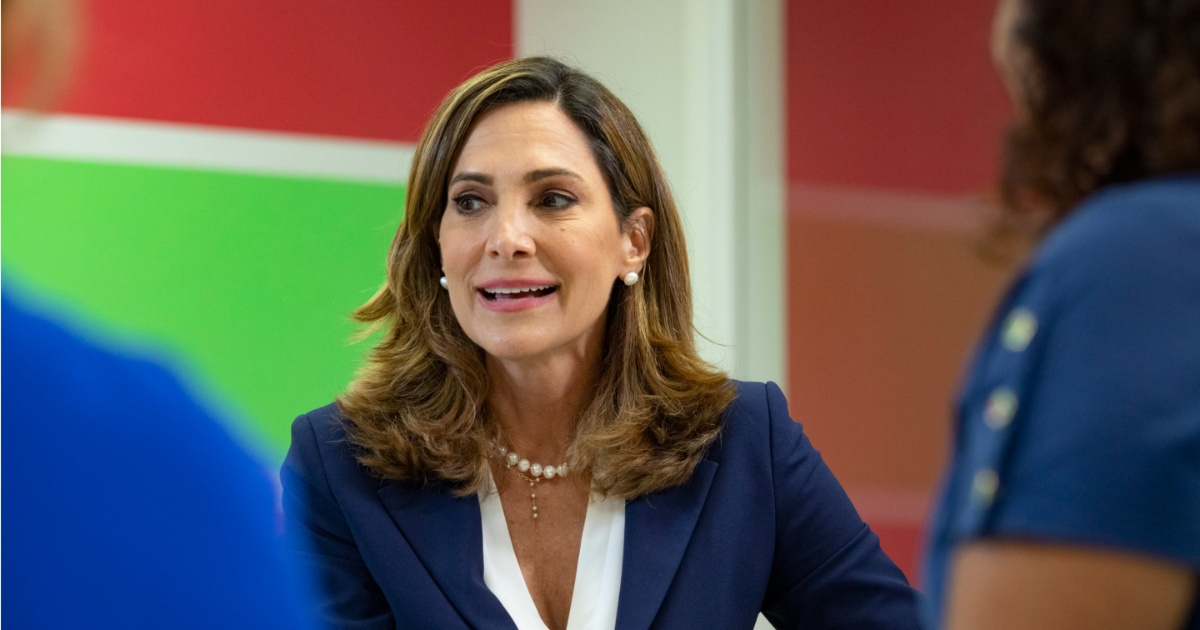
Florida's Cuban-American Representative, Maria Elvira Salazar, emphasized on Thursday the necessity for the United States to maintain its influence in Latin America amidst China's growing presence. Her comments came in support of a meeting between the U.S. Export-Import Bank (EXIM) president and the president of Honduras.
"It's crucial that America doesn't yield Latin America to China. That's why it's significant to see the president of EXIM and the president of Honduras strengthening economic ties in our region and securing strategic supply chains in Central America," Salazar expressed on her social media account.
The Republican congresswoman was referring to the meeting between John Jovanovic, appointed by President Donald Trump as the EXIM Bank president in September 2025, and Nasry "Tito" Asfura, who took office as Honduras' president in January 2026 following his election victory in November 2025.
Geopolitical Tensions in Honduras
Honduras holds a significant position in the geopolitical struggle between Washington and Beijing. Asfura's predecessor, Xiomara Castro, severed ties with Taiwan and established diplomatic relations with China in March 2023, culminating in the signing of 22 cooperation agreements with Beijing during a state visit that year.
Asfura's rise to power represents a strategic shift favorable to Washington. In January 2026, U.S. Secretary of State Marco Rubio welcomed the then-president-elect of Honduras in Washington to discuss bilateral cooperation, regional security, investment, and migration.
The American Hemisphere's Strategic Importance
In March 2026, Asfura participated in the "Shield of the Americas" Summit in Miami, organized by Trump along with leaders like Nayib Bukele, Javier Milei, Daniel Noboa, and José Raúl Mulino. During the summit, Trump disclosed that four Latin American leaders, including Asfura, had urged him to "take care of Cuba."
Salazar, a prominent voice in Congress on hemispheric policy, has consistently combined her opposition to the regimes in Cuba, Venezuela, and Nicaragua with warnings about China's expansion in the region.
Security Concerns and Economic Moves
In April 2026, Salazar opposed calls to lift sanctions on Cuba during a House hearing, asserting that "the Cuban people are suffering due to a brutal dictatorship, not because they need more concessions to the regime."
Salazar's concerns are underscored by national security implications. U.S. intelligence reports have identified Chinese signal intelligence facilities in Cuba—located in Bejucal, Wajay, Calabazar, and El Salao—just 100 miles from Florida, posing a direct threat amid the debate on China's presence in the hemisphere.
China has also adjusted its strategy in Latin America. After peaking at $29 billion in loans in 2015, it has scaled back massive financing in favor of selective investments in lithium mining, technology, and telecommunications. In 2025, its foreign direct investment accounted for a mere 4.24% of the region's total.
"More trade with our allies. More stability in the hemisphere. More security for the United States. This is how American leadership is upheld in the Americas," Salazar concluded in her post.
FAQs on U.S. Influence in Latin America
Why is the U.S. concerned about China's presence in Latin America?
The U.S. is concerned because China's growing influence in Latin America could undermine American geopolitical interests and security, especially with strategic investments and intelligence facilities close to U.S. borders.
What actions is the U.S. taking to counter China's influence in the region?
The U.S. is engaging in diplomatic efforts, strengthening economic ties, and securing strategic supply chains with Latin American countries to counterbalance China's influence.