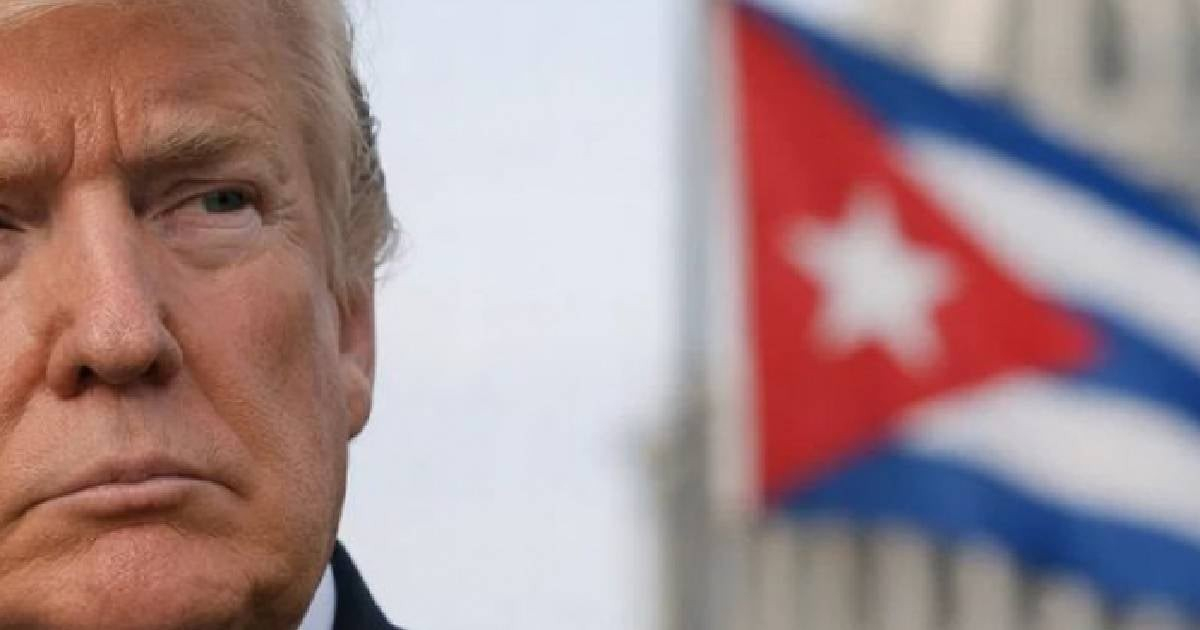
A recent YouGov survey, conducted by the international market research and data analytics firm, indicates that a substantial 64% of Americans are against the idea of their nation engaging in military conflict with Cuba. In contrast, a mere 15% support such action, while 21% remain undecided.
This poll, commissioned by the Center for Economic and Policy Research (CEPR), gains significance amid escalating tensions between Washington and Havana, following President Donald Trump's repeated threats to deploy the aircraft carrier Abraham Lincoln near Cuban waters.
Mark Weisbrot, a senior economist and co-director of CEPR, bluntly stated that the survey's findings should compel President Trump to "think twice before embarking on another elective war."
"The notion that Cuba poses a security threat to the United States is laughable to nearly all Cuba experts. Trump's war with Iran has already cost him and his party considerable support," Weisbrot remarked.
Among those surveyed who hold an opinion, the opposition is overwhelming: 81% are against any military action against the island nation.
Independent Voters and the War Sentiment
Independent voters also oppose an aggressive stance towards Cuba, with 68% against and only 25% in favor. The CEPR emphasizes that this demographic, evenly split between Democratic and Republican sympathizers, contains a significant number of undecided voters ahead of the November elections.
The survey further reveals that 62% of Americans believe the war in Iran has adversely affected both citizens and the world, while 24% disagree.
Weisbrot was unequivocal: "Trump campaigned on promises of avoiding wars and lowering costs. Instead, he initiated a conflict that has escalated prices and will likely continue to do so for some time."
Trump's Political Maneuvering
Weisbrot recalled Trump's past declarations about engaging in a conflict with Cuba after withdrawing from Iran, and he warned of the risk of the Republican leader using a new war as a political diversion.
"It's unusual for a leader to use another war as a distraction from an unpopular war that has harmed voters. Yet this seems a very real possibility here. Distraction has been an unprecedented tool in Trump's political strategy," he noted.
On May 1st, Trump signed a new executive order expanding sanctions against the Cuban regime in the energy, defense, mining, and financial services sectors, including secondary sanctions on foreign banks dealing with sanctioned Cuban entities.
That same day, at a private dinner in West Palm Beach, Trump stated that the U.S. would "take Cuba almost immediately" following the conclusion of military operations in Iran.
Since January 2026, the Trump administration has imposed over 240 sanctions on Cuba and intercepted at least seven oil tankers bound for the island.
The regime of Díaz-Canel has responded with rhetoric of defiance. Last Saturday, Díaz-Canel cautioned about "the imminence of a U.S. military aggression" and invoked the "War of the Entire People" doctrine, developed by Fidel Castro in the 1980s.
Understanding American Opinions on Cuba
What percentage of Americans oppose military action against Cuba?
According to the YouGov survey, 64% of Americans are against the U.S. engaging in military conflict with Cuba.
How do independent voters feel about a potential conflict with Cuba?
The survey indicates that 68% of independent voters are opposed to military action against Cuba, while 25% support it.
What actions has the Trump administration taken against Cuba?
The Trump administration has imposed over 240 sanctions on Cuba and intercepted several oil tankers destined for the island since January 2026.