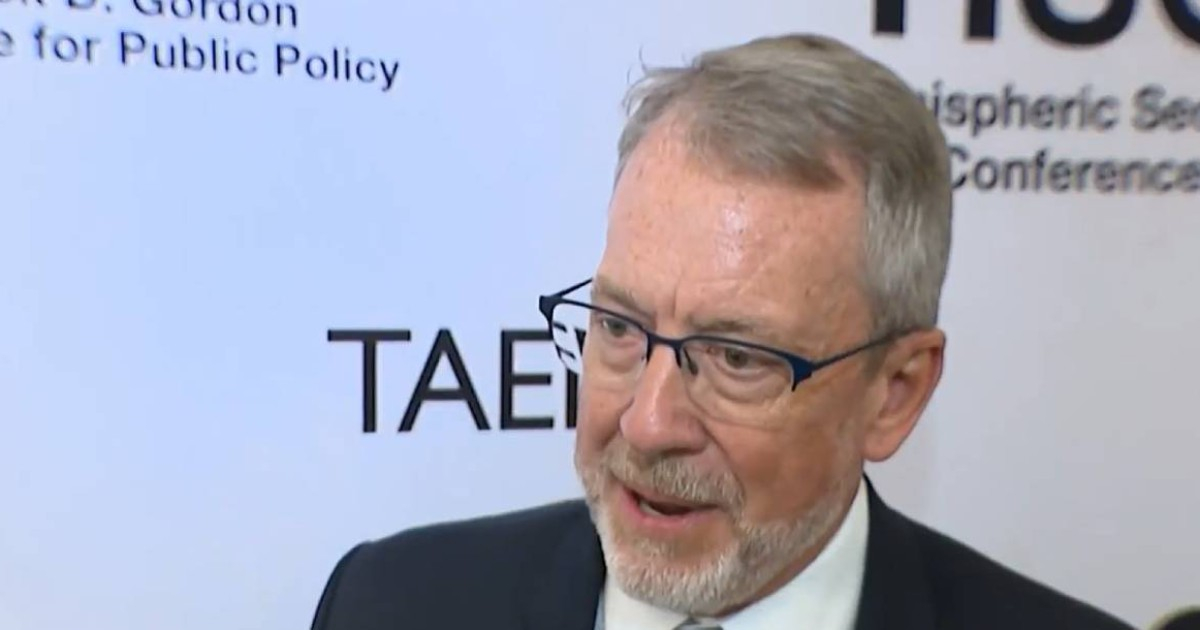
James Story, the former U.S. ambassador to Venezuela, highlighted on Wednesday the immense challenges faced by Cuba's democratic opposition and openly questioned what strategies could be effective against a regime that, unlike Venezuela's, offers no political openings for opposition forces.
Story shared his thoughts during a forum on Latin American political issues held at Florida International University (FIU) in Miami. He was joined by Cuban activist Rosa María Payá and analyst Frank Mora on the panel.
The discussion, as reported by Telemundo 51, touched on both Venezuelan and Cuban contexts, with references to Cuba providing some of the forum's most thought-provoking insights.
"At least in Venezuela, there was some space for the democratic opposition... so I ask myself, what can be done in Cuba?" Story expressed.
The former diplomat, who played a key role in shaping U.S. policy towards Venezuela during the Trump and Biden administrations, emphasized the stark contrast between the two nations.
While Venezuela allowed limited political participation and visible opposition leadership, Cuba's repressive apparatus maintains a much tighter grip on dissent. Dissenters are jailed, exiled, and allegedly even eliminated.
This observation aligns with a common analysis: there's no visible figure in Cuba like Delcy Rodríguez, who could facilitate a peaceful political transition.
Debating the Path Forward for Cuba
The forum also showcased differing opinions on influencing Cuba's regime towards political change.
Frank Mora argued that economic sanctions alone have failed to bring about the desired political shift on the island, suggesting that real pressure comes from internal dissatisfaction and popular protests, such as those on July 11, 2021.
On the other hand, Rosa María Payá insisted on economically targeting the regime's power structure.
"The interests of the criminals in power in Cuba must be undermined to compel them to yield to the Cuban people's desire for change," she stated.
Payá also criticized the regime's recent distribution of a family guide to counter a potential military threat, branding it as part of a strategy to instill fear among citizens.
"The Cuban regime is, as always, ramping up its rhetoric to create panic, while the only aggressors remain the criminals in power," she concluded.
Understanding Cuba's Political Climate
What challenges does Cuba's opposition face?
Cuba's democratic opposition faces a regime that provides no political space for dissent, maintaining a tight grip through repression, imprisonment, and exile.
How does Cuba's political situation differ from Venezuela's?
Unlike Venezuela, which allowed some degree of opposition participation, Cuba's regime tightly controls dissent, eliminating visible opposition leadership.
What strategies are proposed to pressure Cuba's regime?
Proposed strategies include economic sanctions and leveraging internal dissatisfaction and protests as means to pressure the regime.