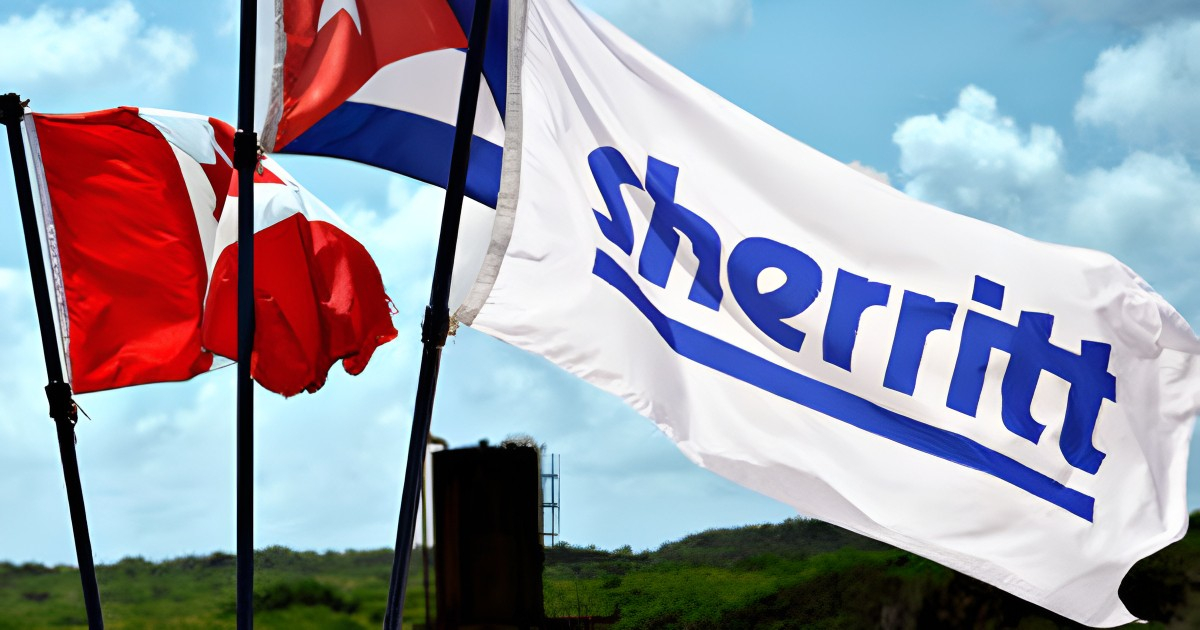
Sherritt International Corporation, a Canadian mining company with over thirty years of presence in Cuba, announced on Thursday it is halting its direct involvement in all joint ventures on the island. The company has begun the immediate repatriation of its expatriate employees, a move directly in response to a new Executive Order signed by President Donald Trump on May 1st.
This decision removes from the Cuban regime its most significant foreign mining partner and between 10% to 15% of its independent power generation capacity. According to EFE, this development adds to an already unprecedented spiral of economic decline.
Bloomberg reported that three board members, including Chairman Brian Imrie, Richard Moat, and Brett Richards, have resigned with immediate effect.
The Executive Order, signed by Trump on May 1st, invokes the International Emergency Economic Powers Act and introduces secondary sanctions against foreign financial institutions dealing with blocked Cuban entities. This was a decisive factor for Sherritt, whose business model relies heavily on its access to international banking.
Prior to this announcement, Sherritt had issued a corporate alert stating it was "consulting with its advisors and stakeholders to assess the potential implications of the Executive Order and is considering the steps to take regarding the Corporation's interests in Cuba."
The Historical Context of Sherritt in Cuba
The withdrawal was not entirely unexpected: back in February, Sherritt had already halted nickel and cobalt production at its Moa mine in Holguín due to fuel shortages reported by Cuban authorities.
Sherritt's journey in Cuba began in 1991 when it started acquiring nickel concentrate from the Moa mine for its Fort Saskatchewan refinery in Alberta. In 1994, it formalized a 50/50 joint venture with the Cuban state-owned General Nickel Company S.A. In 1998, Sherritt expanded its footprint by entering the telecommunications sector and establishing Energas S.A., which operates 506 megawatts of power capacity.
Economic and Human Rights Concerns
In 1996, Sherritt became the first target of the Helms-Burton Act: its executives received letters barring entry into the United States for operating on properties expropriated by Cuba, a prohibition that remains to this day.
Nickel production dropped from 34,876 tons in 2021 to 25,240 in 2025, and the Cuban state owes at least $344 million to the company. Sherritt's presence has also faced sustained criticism from human rights organizations: the joint ventures' labor model involves the miner paying the Cuban state in foreign currency, while workers receive minimal wages in pesos, equivalent to just a few dollars monthly, without independent unions.
Diplomatic and Economic Ramifications
In March, in this context, the Cuban-Canadian Coalition called on Mark Carney's government to close the Cuban embassy in Ottawa and reduce diplomatic presence in Havana amid increasing criticism over Canada's financial support to the regime, which has surpassed 60 million Canadian dollars in recent years.
Since January 2026, the Trump administration has imposed over 240 sanctions against the Cuban regime, slashing the island's energy imports by 80-90% and exacerbating blackouts affecting more than 55% of the national territory. Meanwhile, the projected economic contraction for Cuba in 2026 stands at 7.2%, according to The Economist Intelligence Unit.
The Fort Saskatchewan refinery continues to operate with raw material inventory estimated to last until mid-June, a point when Sherritt must decide the definitive future of its Cuban operations.
Impact of Sherritt's Withdrawal on Cuba
What prompted Sherritt to withdraw from Cuba?
Sherritt decided to withdraw from Cuba in response to a new Executive Order by President Donald Trump that imposes secondary sanctions on foreign financial institutions dealing with blocked Cuban entities, affecting Sherritt's access to international banking.
How will Sherritt's exit impact Cuba's economy?
Sherritt's exit will strip the Cuban regime of its largest foreign mining partner and reduce its independent power generation capacity by 10% to 15%, exacerbating the country's economic decline.
What has been the historical role of Sherritt in Cuba?
Sherritt played a significant role in Cuba's mining sector since 1991, entering into a joint venture with the Cuban state-owned General Nickel Company and expanding into telecommunications and energy sectors.