The Chinese Foreign Ministry's spokesperson, Lin Jian, reaffirmed Beijing's unwavering support for Havana and called on Washington to immediately terminate the embargo, sanctions, and any coercive actions against Cuba. This statement was shared by the Chinese ambassador to the island, Hua Xin, via social media platform X.
"The United States is escalating its illegal unilateral sanctions against Cuba, severely infringing on the Cuban people's rights to survival and development, and blatantly violating fundamental principles of international relations," Lin Jian declared.
He further emphasized, "China steadfastly supports Cuba in defending its sovereignty and national security, firmly opposes interference in Cuba's internal affairs, and urges the U.S. to end the blockade and sanctions against Cuba, as well as any forms of coercion and pressure." This pronouncement comes just days after former President Donald Trump signed an executive order on May 1, expanding sanctions against the Cuban regime. These measures target assets linked to repressive figures and apply secondary sanctions to foreign financial institutions conducting business with them.
Since January 2025, the Trump administration has imposed more than 240 sanctions on Cuba, reducing the island's energy imports by 80% to 90%, leading to power outages lasting up to 25 hours daily across more than 55% of the nation. The Economist Intelligence Unit forecasts a 7.2% economic contraction for Cuba in 2026.
China's Strategic Support for Cuba
China's backing also responds to accusations made by Secretary of State Marco Rubio on April 28, alleging that Cuba hosts at least 12 Chinese-operated signal intelligence facilities at sites including Bejucal, El Wajay, Calabazar, and El Salao.
"We will not allow any foreign military, intelligence, or security apparatus to operate with impunity just 90 miles from the U.S. coast," Rubio warned.
China firmly denied these claims. On April 29, Lin Jian described Sino-Cuban cooperation as "entirely legitimate, transparent, and in accordance with international law," accusing Washington of fabricating excuses to justify the embargo.
Beijing's Financial and Material Assistance
Beijing's support for Havana extends beyond rhetoric. In January 2026, President Xi Jinping authorized an emergency aid package of $80 million and 60,000 tons of rice to address the island's electricity and food crises. In March, a shipment of 15,600 tons of Chinese rice was unloaded at Havana's port, further demonstrating Beijing's material support for the regime.
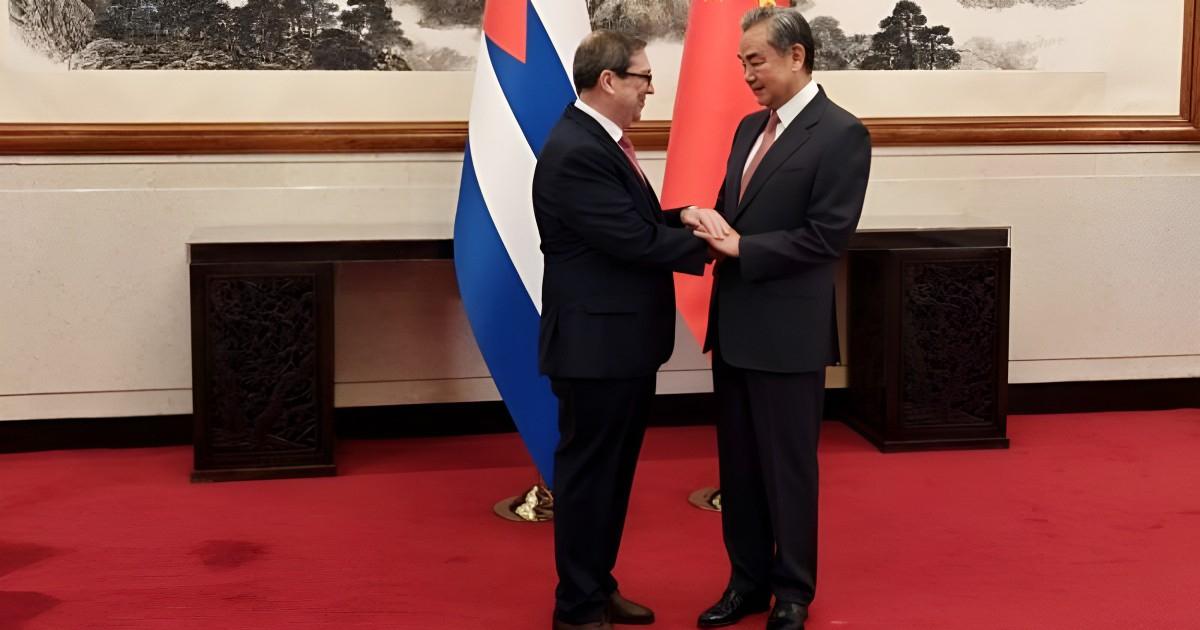
During the same month, Foreign Ministers Wang Yi and Bruno Rodríguez Parrilla agreed to formally strengthen bilateral relations, enhancing a partnership that Beijing has intensified in response to the escalating U.S. pressure on Cuba.
Spokesperson Lin Jian has issued supportive statements for Cuba on at least five occasions since February, with China persistently urging the U.S. to lift its sanctions. Beijing estimates that the accumulated damage from the U.S. embargo on Cuba exceeds $170.677 billion.
Impact and Implications of U.S. Sanctions on Cuba
How have U.S. sanctions impacted Cuba's economy?
U.S. sanctions have significantly reduced Cuba's energy imports by 80% to 90%, leading to widespread power outages. The Economist Intelligence Unit predicts a 7.2% economic contraction for Cuba in 2026.
What is China's stance on U.S. sanctions against Cuba?
China firmly opposes U.S. sanctions against Cuba, advocating for the lifting of the embargo and denouncing any form of coercion or pressure. China supports Cuba's sovereignty and security.
What aid has China provided to Cuba?
In 2026, China provided Cuba with an emergency aid package worth $80 million and 60,000 tons of rice to help alleviate the island's electricity and food shortages.