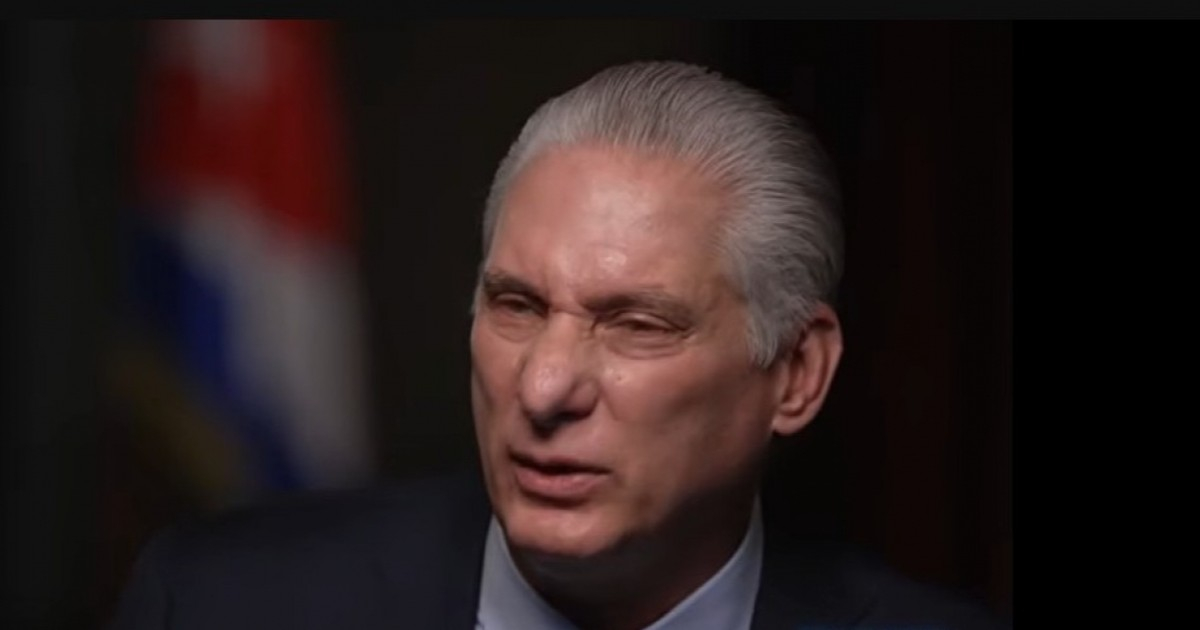
On social media, Miguel Díaz-Canel expressed surprise at a statement from "a senior U.S. government official" who dismissed claims of an alleged "energy blockade" against Cuba and held the regime accountable for the island's crisis. His comments were in response to recent remarks by Secretary of State Marco Rubio, who labeled the Cuban government a "failed state" led by "incompetent communists" and denied the existence of a U.S. oil embargo on Cuba.
Instead of rallying support, Díaz-Canel's post sparked a flood of criticism from Cubans who blamed him directly for power outages, inflation, shortages, and the lack of freedoms in the country.
Public Outrage and Questions of Legitimacy
One of the most repeated messages questioned the Cuban leader's legitimacy: "It's surprising they call you president when no one elected you, with no elections since '59."
Many users rejected attempts to paint Marco Rubio's criticisms as an attack on the Cuban people, clarifying that the criticisms targeted the government. "Sorry, they're not blaming the Cubans. The incompetence lies with the government and its sole party," a user remarked. Another echoed this sentiment: "It's not the incompetence of the Cuban people, but of our leaders. The people are not to blame for the disaster you've created."
Energy Crisis and Economic Collapse
The energy crisis was a dominant theme in many responses. Numerous Cubans shared accounts of prolonged blackouts in provinces like Granma, including Manzanillo, amid power cuts lasting up to 20 and 25 hours daily in various regions. "All I know is I've been without power for 28 hours, and every second without electricity makes me wish you'd all disappear," one user expressed. Another wrote: "In Granma, we've been without power for over 30 consecutive hours, and when it comes back, it barely lasts three."
Complaints about the deteriorating standard of living and economic collapse were also prevalent. "It's surprising that today a loaf of bread costs 40 Cuban pesos, a pizza 300, and a package of imported chicken 4,800 Cuban pesos while wages remain pitiful," an internet user observed. Others questioned why basic items like gas canisters are sold in dollars within Cuba: "Is selling gas canisters in dollars also the embargo's fault?" asked one of the most shared comments.
Calls for Political Freedoms and Reform
The lack of political freedoms was another central issue. "Free elections and freedom of expression. The people have the right to choose their destiny," demanded one user. Another added: "What's surprising is you're still clinging to power instead of letting the people be free."
Ironically, several comments mocked the government's frequent references to the U.S. embargo and the so-called "energy blockade." "We're supposedly blocked, yet ships from Russia and Mexico have arrived. Why not buy oil instead of begging for it?" a Cuban questioned. Others recalled the Venezuelan oil sent to the island over the years and wondered what happened to those resources amidst a significant drop in fuel imports to Cuba.
Official Narrative and Public Discontent
Frustration was also directed at the official narrative regarding the system's supposed resilience. "What a weak text. I'm always impressed by how easily some speeches turn 65 years of disaster into a one-liner explanation," a user wrote. Another comment stated: "You're exhausting. It's the same whining every day."
Some messages mixed dark humor with references to Nicolás Maduro's capture in Venezuela. "Say the magic words, the same ones Maduro said: 'Come for me,'" several comments repeated. Others included phrases like "Tic-tac, tic-tac" or "They're on their way," alluding to a possible end for the current Cuban government.
Direct criticisms of the contrast between the ruling elite's lifestyle and the common citizen's struggles were also frequent. "It's surprising you have a private plane, your power never goes out, and the people are starving," a user noted. Another added: "Cubans can't even go to Varadero, while you live surrounded by luxury."
Among hundreds of responses, there were also calls for deep economic reforms and genuine political openness. "If you want to save the country, allow more economic freedom, fewer restrictions, more production, and respect for civil rights," an internet user commented.
Amid a severe economic and energy crisis, marked by prolonged blackouts, inflation, shortages, and a growing deterioration of basic services, Díaz-Canel's post became a barometer of the social discontent sweeping the country. More than addressing Marco Rubio's statements, hundreds of Cubans used the comments to directly challenge the government's management, denounce the loss of purchasing power, demand free elections, and reject the official narrative that for decades has primarily blamed the U.S. embargo for the crisis. The prevailing tone of the responses reflected not just fatigue and frustration but also a growing disconnect between the official discourse and the everyday reality for much of the Cuban population.
Common Concerns About Cuba's Current Situation
What are the main criticisms against Díaz-Canel's government?
Critics primarily blame Díaz-Canel's government for persistent power outages, inflation, shortages, and the lack of political freedoms in Cuba.
How do Cubans perceive the U.S. embargo?
While the Cuban government often blames the U.S. embargo for the country's issues, many Cubans feel that the regime's incompetence and mismanagement are the real culprits.
What economic challenges are Cubans facing?
Cubans are grappling with high prices for basic goods, stagnant wages, and a collapsing economy, exacerbated by prolonged blackouts and shortages of essential items.