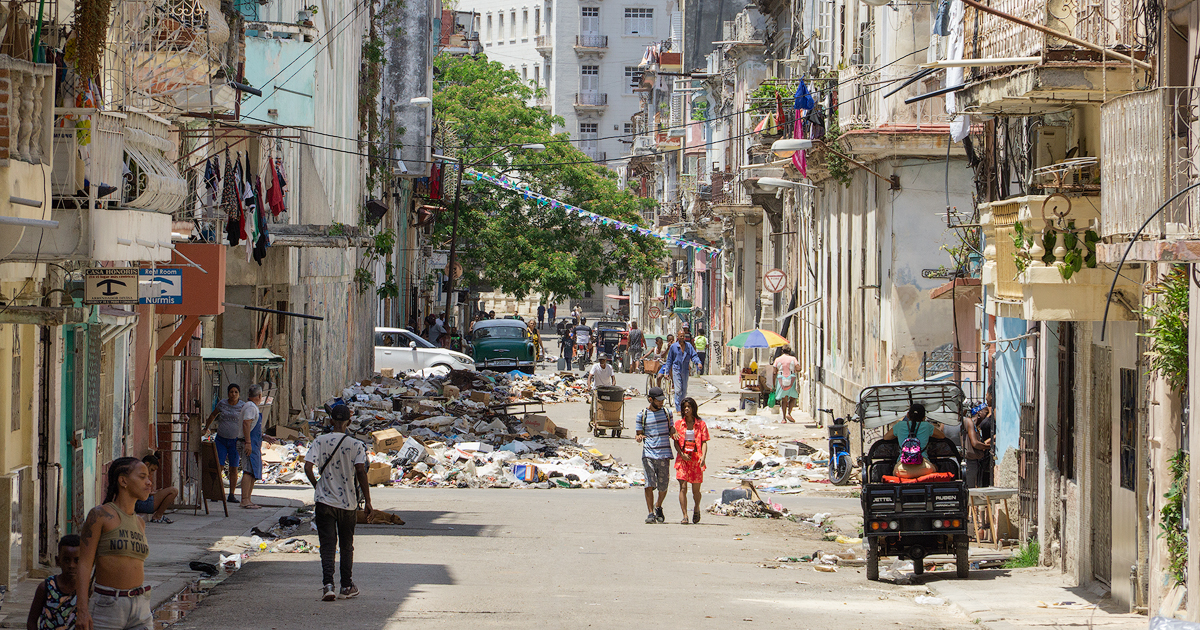
The ongoing power outages in Cuba highlight the fragile state of the island's electrical infrastructure. As the National Electrical System (SEN) continues to report daily on disruptions and incidents, a more severe issue is emerging on the horizon.
The already dire economic situation in Cuba is expected to worsen in the coming months. The scarcity of oil, crucial for meeting basic population needs, is being compounded by another pressing threat. Analysts predict that the prices of essential agricultural products could surge by 8.5% by 2026 due to escalating tensions with Iran. This forecast is based on the likely disruption of trade following the closure of the Strait of Hormuz, which has significantly impacted global exchanges of these goods.
Should the conflict escalate beyond its current state, potentially leading to a six-month closure of the Strait and stalled negotiations between the United States and Iran, the scenario could become especially challenging. Sectors heavily reliant on oil or its derivatives, such as the agricultural industry, would find themselves in a precarious position. For instance, higher fertilizer costs will directly inflate food prices, becoming starkly noticeable by the end of the year.
The Impact on Food and Energy Prices
Rising energy costs affect every stage of food production—from seed cultivation and harvesting to processing, storage, and distribution to consumer markets. Projections suggest that the average global price of essential agricultural products might rise by 8.5% this year and 3.8% in 2027. These figures significantly deviate from pre-conflict estimates, which anticipated increases of 0.7% and 2.5%, respectively.
Cuba's economy, heavily reliant on imports due to the structural inefficiencies of its domestic agriculture sector, will have to brace for higher food prices while seeking funding, which remains scarce. The regime must act swiftly, as relying on international aid becomes increasingly uncertain in a global context where many countries struggle to secure food supplies. Consequently, the elevated costs of food imports will exacerbate Cuba’s external account deficit, further straining any hopes of balancing external objectives by 2026.
Transport Costs and Economic Challenges
Alongside the food price dilemma, the transportation sector is another major contributor to rising costs. Since February, transportation costs have surged, far exceeding the average and hindering the stabilization of the economy, particularly price stabilization. For instance, maritime freight costs are expected to rise by 15% to 20%, posing a significant challenge for Cuba to manage the high expenses of sea transport.
The anticipated revision of Cuba's GDP growth rate for 2026—from the government's optimistic 1% to the Economic Commission for Latin America and the Caribbean's (ECLAC) forecast of -6.5%—is closely tied to this critical scenario. The economic cycle is tightening, and systemic issues are mounting, which the communist regime cannot address with its usual practices. A profound transformation is essential to overcome the severe crisis currently unfolding. As usual, the regime will likely attribute the crisis to the U.S. embargo.
Frequently Asked Questions about Cuba's Economic Crisis
What is causing the worsening economic crisis in Cuba?
The crisis is exacerbated by a lack of oil and the rising prices of essential agricultural products due to global tensions, particularly the conflict involving Iran.
How might the closure of the Strait of Hormuz affect Cuba's economy?
A prolonged closure could disrupt global trade, leading to significant increases in agricultural product prices, thereby impacting Cuba's import-dependent economy.
What are the projected price increases for agricultural products?
Analysts predict an 8.5% increase in 2026 and a 3.8% rise in 2027, much higher than previous estimates before the conflict.
Why are transportation costs rising in Cuba?
Transportation costs, particularly maritime freight, are rising due to increased energy prices and logistical challenges, impacting the overall economic stability.