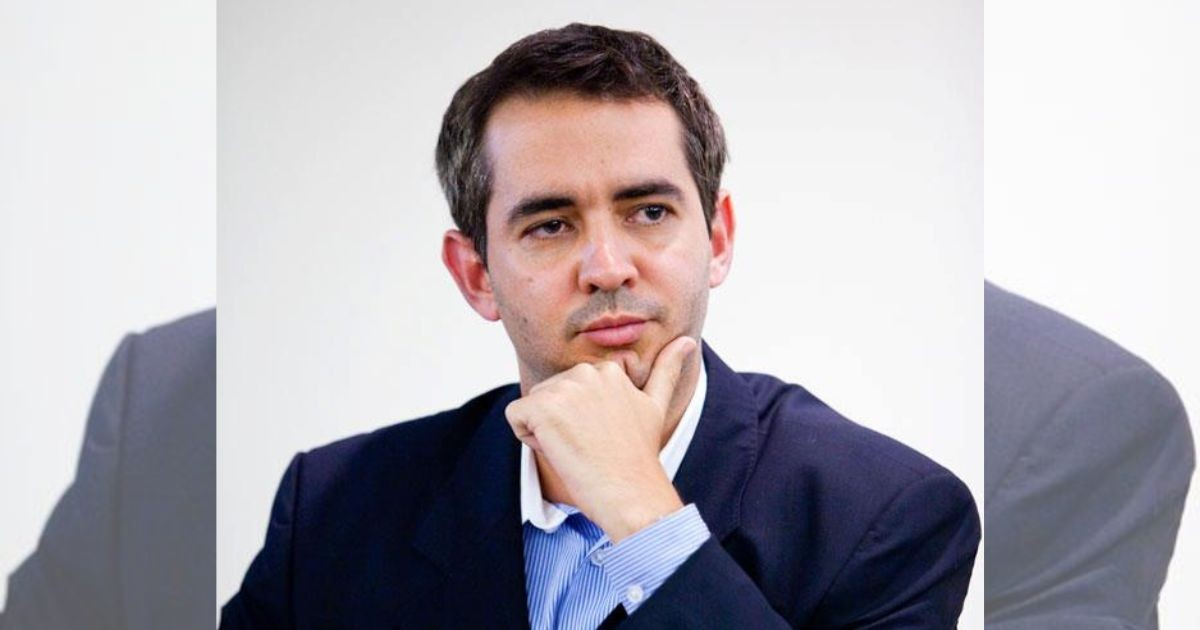
In a recent analysis published on Horizonte Cubano, hosted by Columbia Law School, Cuban economist Pavel Vidal proposed a roadmap for structural reforms in Cuba, emphasizing that the military conglomerate GAESA must not be excluded from any genuine economic transformation process.
The article, titled "What Should Be Prioritized in an Initial Phase of Economic Reforms in Cuba?" comes amidst preliminary diplomatic talks between Havana and Washington, set against the backdrop of the worst economic crisis Cuba has faced in decades, with a GDP decline of 23% to 26% since 2019.
Phased Approach to Economic Reforms
Vidal outlines his proposal in three stages: an initial phase for stabilization and emergency transformations, a second phase for broader productive reactivation, and a third for strategically defining a long-term development model.
The most contentious aspect of his analysis critiques the Grupo de Administración Empresarial S.A. (GAESA), a conglomerate of the Revolutionary Armed Forces controlling 40% to 70% of Cuba's formal economy, including finance, tourism, foreign trade, and international reserves.
"Designing a productive national transformation that excludes GAESA is neither logical nor effective," Vidal asserts.
Challenging GAESA's Dominance
Vidal argues that for reforms to gain macroeconomic credibility, productive coherence, and social legitimacy, it is imperative to dismantle GAESA, reduce its monopolistic control, and transfer its functions to more transparent and civilian structures.
This stance aligns with Cuban lawyer Alberto Luzárraga, who remarked on April 25th that GAESA "is part of the problem that needs solving," not part of the solution.
Key Structural Transformations
For the initial phase, Vidal identifies two primary structural transformations.
The first involves correcting relative prices and the exchange rate, which he describes as "probably the most critical shock of a market reform." While acknowledging similarities with the unsuccessful "Tarea Ordenamiento" of 2021, Vidal stresses that this time, the exchange rate correction should be paired with genuine economic liberalization, enabling the private sector, agriculture, and other productive actors to respond to new market incentives.
The second priority transformation involves reallocating resources and employment, which would mean closing, merging, or restructuring unprofitable state enterprises, with the impact cushioned by expanding the private sector and providing temporary subsidies for affected workers.
Avoiding Pitfalls of Reform
Vidal cautions that "the sequence of changes cannot be excessively slow, as has been the case, nor should it result in a disorganized and chaotic process of liberalization and privatization that exacerbates productive contraction and social costs, creating rent-seeking opportunities for elites."
He also notes that real inflation, estimated at around 70% year-on-year, has moderated "more due to impoverishment adjustments than the implementation of a coherent stabilization program," intensifying the urgency for reforms.
This analysis comes at a time when the Trump administration has imposed over 240 new sanctions on Cuba since January 2026, while conversations between both governments remain in a "very preliminary and initial" phase, confirmed by Cuban Vice Chancellor Josefina Vidal in April.
Vidal concludes that the speed and extent of these changes will depend on the power balance emerging from political negotiations and the type of agreements reached with the United States regarding GAESA's future.
FAQs on Cuba's Economic Reforms and GAESA
What is GAESA's role in the Cuban economy?
GAESA is a military conglomerate that controls a significant portion of Cuba's formal economy, including sectors like finance, tourism, foreign trade, and international reserves.
Why does Pavel Vidal propose reducing GAESA's control?
Vidal argues that reducing GAESA's monopolistic control and transferring its functions to more transparent civilian structures is crucial for gaining economic credibility, coherence, and social legitimacy for reforms.
What are the key transformations identified by Vidal for Cuba's economic reforms?
Vidal emphasizes correcting relative prices and the exchange rate, and reallocating resources and employment as critical transformations in the initial phase of economic reforms.