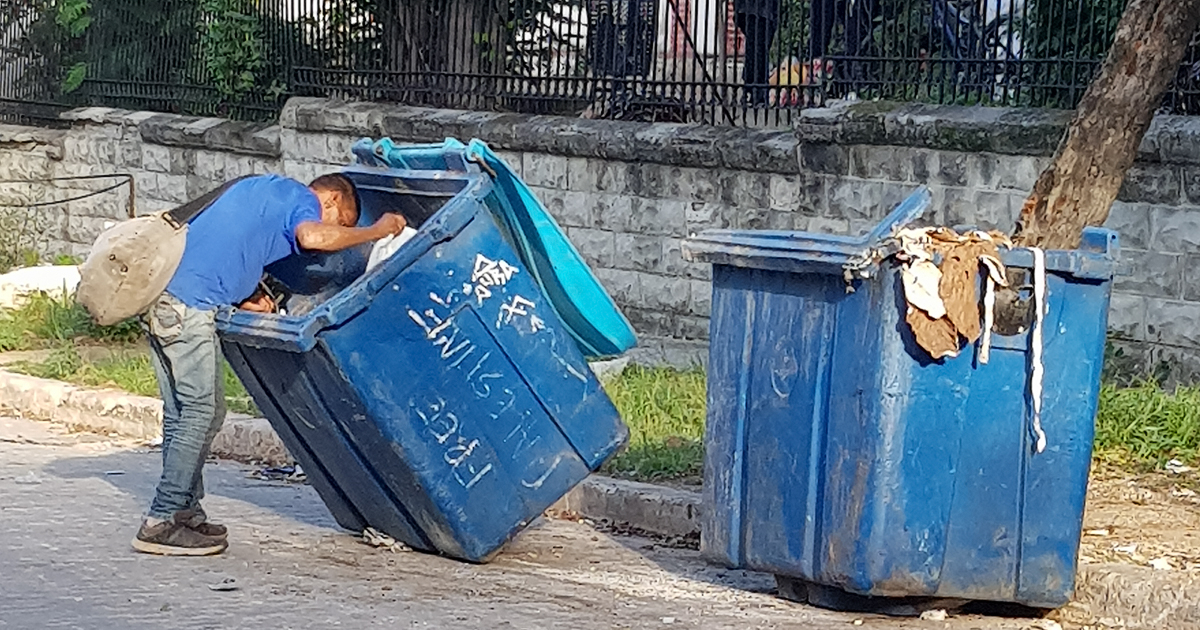
The Cuban Civil Defense has circulated a "Family Guide for Protection Against Military Aggression" in the province of Granma. Although intended for national distribution, the nine-page document provides families with instructions on surviving bombings using available resources such as bread, cereals, canned goods, and medications, which are nearly impossible to obtain in Cuba by 2026.
Compiled by the National Staff of Cuba's Civil Defense in April 2026, the guide carries the motto "Protect, Resist, Survive, and Triumph." Public knowledge of the document came accidentally after Yudelkis Ortiz, the first secretary of the Communist Party in Granma, shared and then deleted a Facebook post about the Provincial Defense Council meeting, suggesting unauthorized disclosure.
The guide advises assembling a family emergency backpack containing candles, matches, a lighter, a flashlight, a radio with alternative power, non-cook food for three days—including cans, cookies, fruits, bread, cereals, and candies—along with potable water, hygiene items "as feasible," and medications for chronic illnesses.
The recommended first aid kit reveals more: analgesics like dipyrone, paracetamol, and aspirin; antihistamines; disposable gloves; antiseptics; gauze; bandages; adhesive tape; scissors; tweezers; a thermometer; burn ointments; and face masks.
The fundamental issue is that 70% of essential medications listed in Cuba's Basic Medicines Chart are unavailable at state pharmacies, and only 3% of citizens have managed to procure the medicines they need, according to the Cuban Observatory of Social Rights.
Regarding food, a recent survey indicated that one in three Cuban households experiences hunger, with 25% going to bed without dinner, and 97% of the population has lost access to basic food items amid a cost of living that exceeds 40,000 pesos monthly against an average salary of 6,000 pesos.
In the event of an air raid alert, the document instructs finding refuge in "basements, semi-basements, tunnels, ditches deep enough to shield from blast waves" and not to emerge until the all-clear is given.
If reaching a shelter is not possible, the guide advises lying face down, protecting the head, and opening one’s mouth to mitigate the impact of the blast wave.
Ortiz defended the initiative before removing her post: "The best way to prevent war is by preparing. We are implementing that idea, that concept in Granma."
The document's distribution occurs via the "My Neighborhood for the Homeland" movement, the Community Youth Network, and meetings in work, school, and residential settings throughout the province.
This initiative aligns with the designation of 2026 as the "Year of Defense Preparation," established on January 11, which designated Saturdays as ongoing military training days for civilians, featuring exercises with AK-47 rifles, drones, anti-tank mines, and oxen teams for road blockades.
The most recent trigger was Donald Trump's statement on May 2 in Palm Beach: "We will be taking Cuba almost immediately. Cuba is in trouble."
Díaz-Canel responded by warning that Trump "escalates his military aggression threats against Cuba to a dangerous and unprecedented level," while Raúl Castro issued letters to the Central and Eastern Armies urging them to "resolutely face any enemy aggression," declaring on May 1 that they were "ready for the charge with machetes."
Ortiz's involvement adds a layer of irony: just two days before leading the Defense Council meeting, the PCC secretary in Granma attended a spiritual ceremony in Bayamo to "ward off" external threats to Cuba.
The guide encapsulates the regime's logic: "With the same fervor and discipline we have used to prepare for disaster events, we must ready ourselves to protect life if militarily attacked by the enemy."
Key Questions About Cuba's Civil Defense Measures
What are the main contents of the emergency backpack recommended by Cuban Civil Defense?
The recommended backpack includes candles, matches, a flashlight, a radio with alternative power, non-cook food for three days, potable water, hygiene items, and medications for chronic conditions.
Why is it difficult for Cubans to obtain essential medications and food?
A significant portion of essential medications is unavailable in state pharmacies, and many Cubans face food shortages due to a high cost of living and limited access to basic food items.