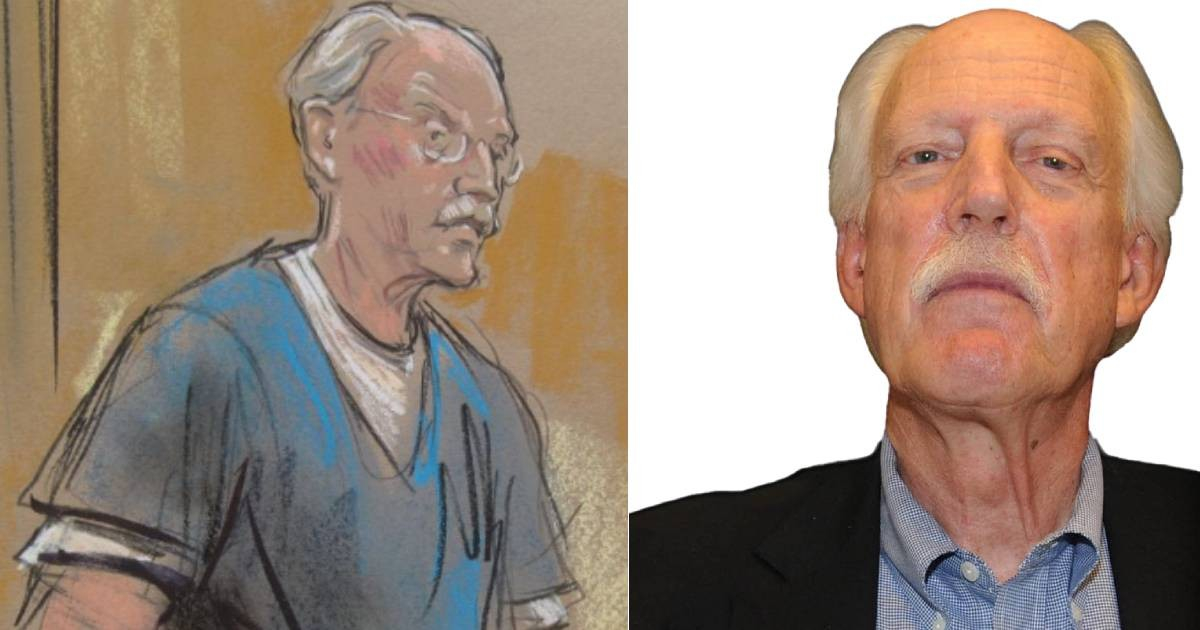
Walter Kendall Myers, the former State Department analyst who spent nearly thirty years spying for the Cuban regime, passed away on March 12 in Springfield, Missouri, at the age of 88. He died from cancer while serving a life sentence at a medical prison facility, as confirmed by his daughter Amanda Myers Klein to The New York Times. The news was published nearly two months after his death.
Identified by Cuban intelligence as Agent 202, Myers was sentenced in July 2010 after pleading guilty to conspiracy to commit espionage and two counts of wire fraud. His wife and fellow conspirator, Gwendolyn Steingraber Myers—known as Agent 123—was sentenced to 81 months. Both were apprehended in June 2009 following a three-year FBI undercover operation.
The extent of the damage caused by Myers was described as "devastating" by James Olson, former chief of counterintelligence at the CIA. "He would have been in a position to provide them with hot information on what was happening in the intelligence community at the State Department," Olson told the Times. Between 2001 and 2007, Myers served as a senior analyst on European affairs in the Bureau of Intelligence and Research, with access to hundreds of highly classified reports.
Methods of Espionage
The couple relayed information through shortwave radio messages and physical exchanges using shopping carts. They met with Cuban agents in Cuba, Mexico, Argentina, Brazil, Ecuador, and Trinidad and Tobago. In 1995, they traveled to the island under false identities and spent four hours with Fidel Castro.
Enrique García, a former officer of Cuba's General Directorate of Intelligence who defected in 1989, revealed that the Myers' documents were of such value that they were processed overnight in Havana and delivered directly to Fidel Castro in the morning, bypassing the Interior Minister.
Ideological Motivation
Myers was driven purely by ideology, receiving no payment for his espionage aside from equipment reimbursements. During his sentencing hearing in federal court, he stated, "We did not act out of anger toward the United States or any anti-American sentiment. Our objective was to help the Cuban people defend their revolution." He famously told an undercover FBI agent that Castro was "simply wonderful."
Olson highlighted the danger posed by such a profile: "Ideological spies are the hardest to catch because they don't have extravagant expenses."
A Traitor's Legacy
The judge who sentenced Myers to life in 2010 agreed with prosecutor Michael Harvey, who unequivocally labeled him "a traitor. He betrayed his colleagues at the State Department and our nation." The court also seized $1.7 million in assets, equivalent to Myers' accumulated federal salary over the years.
The Myers case is part of a series of serious Cuban intelligence infiltrations into the U.S. government. On March 31, the FBI dedicated an episode of its podcast to the topic, describing the regime's espionage structure as "highly skilled," operating "well above its weight class." The FBI has disclosed that Cuba recruited spies from elite universities, capitalizing on ideological sympathies before recruits had access to classified information, a pattern evident in the Myers case.
Gwendolyn Myers passed away in 2015 without showing remorse, as the FBI noted. Her husband also died unrepentant, closing one of the darkest chapters of betrayal in recent State Department history.
Kendall Myers and Cuban Espionage: Key Questions Answered
Who was Walter Kendall Myers?
Walter Kendall Myers was a former State Department analyst who spied for Cuba for nearly three decades and was sentenced to life in prison for his espionage activities.
What was the impact of Myers' espionage?
Myers caused significant damage by providing Cuban intelligence with critical information about the U.S. intelligence community, described as "devastating" by former CIA counterintelligence chief James Olson.
How did Myers and his wife communicate with Cuban agents?
The Myers couple transmitted information via shortwave radio and physical exchanges, meeting with Cuban agents in multiple countries and even visiting Cuba under false identities to meet Fidel Castro.
Why did Myers spy for Cuba?
Myers was motivated by ideological beliefs rather than financial gain, aiming to support the Cuban revolution without receiving payment for his espionage activities.