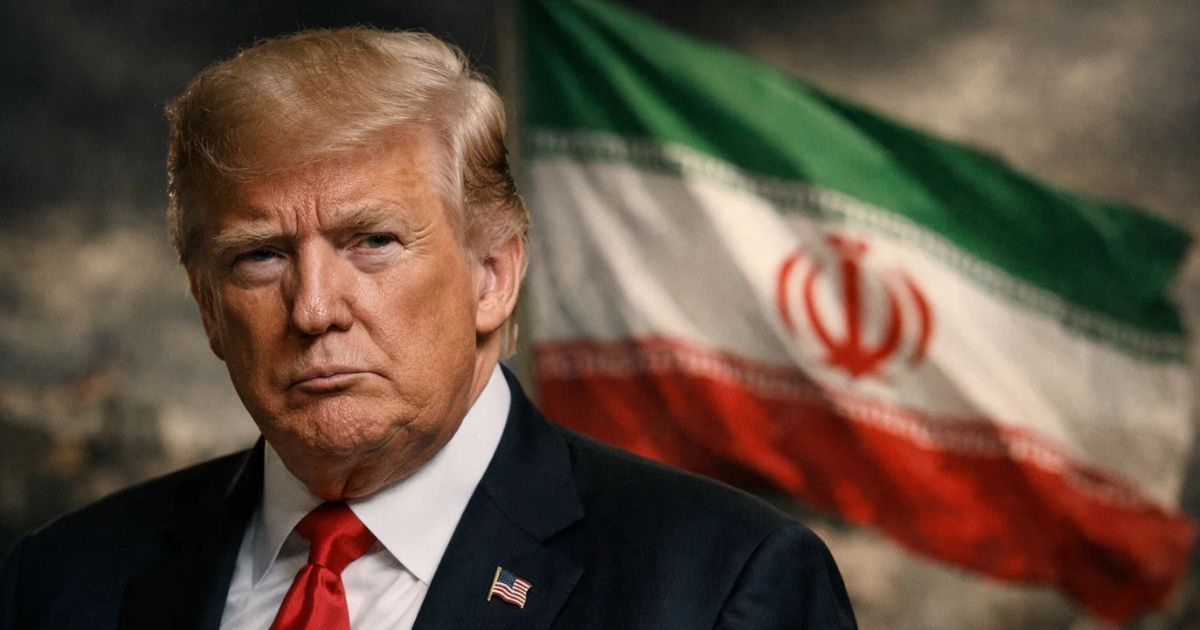
President Donald Trump announced on Wednesday that the United States and Iran have engaged in what he described as "very productive" discussions over the past 44 hours. He expressed optimism that a resolution to the military conflict between the two nations could soon be reached.
"We've had very productive conversations in the last 44 hours. It's quite possible we may reach a deal," Trump stated, emphasizing that a non-negotiable demand from Washington is that Iran must not possess nuclear weapons.
The President painted a bleak picture of Iran's military status, describing it as severely weakened: "They once had a navy with 159 ships, now every vessel is wrecked at the sea's bottom. They used to have a substantial air force, but now they have no planes. They lack anti-aircraft defenses and radar. Most of their missiles are destroyed," he detailed, noting that Tehran retains only 18% to 19% of its original missile stockpile.
Trump also warned that if Iran rejects the agreement, military strikes will resume with greater force: "If they don't accept, the bombings will start again and, unfortunately, will be much more intense than before," he wrote on Truth Social.
A central focus of the negotiations is a one-page memorandum of understanding, which proposes a 14-point framework that includes a halt to Iranian uranium enrichment, lifting of U.S. sanctions, release of frozen assets, and reopening of the Strait of Hormuz.
The primary sticking point remains the length of the moratorium: Washington demands a 20-year period, while Tehran has suggested five years, with insiders hinting that a compromise might be found between 12 and 15 years.
Iran is considering the U.S. proposal and will communicate its decision to Pakistan, the exclusive mediator, after completing its internal review, confirmed Iranian Foreign Ministry spokesperson Ismail Bagaei: "The U.S. proposal is under evaluation by Iran, and upon conclusion, Iran will convey its views to the Pakistani side."
Secretary of State Marco Rubio stated that combat operations have ceased, although the naval blockade imposed on April 13 remains in effect. This blockade has intercepted approximately 50 Iranian vessels, resulting in daily financial losses for Iran estimated between $435 and $500 million.
The conflict began on February 28, 2026, with Operation Epic Fury, a joint U.S.-Israel initiative that obliterated Iranian nuclear facilities in Natanz, Isfahan, and Fordow. In retaliation, Iran closed the Strait of Hormuz on March 4, stranding nearly 2,000 ships and causing Brent crude oil prices to surge from $67 to over $126 per barrel. Gasoline prices in the U.S. soared by 50%, reaching $4.48 per gallon.
A Pakistani source quoted by Reuters summarized the current state of negotiations: "We'll finalize it very soon. We're close." Washington anticipates Iran's response within the next 48 hours.
Insights on U.S.-Iran Negotiations
What are the key points of the proposed agreement?
The proposed agreement includes a moratorium on Iranian uranium enrichment, the lifting of U.S. sanctions, the release of frozen funds, and the reopening of the Strait of Hormuz.
What is the main obstacle in the negotiations?
The main challenge is the duration of the moratorium on uranium enrichment. The U.S. wants a 20-year period, while Iran has proposed five years, with a potential compromise between 12 and 15 years.
How has the conflict affected global oil prices?
Following the closure of the Strait of Hormuz, Brent crude oil prices surged from $67 to over $126 per barrel, significantly impacting global markets.