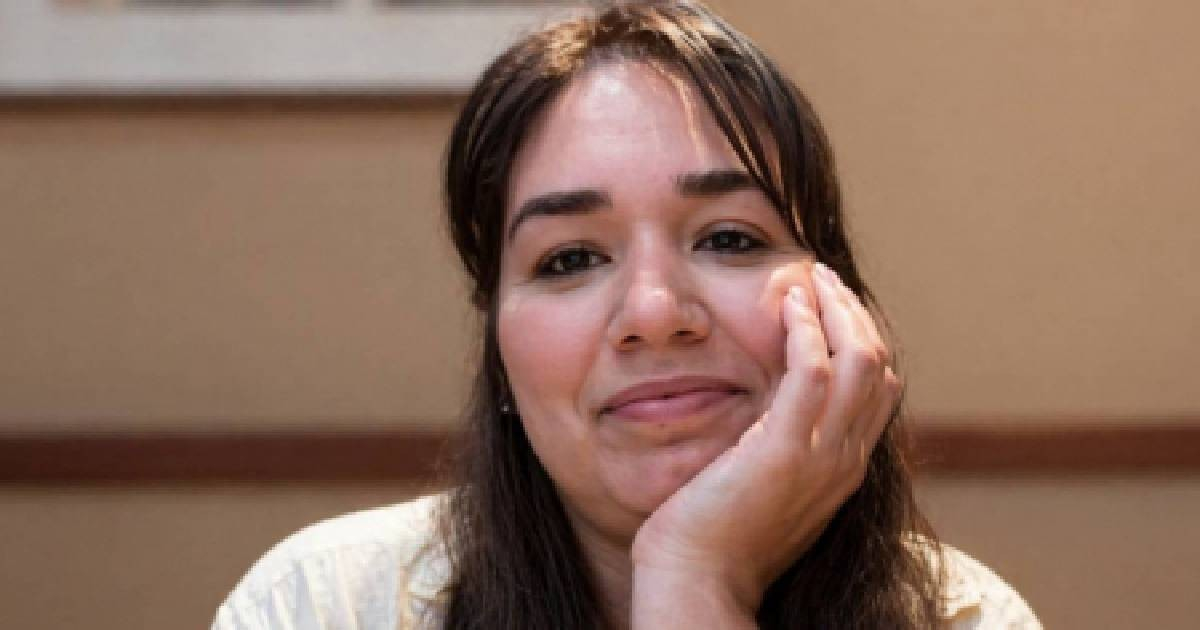
This week, Cuban activist Amelia Calzadilla shared a thought-provoking post on social media, highlighting a symbolic full circle in her political journey. Her activism began as a call for cooking gas access, and now that same gas is being sold on digital platforms for a steep price of $29 per cylinder—an amount far beyond the reach of most Cubans.
"Recently, it's become apparent that my fight started over something as fundamental as securing a way to cook meals for our families," noted Calzadilla, who has been residing in Madrid since November 2023, after going into exile with her husband and three children.
Platforms like Katapulk and Supermarket have begun offering gas cylinders to Cubans on the island, following a complete absence of the product in the domestic market for months.
The $29 price tag is unattainable for those earning in Cuban pesos, with the average salary in Cuba being 2,100 CUP, equating to just a few dollars. According to an infographic shared by Calzadilla, a Cuban would have to work approximately five months to afford a single gas cylinder.
Political Implications of Basic Necessities
"I stand with those who are outraged and anxious today," declared the activist, adding, "Nothing is more political than scarcity... discussing politics also involves talking about a gas cylinder for a desperate mother who needs support."
Calzadilla also addressed critics who dismiss her political involvement by arguing that everyday shortages are not valid reasons to engage in public life. "They've tried to invalidate my right to participate in politics by suggesting that the hardships of millions aren't valid grounds for engaging in the political life of their nation," she wrote.
The Path from Dissatisfaction to Opposition
Calzadilla’s evolution from a disgruntled neighbor to an active opponent began in January 2021, when she took to Facebook to expose that 58 households in Havana's Cerro municipality had been without manufactured gas for eight years, forced to cook with electricity just as the "Tarea Ordenamiento" sharply increased electricity rates.
The State Security retaliated with smear and discredit campaigns. Calzadilla explained that these pressures "pushed" her towards activism and opposition, culminating on April 27 with the founding of the Partido Liberal Ortodoxo Cubano (PLOC), a center-right liberal party inspired by Marti's ideology and free-market principles.
Gas Crisis: A Structural Issue
The liquefied gas crisis in Cuba has deep roots. Out of 1.7 million liquefied gas customers on the island, about 834,000—nearly half—were unable to purchase the product during the last distributions in April 2026.
By January 2025, provinces like Las Tunas, Villa Clara, Cienfuegos, Camagüey, Isla de la Juventud, and Pinar del Río had suspended sales "until further notice" due to "low availability." The government attempted to mitigate the situation by expanding manufactured gas in Havana, aiming for 25,000 new customers, although only 16% of the capital's population has potential access to this network.
The shift to selling on digital platforms in dollars marks a new phase of the crisis: the regime is unable to ensure subsidized supply, and the product reemerges in the market in foreign currency, inaccessible to those paid in pesos.
Calzadilla, who disclosed the motivations behind the founding of PLOC in late April, concluded her post with a statement that encapsulates her journey: "I intend to hold my head high and proudly embrace my place."
Understanding the Gas Crisis in Cuba
What sparked Amelia Calzadilla's activism?
Amelia Calzadilla's activism was initially sparked by the lack of access to cooking gas, a basic necessity for Cuban families.
Why is the $29 price for gas cylinders problematic?
The $29 price for gas cylinders is problematic because it is far beyond the financial reach of most Cubans, who earn salaries in pesos that equate to very few dollars.
How has the Cuban government responded to the gas shortage?
The Cuban government attempted to address the gas shortage by expanding the availability of manufactured gas in Havana, but this effort only reached a small portion of the population.