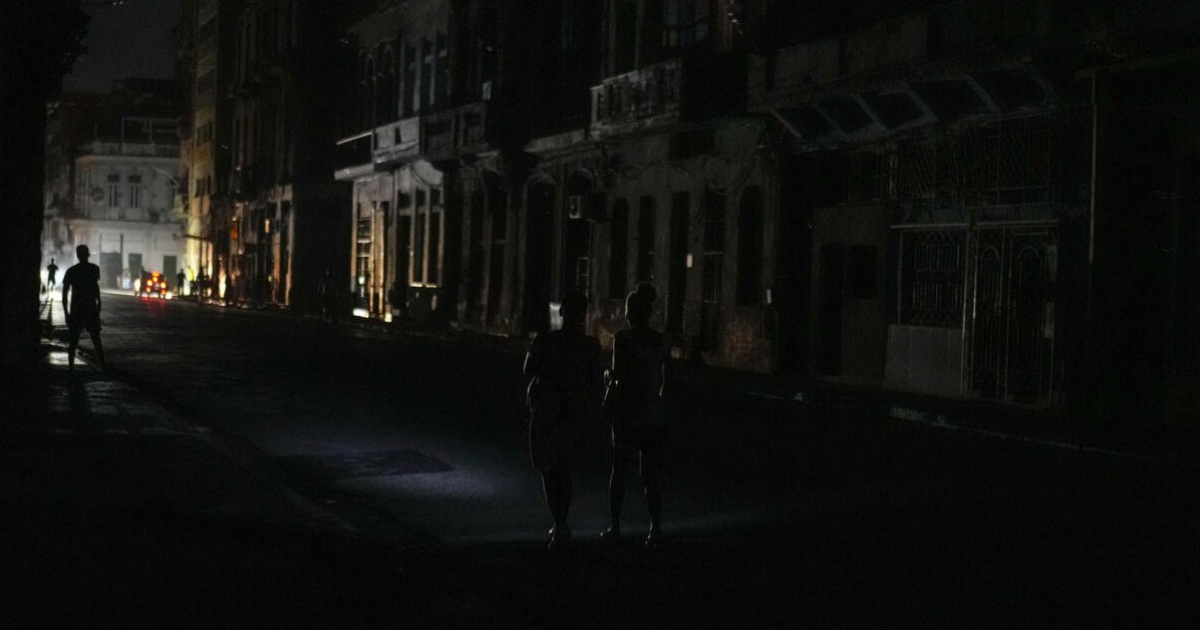
Cuba is grappling with a new wave of power outages after the Antonio Guiteras thermoelectric plant went offline on Tuesday due to a boiler malfunction and the depletion of Russian oil supplies received in March, according to an official statement from the Unión Eléctrica (UNE).
As of 6:00 AM on Wednesday, the availability of the National Electric System was at 1,390 MW, while demand reached 2,772 MW, leaving 1,395 MW affected. The UNE forecasts a nighttime peak deficit of 1,720 MW, with an expected impact of 1,750 MW.
On Tuesday, service disruptions lasted throughout the day. The maximum recorded impact was 1,731 MW at 8:20 PM, as reported by the state entity.
Impact of Guiteras Plant Shutdown
The Guiteras shutdown occurred at 9:12 AM on Tuesday due to yet another boiler failure, marking an estimated four days out of operation and an immediate loss of 140 MW in an already strained system.
In addition to Guiteras, the system is struggling with simultaneous malfunctions in Unit 6 of the CTE Diez de Octubre, Unit 2 of the CTE Lidio Ramón Pérez, and Units 3 and 5 of the CTE Antonio Maceo, resulting in an additional 254 MW out of service due to thermal generation limitations.
Fuel Depletion and International Pressure
The underlying crisis stems from fuel shortages. The only significant shipment received in over four months was from the Russian tanker Anatoli Kolodkin, which docked in Matanzas on March 31 with approximately 730,000 barrels of crude donated by Moscow.
On May 2, Miguel Díaz-Canel admitted to international solidarity delegates that Cuba had gone four consecutive months without receiving external fuel. "That oil is running out these days, and we don't know when more fuel will arrive in Cuba," he conceded.
Energy and Mines Minister Vicente de la O Levy had previously warned on April 22 that Cuba had enough fuel only until the end of that month, and indeed, by April 30, outages exceeded 1,500 MW once again.
A second Russian vessel, the Universal, carrying about 200,000 barrels of diesel, remains adrift without a confirmed destination in the Atlantic after diverting its route toward Trinidad and Tobago in late April, partly due to pressure from U.S. sanctions.
Escalating Sanctions and Energy Needs
The situation worsened on May 1 when President Donald Trump signed a new executive order imposing expanded sectoral sanctions on energy, defense, mining, and financial services, effective immediately without a grace period.
Cuba requires between 90,000 and 110,000 barrels of oil daily—equivalent to eight ships per month—to meet its energy needs, but domestic production barely reaches around 40,000 barrels per day, according to the minister's data.
The CTE Antonio Guiteras, inaugurated in 1988 in Matanzas, has never undergone significant maintenance in its 36 years of operation and has gone offline at least seven times in 2026, becoming a primary cause of national electrical system collapses.
Frequently Asked Questions About Cuba's Energy Crisis
What caused the recent increase in power outages in Cuba?
The recent surge in power outages is primarily due to the shutdown of the Antonio Guiteras plant because of a boiler malfunction and the depletion of Russian oil supplies.
How is the lack of fuel impacting Cuba's energy system?
Fuel shortages have led to limited power generation capacity, resulting in significant power outages exceeding 1,500 MW in some cases.
What actions are being taken to address the energy crisis in Cuba?
Cuban authorities are seeking additional fuel supplies, but international political pressures, such as U.S. sanctions, complicate these efforts.