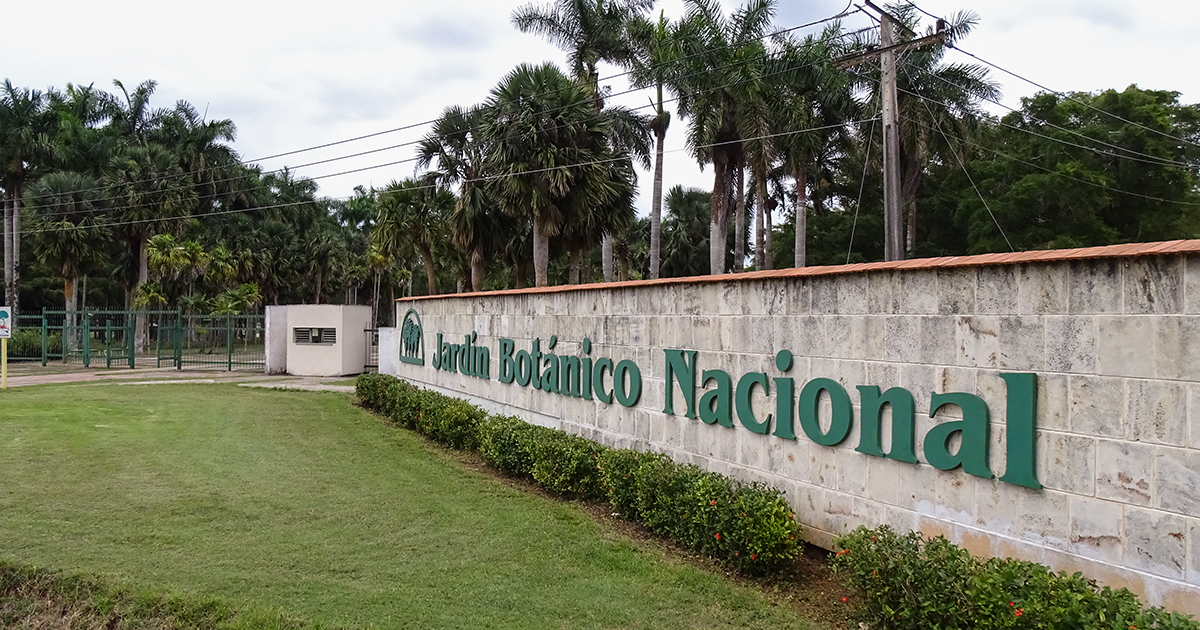
The National Botanical Garden (JBN) of Cuba, which has been shut since April 12 due to a shortage of diesel fuel, hosted the second scientific session of the international REVIV-e Project on Tuesday. This initiative is researching the conversion of garden prunings into renewable energy and high-value products.
Held in Havana, the meeting focused on examining the pruning process: the flow, volume, and types of branches and leaves from approximately 3,000 plant species, aiming to assess their potential for transformation into wood pellets, chips, and natural substrates within a circular economy framework.
The irony is striking: the JBN remains closed because it hasn't received any of the 10,000 liters of diesel allocated monthly since February, leading to a halt in trimming, pruning, and maintenance activities.
In its closure statement, the garden expressed, "Throughout this year, we have been unable to secure the minimal fuel required to maintain our collections, transport staff, fix breakdowns, and carry out other vital tasks."
Now, those same plant residues that cannot be removed due to fuel scarcity are the focus of the REVIV-e study. The project's stated objective is "to demonstrate the technical, economic, social, and environmental feasibility of an integrated model for energy and non-energy recovery of residual forest biomass."
Fully funded by the Spanish Agency for International Development Cooperation (AECID) and coordinated by the University of Zaragoza's ENERGAIA Institute, with researcher Javier Royo at the helm, the project is officially titled "From Waste to Resources: Comprehensive Use of Forest Biomass from Sustainable Management of the Almendares Basin."
Cuban institutions such as CUBAENERGIA, INSTEC, CUBASOLAR, and ECOMUNDO are participating, alongside Spanish organizations Sodepaz and Ecofricalia.
REVIV-e follows the Mor-e Project, also managed by the University of Zaragoza and funded by AECID with a budget of 507,400 euros. In October 2024, Mor-e inaugurated Cuba's first pellet production plant using residual moringa biomass, achieving a 91% reduction in drying process electricity consumption.
The JBN's closure occurs during Cuba's worst energy crisis in decades, with an electrical shortfall reaching 1,800 megawatts in March 2026, following the interruption of oil supplies from Venezuela and Mexico.
Mexico halted oil shipments on January 9, 2026, and Cuba received only two crude deliveries in the first quarter, posing a threat of running out of reserves soon.
Informal market fuel prices skyrocketed to 18,000 pesos for just three liters in April 2026, highlighting the collapse's severity.
Affiliated with the University of Havana and covering 500-600 hectares in the Arroyo Naranjo municipality, the JBN houses around 4,000 living plant species and an herbarium with 100,000 specimens. Its previous closure was during the COVID-19 pandemic, reopening to the public in October 2021.
Social media reactions to the closure were sharp. "Because of the embargo, haaaa... we don't have a botanical garden, Lenin Park, ExpoCuba, zoo, national aquarium, morals, or shame either," wrote one user, mocking the official narrative blaming the embargo for all of the country's woes.
For now, the JBN remains closed "until further notice," as REVIV-e researchers work to determine if the garden's own waste can be transformed into the energy needed for its reopening.
Exploring Renewable Energy Solutions for Cuban Botanical Garden
What is the main goal of the REVIV-e Project?
The REVIV-e Project aims to demonstrate the technical, economic, social, and environmental viability of converting residual forest biomass into renewable energy and high-value products.
Why is the National Botanical Garden of Cuba closed?
The garden is closed due to a lack of diesel fuel, which has halted essential maintenance, trimming, and operational activities.