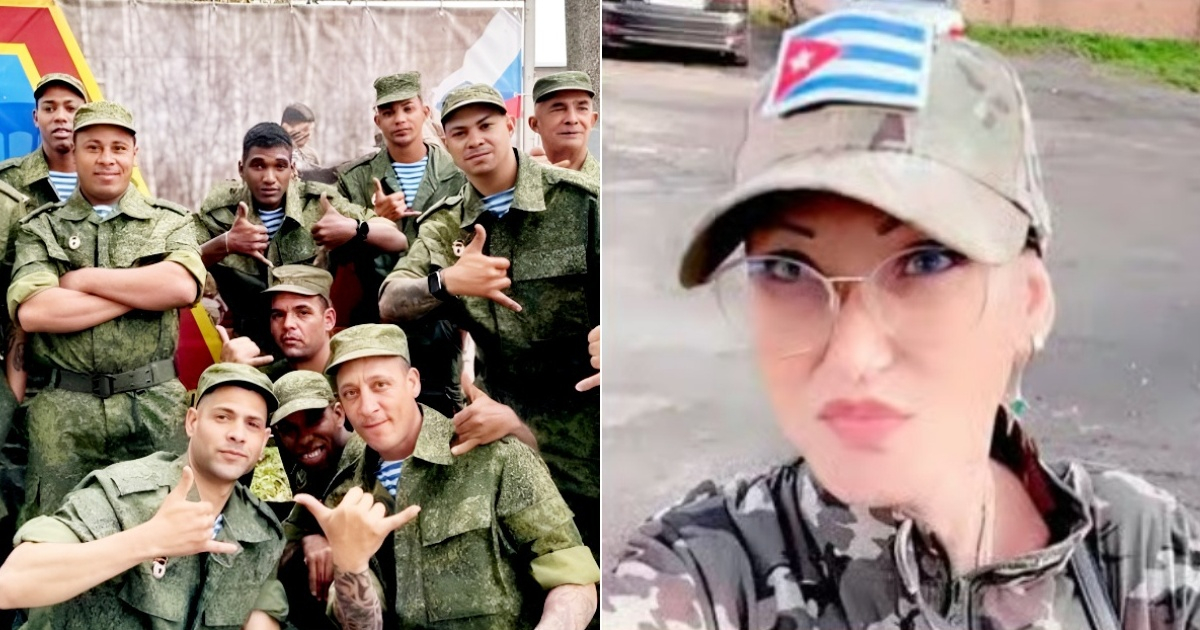
The United Kingdom has recently imposed sanctions on Cuban national Dayana Echemendia Díaz for allegedly deceiving fellow Cubans into enlisting for Russia's military campaign against Ukraine. This action was confirmed through the official sanctions list issued by the British Foreign Office.
Echemendia Díaz, born on July 29, 1989, has been sanctioned under the Global Irregular Migration and Trafficking in Persons Sanctions Regulations 2025 (GIMTiPS). This regulatory framework was specifically designed to combat human trafficking associated with the destabilization efforts in Ukraine and Europe.
Consequences of the Sanctions
The sanctions against the Cuban citizen include asset freezes, travel bans, and a prohibition from serving as a company director. The British Foreign Office stated there are "reasonable grounds to suspect" that Echemendia Díaz is involved in irregular migrant trafficking, according to the official sanctions notice.
Authorities accuse her of using social media and other communication means to deceitfully recruit Cuban nationals. These individuals were promised lucrative civilian jobs in Russia, only to be coerced, threatened, and imprisoned into fighting on the front lines.
A Broader Sanctions Package
Echemendia Díaz is part of a package of sanctions targeting 35 individuals and entities. This is the first coordinated application of the GIMTiPS regime against networks linked to Russia's military efforts. Among those sanctioned is Elena Smirnova, who Ukrainian intelligence has identified as a link between the Russian Defense Ministry and the Revolutionary Armed Forces of Cuba, also accused of recruiting Cubans for combat in Ukraine.
The sanctions also target Indian recruitment networks, including Baba Vlogs Overseas Recruitment Solutions, and entities involved in the Alabuga Start program, a Russian initiative that enlists workers from economically vulnerable countries to manufacture Iranian-designed drones in Tatarstan.
The UK's Minister for Sanctions, Stephen Doughty, condemned Russia's practices as "barbaric," accusing Moscow of exploiting vulnerable individuals as "cannon fodder."
The Recruitment Trap Amid Cuba's Economic Crisis
Recruitment efforts operate through Spanish-language ads on social media, offering civilian jobs with monthly salaries between 1,700 and 2,000 euros in sectors like construction, warehousing, or security. These offers are especially appealing in the context of Cuba's economic crisis, where salaries average between 15 and 30 euros a month, according to a report by the International Federation for Human Rights (FIDH), Truth Hounds, and the International Office of Kazakhstan.
"With average monthly salaries in Cuba barely reaching 30 euros, or even 15 euros, the prospect of 'easy work in friendly Russia' with earnings of 1,700-2,000 euros a month seems transformative," highlights the April 2026 report.
Once in Russia, recruits are coerced into signing military contracts written entirely in Russian, a language they do not understand, and are sent to the front lines without adequate training.
The Human Cost: Confirmed Cuban Casualties
The Ukrainian project "I Want to Live" reports at least 93 Cuban fatalities fighting for Russia as of January 2026, with an average survival time of just 150 days post-deployment. The FIDH report estimates that since 2023, at least 20,000 Cuban nationals have been sent to fight in Ukraine, making them one of the largest foreign contingents in the Russian military.
The U.S. State Department suggested in April 2026 that the Cuban regime may have facilitated or tolerated the recruitment process, estimating between 1,000 and 5,000 Cubans involved in Russian military operations, though Havana officially denies any involvement.
The European Parliament condemned "the recruitment and deployment of Cuban soldiers, along with the participation of North Korean troops" in Russia's war against Ukraine in July 2025. Intelligence from Ukraine suggests Russia plans to recruit an additional 18,500 foreign fighters by the end of 2026, implying that recruitment networks like the one attributed to Echemendia Díaz will likely continue their operations.
Understanding the Impact of UK Sanctions on Cuban Recruitment Networks
What are the sanctions imposed on Dayana Echemendia Díaz?
The sanctions include asset freezes, travel bans, and a prohibition from serving as a company director.
Why did the UK impose sanctions on Echemendia Díaz?
The UK sanctioned her for allegedly deceiving Cuban nationals into joining Russia's military efforts in Ukraine.
How does the economic situation in Cuba affect recruitment?
Cuba's economic crisis, with salaries averaging 15 to 30 euros a month, makes the offer of high-paying jobs in Russia particularly enticing.