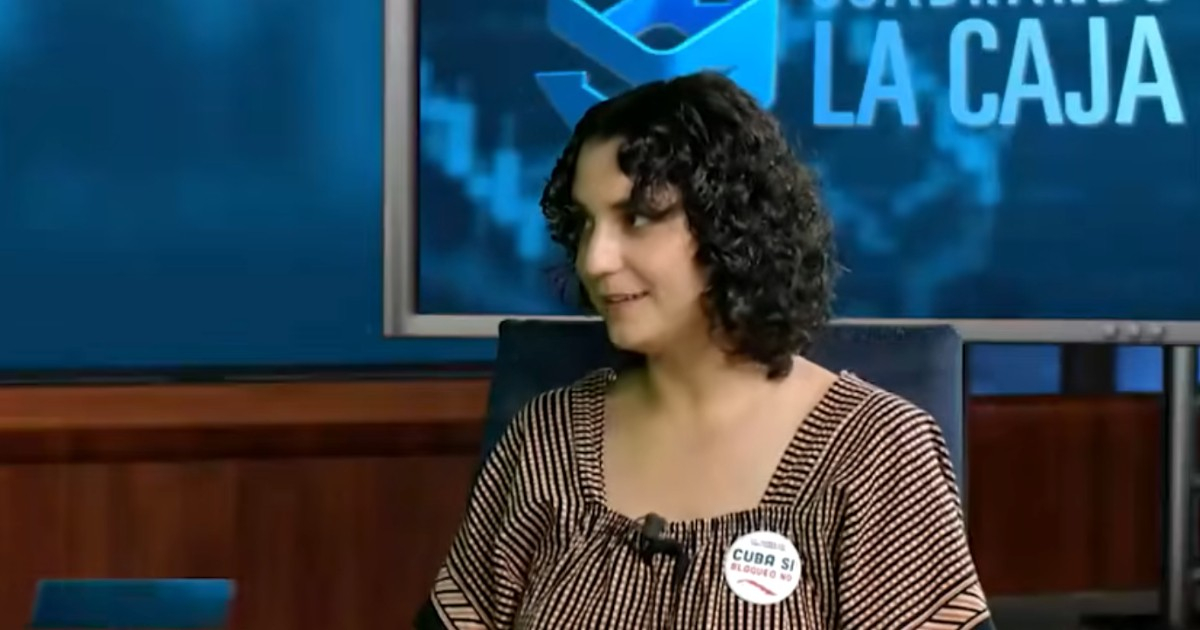
Brenda López, a co-founder of the "Hands Off Cuba" committee and a resident of Oakland, recently expressed on the program "Squaring the Box" that the homeless crisis in Los Angeles is "far more severe" than what she has witnessed during her visits to Cuba. Her remarks starkly contrast with independent data indicating a worsening situation on the island.
López appeared on the television show hosted by Marxlenin Pérez Valdés, a doctor of Philosophy and History and a Marxism professor at the University of Havana. The program is described as a platform for debating, questioning, and reaching consensus from a Cuban socialist perspective.
"Something that always surprises me is hearing, 'Oh, things are critical in Cuba; there are many people living on the streets,' but what I see where I live is much more severe than what I've seen on all my visits to Cuba," said the 30-year-old activist.
López specifically highlighted Skid Row as the epicenter of the crisis: "In Los Angeles, there's an area called Skid Row, which is essentially a community of homeless individuals, many struggling with substance issues, lacking resources."
The activist, who works in a rehabilitation center, attributed the problem to cuts in social services: "When our government slashes funding for social resources and health, people have nowhere to turn, nowhere to seek care, and they end up on the streets."
However, independent data on Cuba contradicts López's portrayal. A 2024 census analyzed by sociologist Elaine Acosta revealed that the homeless population in Cuba has tripled compared to previous figures, with most being elderly. In Camagüey, health authorities identified at least 59 individuals exhibiting vagrant behavior in 2025, warning that the actual number might be higher.
Cuban state media has blamed the embargo for the increase in street beggars, while independent activists document people sleeping in doorways and terminals in Havana without access to basic services.
López's comments are part of a Cuban regime strategy to use sympathetic foreign voices to contrast living conditions in Cuba with capitalist countries. Her appearance on "Squaring the Box" follows the March 2026 visit of the "Our America Convoy," which brought between 500 and 650 activists from 33 countries to the island amid an energy crisis causing up to 20-hour daily blackouts.
Beyond the Cuba comparison, López provided a broad assessment of the labor situation in the United States: "We're in a situation where people can no longer survive on one job. Many of us have two or three. Personally, I have two jobs and still barely make enough to pay my rent."
She also noted that only 5% of the U.S. population is unionized, attributing the labor movement's weakness to the dismantling that began under the Reagan administration. She observed that most people of her generation understand they will never afford a house, as most cost over a million dollars.
What López overlooks in her comparison is that nearly nine out of ten Cubans must find ways to avoid starvation on an island where a humanitarian crisis consumes the population after 67 years of communist dictatorship.
Key Insights into U.S. and Cuban Homelessness
How does homelessness in Los Angeles compare to Cuba according to Brenda López?
Brenda López claims that the homeless crisis in Los Angeles is much more severe than what she has observed in Cuba during her visits.
What are the main causes of homelessness in Los Angeles as identified by López?
López attributes the homelessness crisis in Los Angeles to government cuts in social services and health resources, leaving individuals without necessary support.
What does independent data suggest about homelessness in Cuba?
Independent data indicates that the homeless population in Cuba has tripled, with a significant portion being elderly, contradicting López's claims.