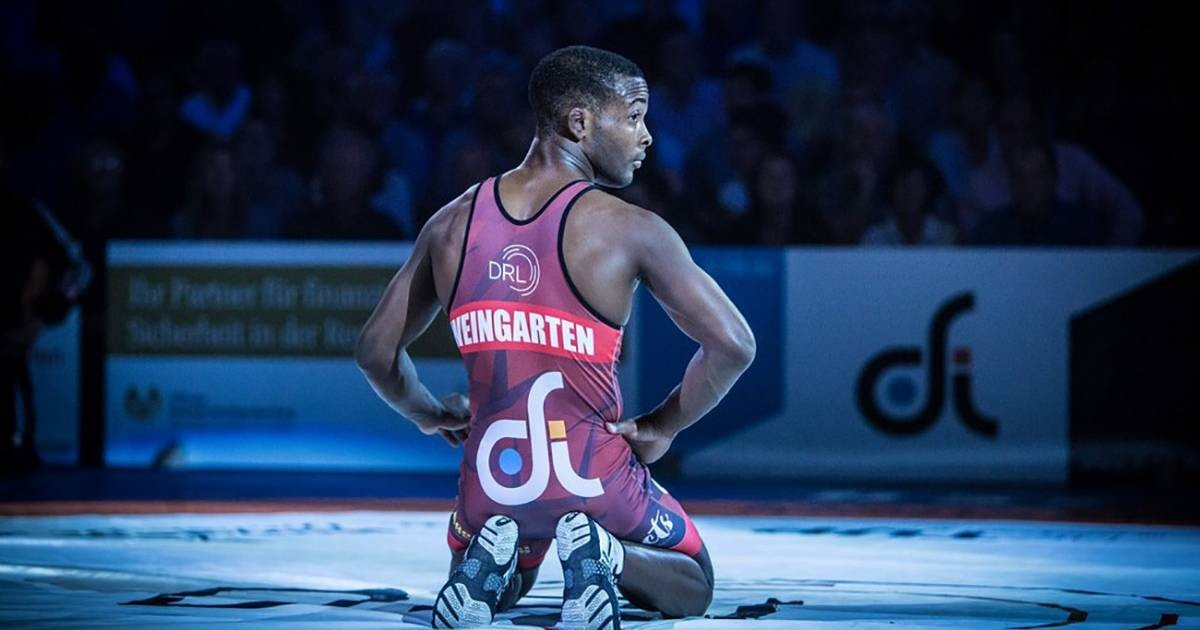
Reineri Andreu Ortega, a Cuban wrestler with two world U-23 titles and two Pan American championships, has voluntarily withdrawn his lawsuit against the NCAA as of late last week. This move concludes a legal battle aimed at securing his eligibility to compete at Iowa State University (ISU), as reported by local media.
The lawsuit, initially filed in December 2025, was dismissed without any public disclosure regarding a potential settlement between the parties involved.
Central to the case was the NCAA's "five-year eligibility clock," a rule dictating when an athlete's eligibility to compete in college sports commences and expires.
According to NCAA rules, this clock starts from the first full-time enrollment at any university worldwide, regardless of NCAA affiliation or athletic participation.
The Path of Reineri Andreu Ortega
Ortega completed his high school education in Cuba in spring 2016, subsequently enrolling at the Manuel Fajardo University in the fall, a non-NCAA affiliated institution with no collegiate sports programs.
Between 2017 and spring 2019, he trained and competed for the Cuban National Team—a non-collegiate entity—while continuing his studies at Manuel Fajardo.
In December 2022, Ortega left the Cuban national team and arrived in the United States as a refugee.
By spring 2023, he had enrolled at ISU, securing a spot on their wrestling team, although he never competed.
Legal Challenges and NCAA's Response
The NCAA denied his eligibility request beyond the 2022-23 season, asserting that his eligibility clock had started in 2016 with his enrollment at Manuel Fajardo, and not upon his arrival at Iowa.
Ortega's legal team argued that this interpretation violated antitrust laws and unjustly restricted his ability to "secure meaningful compensation now available to other NCAA Division I athletes."
This argument was bolstered by the 2021 U.S. Supreme Court ruling that allowed college athletes to receive compensation for the use of their name, image, and likeness, a market described as a multi-billion dollar industry in the lawsuit.
The defense highlighted that the rule could render students ineligible who "attend a non-NCAA university for three years without playing sports, take two years off for personal reasons, transfer to an NCAA university, and have exhausted their eligibility without ever competing in college sports."
The NCAA countered that prohibiting the five-year rule's application would not make Ortega eligible anyway, due to other unchallenged factors preventing his competition.
The organization also claimed that the rule lacks a "commercial nature" and is thus not subject to the Sherman Act.
Judicial Decision and Aftermath
On April 23, Judge Rebecca Goodgame Ebinger denied Ortega's request for an injunction, ruling that he had not demonstrated a "sufficient likelihood of success" on his antitrust claim.
Following this judicial setback, and with no realistic chance of competing in the 2026-27 season, his lawyers chose to voluntarily drop the legal action.
Ortega, who competes in the 130-pound category, argued that his prospects in professional wrestling post-college are extremely limited, making a resolution within the collegiate system particularly pressing.
This case adds to the exodus of Cuban wrestlers who have left the national team in recent years, a trend reflecting dissatisfaction with a state-run sports system that fails to provide professional contracts or direct benefits to athletes.
Key Questions About NCAA Eligibility and Legal Disputes
What was the main issue in Reineri Andreu's lawsuit against the NCAA?
The lawsuit centered on the NCAA's "five-year eligibility clock," which dictates when an athlete's eligibility to compete in college sports begins and ends. Ortega's legal team argued this rule unjustly restricted his ability to compete and violated antitrust laws.
Why did the NCAA deny Reineri Andreu's eligibility?
The NCAA denied Ortega's eligibility beyond the 2022-23 season, stating that his eligibility clock had started in 2016 with his enrollment at Manuel Fajardo University in Cuba, rather than when he arrived at Iowa State University.