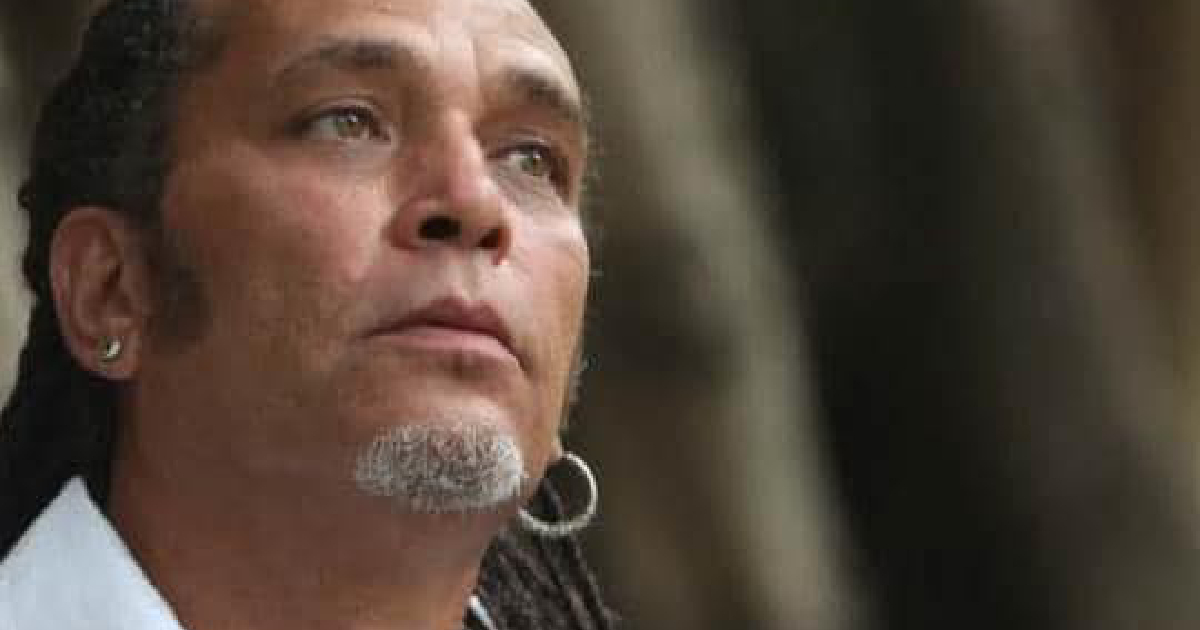
Cuban actor Luis Alberto García recently shared a deeply personal and political reflection on his relationship with Cuba's regime through a post on his Facebook page. Using the song "Yo no tanto como él" by troubadour Pedro Luis Ferrer as inspiration, García penned a heartfelt message honoring his revolutionary parents, while expressing his own skepticism about the system.
García embraced Ferrer's lyrics, adding his own clarification: "Where it says my father, it also means my mother. La Pura and El Puro are El Puro and La Pura. They are not to blame for having believed. No further explanation is needed."
The song, known for its ironic take on generational conflict in post-revolutionary Cuba, portrays a fidelista communist father whom the narrator defends out of familial loyalty, despite not sharing his beliefs: "My father was fidelista, / I not so much, / but whoever touches my father / must deal with me too."
Generational Reflections on a Troubled System
One of the song's more direct sections critiques the core of the system: "I detest the bureaucracy / that turned efficiency / into a heap of misfortunes, / full of pointless prohibitions, / increasing the resentments / and killing a thousand loves / What happened to life? / So many people regretful."
Another stanza paints a picture of García's childhood during the Revolution: "My father in that January / didn’t take me out of the country, / dressed me as a pioneer / and taught me to fight."
A Personal Tribute and a Statement of Belief
In his personal note, García tenderly described his late parents: "My old man is now loving dust, and my old woman, a loving dust. Whenever I can, I place in front of her a plate of food very similar to what she served me for years, without politics getting in the way."
He then summed up the gap between his upbringing and beliefs in one sentence: "I never ate rice with ideology or a plate of fried slogans."
The post concludes with a bold statement anticipating criticism: "Let all the insults come now. The impurities. I will not strike back."
Ongoing Criticism of the Cuban Regime
This publication is part of a consistent pattern of critical remarks from García. In January 2026, he questioned the official phrase "to doubt is to betray," calling it "one of the most fascist sentences" and identifying himself as "a militant of all doubts."
That same month, he demanded answers about the deaths of Cuban military personnel in Venezuela, highlighting the government's "deafening silence" over the loss of 32 soldiers during the capture of Nicolás Maduro.
In March 2026, García described Cuba's situation as a "final moment" for the current model and criticized the official media's silence with the comment: "I thought at least yesterday, on ¿Press Day?, the press wouldn't be as pressed as usual."
In February, García spoke out against the detention of people for their ideas, stating "It's terrible to imprison ideas," amidst rising repression on the island.
The song García adopted is the work of Pedro Luis Ferrer, a troubadour from Yaguajay, Sancti Spíritus, whose critical content has led to censorship in Cuba, circulating mainly among the diaspora and in international concerts.
The song's lyrics conclude with lines García also embraced as his own: "I will not apologize / for my life. / I am what I knew to be / And what a wonder!"
Understanding Luis Alberto García's Critique of Cuba
What prompted Luis Alberto García's reflections on Cuba's regime?
Luis Alberto García was inspired by Pedro Luis Ferrer's song to express his personal and political reflections about his relationship with Cuba's regime, honoring his revolutionary parents while maintaining his own skepticism.
How has García previously criticized the Cuban government?
García has consistently criticized the Cuban government by questioning official slogans, demanding transparency about military deaths in Venezuela, and speaking against the repression of ideas, among other issues.
What is the significance of Pedro Luis Ferrer's song in García's post?
Pedro Luis Ferrer's song serves as the foundation for García's reflections, with its ironic take on generational conflict in Cuba providing a framework for García to convey his personal and political viewpoints.