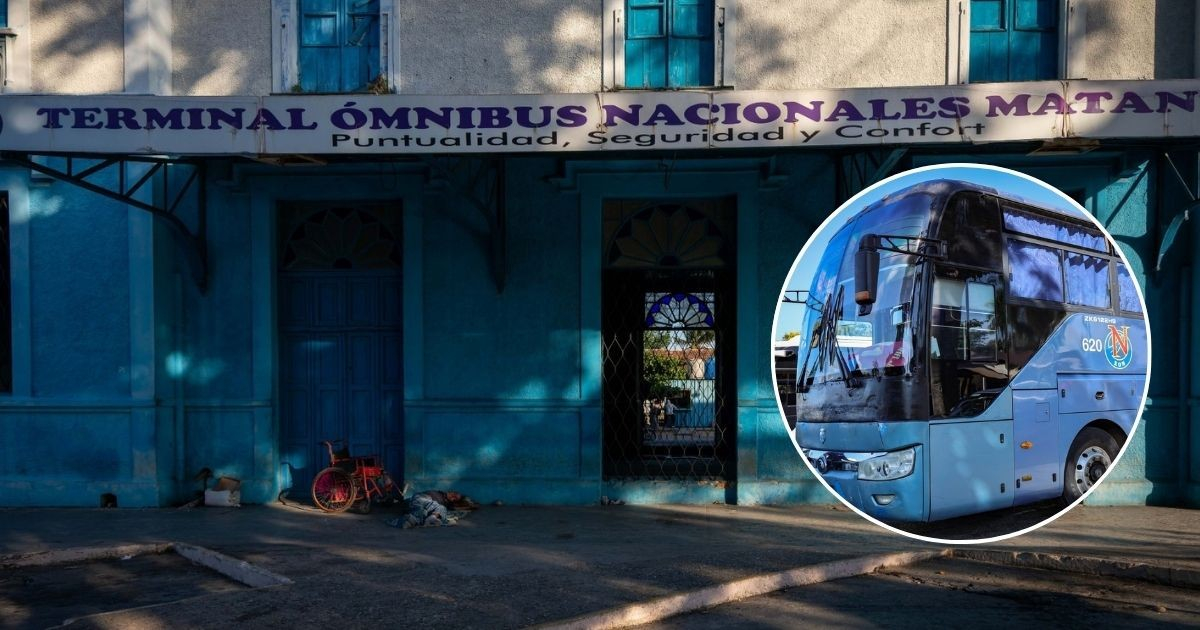
The Provincial Transport Authority of Matanzas announced on Tuesday that two additional buses are now operational for routes heading to Eastern Cuba. This was confirmed by Roberto Bernal Villena, the director, in a statement to TV Yumurí.
Every Tuesday, a bus will depart from the Matanzas Train Station towards Santiago de Cuba and Guantánamo, while Thursdays are reserved for trips to Holguín.
However, these bus tickets are not freely available to everyone. Priority is given to individuals facing urgent personal circumstances that cannot be postponed.
Tickets are sold by the Provincial Transport Authority upon request. Any remaining tickets will be sold on the day of departure directly at the station.
This announcement comes after a significant immobilization of the transport system in Matanzas. Back in February 2026, the province faced a severe transportation halt, with no urban or intermunicipal routes and only one daily trip on the Havana-Matanzas route. The train to the east barely operated, running just once every eight days.
During that period, an exception was made for a weekly bus to Santiago de Cuba, primarily for medical or urgent cases evaluated by the Provincial Transport Authority.
The crisis was fueled by an unprecedented energy shortage. Cuba experienced a loss of 25,000 to 35,000 barrels per day of Venezuelan oil. Additionally, Mexico halted its shipments on January 9, 2026, due to potential U.S. sanctions, and the Russian supply was inadequate, with only 100,000 tons of donated crude arriving on March 31, covering merely a third of the monthly demand.
Nationally, out of 558 interprovincial buses, only 219 were operational as of December 2025, representing less than 40% of total capacity.
The situation in Matanzas mirrored this crisis: out of 129 available buses, only 63 were active by September 2025, just 48.8% of the fleet.
On a positive note, Bernal Villena also announced the resumption of daily bus services between Matanzas and Havana from the Train Station. Improvements are underway, including better water supply, access roads, and street lighting.
The shift of interprovincial services to this station, known as "La Jaiba," is due to "serious violations" reported at the traveler service locations near the interprovincial bus terminal and a lack of adequate facilities for both passengers and ticket agents, according to the director.
Meanwhile, the original bus terminal in the Pueblo Nuevo neighborhood remains unrepaired due to the country's economic constraints, leading to frequent complaints from the public.
Residents have voiced their dissatisfaction with the distance to the Train Station, where interprovincial services are now based, as well as the lack of adequate facilities and safety at the site.
This transport issue is not unique to Matanzas. In February 2026, provinces like Granma, Las Tunas, Camagüey, and Holguín also suspended interprovincial services due to the same fuel crisis, leaving thousands of passengers stranded across the country.
Bernal Villena mentioned that they are "continuing to assess the situation and searching for locations to bring services closer to the population," indicating that a permanent solution to Matanzas' transportation collapse is still uncertain.
FAQs About Matanzas Bus Services to Eastern Cuba
How often do buses from Matanzas travel to Eastern Cuba?
Buses from Matanzas to Santiago de Cuba and Guantánamo run on Tuesdays, while those to Holguín operate on Thursdays.
Who can purchase tickets for these bus services?
Tickets are primarily available for individuals with urgent personal needs. Remaining tickets are sold at the station on the day of departure.
What caused the recent transportation crisis in Matanzas?
The crisis was due to a severe energy shortage, worsened by reduced oil imports from Venezuela, halted shipments from Mexico, and insufficient donations from Russia.