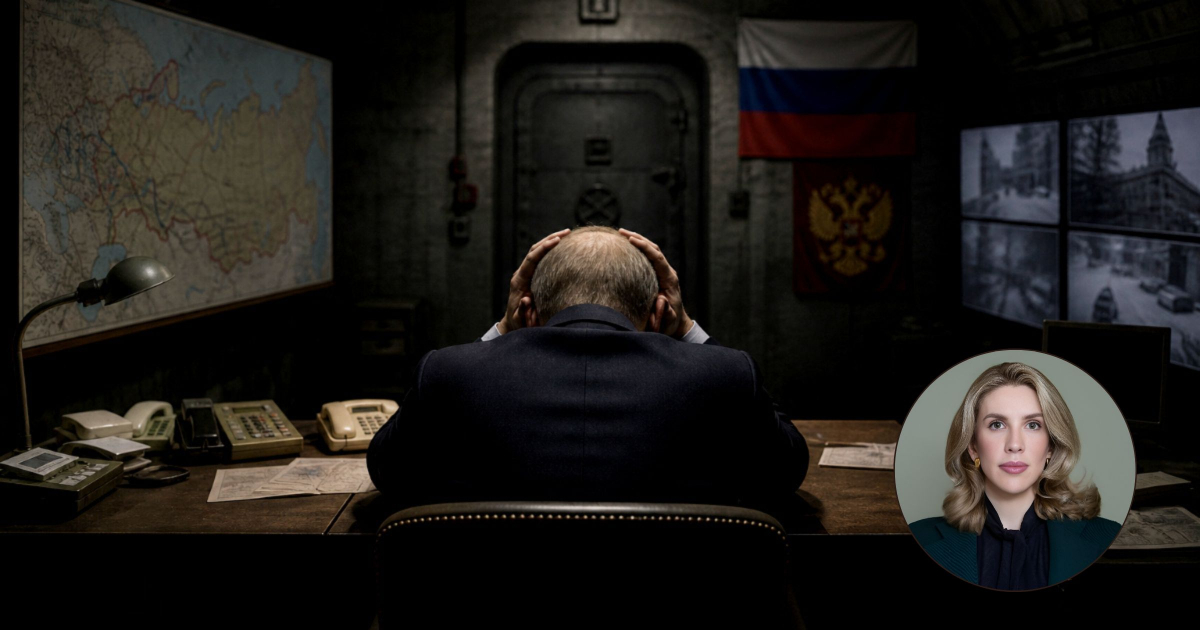
Ukrainian lawmaker Kira Rudik delivered a clear message on Monday when CNN journalist Jim Sciutto inquired if Ukrainian forces pose a threat to Vladimir Putin's life.
"Absolutely, they do. And I believe he should be concerned," Rudik asserted during an interview that quickly gained traction across social media platforms.
Sciutto's question was prompted by a European intelligence report, leaked on Tuesday by the independent Russian outlet iStories and further disseminated by CNN and the Financial Times. This report unveils unprecedented security measures enacted around Putin by the Kremlin since early March 2026, driven by fears of a coup or assassination attempt.
Rudik, leader of the Golos Party and a member of Ukraine's Supreme Rada, firmly justified her nation's stance: "The immense pain and suffering, the multitude of killings, and the abduction of children committed by Putin, his entourage, and Russia in Ukraine justify our right to retaliate, and that is precisely what we are doing."
"When you start a war, committing all sorts of war crimes, you should anticipate that eventually, that war will turn against you," the parliamentarian added, encapsulating Ukraine's official position amid the Kremlin's growing anxiety.
Heightened Security Measures Surrounding Putin
The intelligence report that sparked the interview outlines extraordinary actions taken by Russia's Federal Protective Service: installation of cameras in the homes of Kremlin chefs, bodyguards, and photographers, a prohibition on public transport for close personnel, exclusive use of phones without internet access, and double security checks for meetings with Putin.
According to the report, the Russian leader has stopped visiting his usual residences near Moscow and his estate in Valdai, opting instead for extended stays in underground bunkers in the Krasnodar region of southern Russia.
Moreover, the Kremlin has reportedly resorted to using pre-recorded footage instead of live public appearances, and Putin has not conducted any visits to military installations thus far in 2026.
Incidents Fueling Security Concerns
Among incidents that may have triggered these security measures is the assassination of Lieutenant General Fanil Sarvarov in Moscow on December 22, 2025, attributed to Ukrainian operatives, as reported by El País. The intelligence further suggests that Putin's fears are not solely from Ukraine but also from potential internal threats within the Russian elite.
In January 2026, Russia accused Ukraine of launching 91 drones at a presidential residence in the Novgorod region, an allegation publicly denied by the CIA.
Rudik also addressed the current diplomatic environment: "That's why we are proposing a ceasefire even before the military parade," referring to the May 9 Victory Day parade in Russia, a date of high symbolic value for the Kremlin and a point of particular security concern for Putin.
This proposal is part of negotiations led by the Trump administration, which conducted a phone call with Putin in March 2026.
The lawmaker concluded her remarks with a direct warning: "We will continue this until Russia stops."
Security Concerns and Diplomatic Tensions Involving Russia
Why has the Kremlin increased security measures around Putin?
The Kremlin has heightened security around Putin due to fears of a coup or assassination attempt, as indicated by a leaked European intelligence report.
How has Ukraine's diplomatic stance been influenced by recent events?
Ukraine's diplomatic approach, including proposals for a ceasefire, has been shaped by ongoing negotiations and recent military tensions, aiming to address security concerns and retaliate against Russian aggression.
What incidents have heightened Putin's security concerns?
Incidents like the assassination of Lieutenant General Fanil Sarvarov and alleged drone attacks on Russian territories have significantly heightened security concerns for Putin.