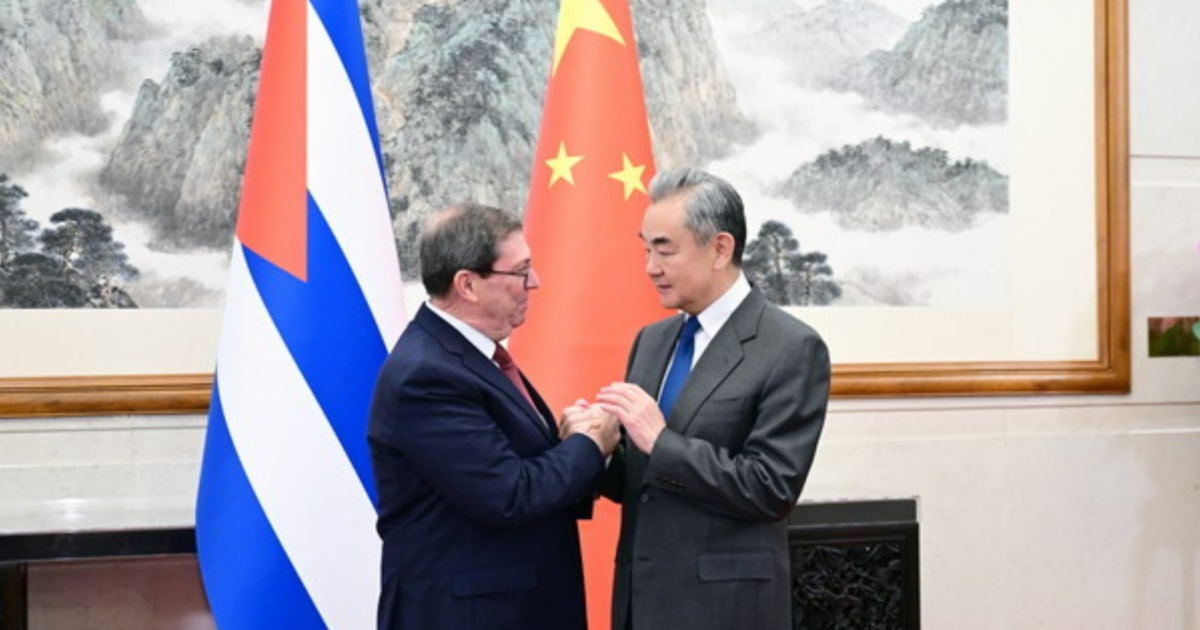
On Tuesday, China's Ministry of Foreign Affairs called on Washington to promptly lift the embargo and sanctions imposed on Cuba, denouncing them as "unilateral and unlawful."
This marks Beijing's strongest statement since the Trump administration intensified its maximum pressure strategy against Havana.
The Chinese Foreign Ministry spokesperson stated that "the United States has further intensified its unilateral and unlawful sanctions against Cuba," severely violating "the Cuban people's rights to survival and development, as well as the fundamental norms of international relations."
In the same message, Beijing reiterated its unwavering support for the Cuban regime: "China steadfastly supports Cuba in defending its sovereignty and national security, firmly opposes interference in Cuba's internal affairs, and urges the U.S. to immediately cease the blockade, sanctions, and any form of coercive pressure against Cuba."
These Chinese remarks came four days after Donald Trump signed a new executive order titled "Imposing Sanctions on Those Responsible for Repression in Cuba," leveraging the International Emergency Economic Powers Act.
Trump signed this executive order on May 1, introducing for the first time secondary sanctions targeting foreign banks and financial institutions that engage with sanctioned Cuban entities, threatening their access to the U.S. dollar.
The order also broadens restrictions on key sectors such as energy, defense, mining, and financial services, and bans regime officials and their adult family members from entering the United States.
The U.S. has also frozen all assets associated with the Cuban regime that fall under American jurisdiction.
Since January 2026, the Trump administration has imposed more than 240 new sanctions against Cuba and intercepted at least seven tankers carrying oil to the island, slashing Cuba's energy imports by 80% to 90%.
Cuban Foreign Minister Bruno Rodríguez Parrilla responded to the new measures by labeling them as "illegal and abusive."
Rodríguez warned that "they will not intimidate the Cuban people" in a social media post, while Miguel Díaz-Canel described them as a "brutal genocidal blockade," accusing Washington of "moral poverty."
China's stance on Tuesday is not unprecedented. On April 30, China's Foreign Ministry had already accused the U.S. of "fabricating pretexts and spreading rumors" to justify the embargo, responding to allegations by Secretary of State Marco Rubio about alleged Chinese intelligence facilities on Cuban soil.
The geopolitical context escalated further on May 2, when Trump threatened to station the USS Abraham Lincoln aircraft carrier just 100 yards off the Cuban coast, linking the move to the conclusion of military operations in Iran.
Frequently Asked Questions on U.S. Sanctions Against Cuba
Why is China urging the U.S. to lift sanctions on Cuba?
China argues that the U.S. sanctions against Cuba are unilateral and unlawful, violating the Cuban people's rights and international norms.
What did the new executive order signed by Trump entail?
The executive order imposed secondary sanctions on foreign banks dealing with sanctioned Cuban entities and extended restrictions on several sectors, preventing regime officials and their families from entering the U.S.
How has the Cuban government responded to the intensified sanctions?
Cuban officials condemned the sanctions as illegal and abusive, asserting that they would not intimidate the Cuban people.