There is an uncomfortable truth that the Cuban regime has consistently chosen to ignore, cloaking it in euphemisms whenever reality closes in: the Cuban Revolution, from its very inception, determined that Cuba would survive on handouts. This is not a consequence or a historical accident, nor is it the result of the embargo. It is a deliberate structural decision made over six decades ago, stubbornly maintained by an ideological rigidity that has condemned entire generations to a life of dependency.
The Deliberate Economic Destruction
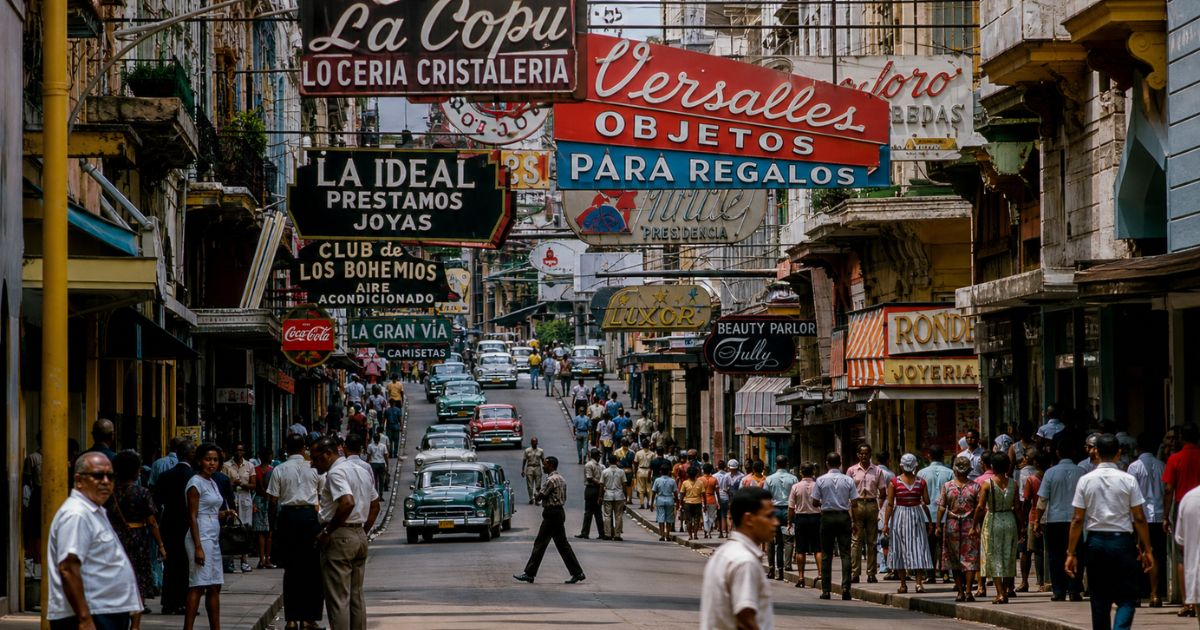
When Fidel Castro seized power in 1959, Cuba was known as the "Pearl of the Caribbean": a functional capitalist economy with a real productive base—sugar mills, light industry, commerce, a working middle class—and small businesses that supported entire neighborhoods. Within months, nationalizations of American companies began. But the regime didn't stop there. In 1968, through the so-called "Revolutionary Offensive," Castro eliminated even the smallest businesses, including barber shops, street vendors, and small cafes. Everything was seized.
What remained was not a thriving socialist economy. It was a void. A nation without an entrepreneurial fabric, incapable of generating its own wealth. At that point, the scheme that persists today was born: Cuba would no longer produce what it needed; it would survive on what others were willing to give.
The Soviet Lifeline
For nearly thirty years, the Soviet Union supported Cuba with extravagant subsidies. Practically free oil, overpriced sugar purchases, low-interest loans that were never meant to be repaid, machinery, fertilizers, tractors, Ladas, KamAZ trucks, and food. Moscow funneled between four to six billion dollars annually to Havana in the 1980s—a staggering amount for an island of ten million people.
This was not an economy but a fiction propped up by the Kremlin. Cuba didn't export products; it exported ideological loyalty, soldiers for African wars, and a geopolitical stance against the United States. In return, it received handouts—generous, abundant, but handouts nonetheless.
The "Special Period": When the Benefactor Disappeared
In 1991, the fall of the Soviet Union left Cuba without its chief benefactor. This was not a typical economic crisis; it was a catastrophic collapse of a country that had never learned to sustain itself. The GDP plummeted by more than 35% over four years. People resorted to eating cats, fainted at bus stops, and lost teeth due to malnutrition.
The regime dubbed this the "Special Period in Time of Peace," a masterclass in Castroist linguistic cynicism. There was nothing special about it: it was simply what happens when a country accustomed to handouts loses its benefactor.
Venezuela: The New Host
As soon as Cuba sensed an opportunity, it latched onto Hugo Chávez like a leech. For nearly two decades, it drained Venezuela of its oil, contributing to the latter's ruin: over 100,000 subsidized barrels daily, in exchange for "doctors" whose salaries the regime confiscated, advisors in repression, and intelligence to keep Chávez in power. Cuba didn't save Venezuela; it devoured it.
By the time Venezuelans realized what was happening, it was too late for them. The regime then turned to Mexico, Russia again, or anywhere else willing to lend a hand.
Remittances: The Common Cuban's Contribution
But there is an even larger, more constant, and more humiliating handout: the remittances sent by Cubans living abroad. Billions of dollars annually sustain internal consumption, fill up the MLC stores, pay for medicines that the "free" healthcare system no longer provides, and buy the chicken that the ration book doesn't cover. Those once labeled "worms," "scum," and "traitors" by the regime are now the lifeline keeping the island afloat. Without Miami, Madrid, Tampa, or Houston, Cuba would have collapsed long ago. The diaspora is currently the main financial supporter of the regime that expelled them.
The Present: Donations and Begging with Hat in Hand
Fast forward to 2026. The last oil ship that arrived in Cuba was a donation from Russia. The one before that was a gift from Mexico. The regime has publicly admitted it needs eight such ships monthly to minimally sustain the country but lacks the resources to pay for them. The official solution? Beg. Beg from Mexico, Russia, China, Vietnam, the UN, and the World Food Program. Donated rice, powdered milk, medicines, and even sugar—donated to Cuba, the country that once supplied sugar to the world.
The "Pearl of the Caribbean" has officially become the world's beggar.
How much longer? How long will we accept a government that maintains an economic model whose sole operational logic is international begging? How long will "sovereignty" be measured by the number of donated ships arriving at Mariel port?
A hardworking, entrepreneurial, talented people—the Cuban people prove this daily in Miami, Madrid, Quito, and Houston, anywhere they are allowed to work freely—are condemned to begging because a fossilized ideological regime refuses to relinquish control. Because maintaining power is deemed more important than allowing production. Because enabling Cubans to thrive within Cuba would mean admitting that sixty-seven years of "revolution" have been sixty-seven years of failure.
The truth is this, without bravado but also without euphemisms: Cuba's poverty is not due to the embargo. Cuba is impoverished because its regime chose the path of handouts over production. And as long as that regime remains, Cuba will continue to be what it is today: the world's beggar.
The question is not whether the model will collapse—it already has. The question is how much longer Cubans will accept living amid the ruins of that collapse, waiting for the next donated ship, the next remittance, the next handout.
Understanding Cuba's Economic Struggles
Why did Cuba become economically dependent on other countries?
Cuba's economic dependency arose from a strategic decision by the Cuban regime to rely on foreign support instead of developing its own productive economy. This choice was solidified through nationalization of industries and an adherence to ideological loyalty over economic self-sufficiency.
How did the fall of the Soviet Union impact Cuba?
The fall of the Soviet Union deprived Cuba of its primary economic benefactor, leading to the "Special Period"—a time of severe economic crisis marked by drastic declines in GDP and widespread shortages. This exposed Cuba's lack of self-sustainability and its reliance on external aid.
What role do remittances play in Cuba's economy?
Remittances sent by Cubans living abroad are a critical financial lifeline for the country, contributing billions of dollars annually. These funds help sustain domestic consumption, support the healthcare system, and provide essentials that the government fails to supply.