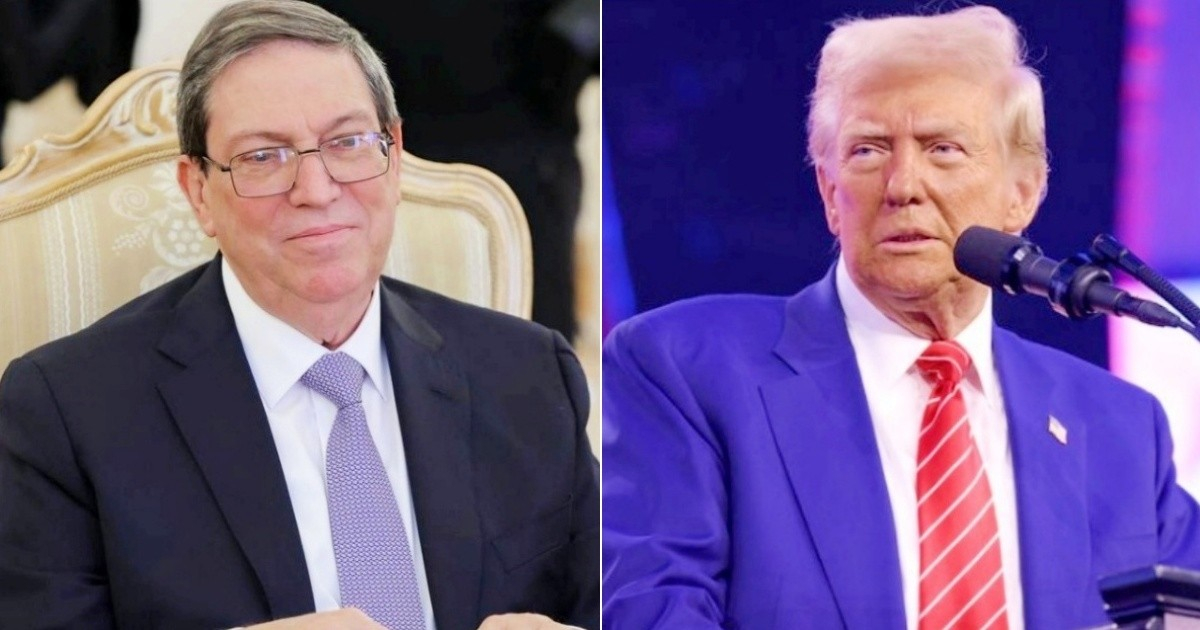
The Cuban Foreign Minister, Bruno Rodríguez Parrilla, took to Facebook on Tuesday to address comments made by President Donald Trump, who described Cuba as "devastated" and expressed that it would be an "honor" to liberate the island. Rodríguez slammed these statements as "cynical and hypocritical," accusing the U.S. of a longstanding effort to dismantle Cuba's economy.
Trump's comments, which prompted Rodríguez's response, were made during a Tuesday phone interview with Salem News Channel. In the interview, Trump reiterated his desire to intervene in Cuba, adding a political angle by stating, "You know, I received 94% of the Cuban vote in the United States. I have an obligation, frankly, to do something for Cuba."
This figure has not been verified by exit polls or independent election sources, as verified data from November 2024 places Trump’s Cuban American support at approximately 70%.
The Aircraft Carrier Scenario
In the same interview, Trump revisited the idea of deploying the aircraft carrier: "We will position the Abraham Lincoln a couple of hundred yards from the coast and see if they want to do something." He further commented, "What they have done to the Cubans, what they have done to the families of people living in the United States, is unthinkable."
This was not the first instance. On May 2, during a private dinner at the Forum Club in West Palm Beach, Florida, Trump declared that the U.S. would "take Cuba almost immediately" after completing operations in Iran, describing a scenario where the USS Abraham Lincoln would halt "about 100 yards from the coast" until the regime responded with, "Thank you very much, we surrender."
Rodríguez's Comprehensive Response
In response to these declarations, Rodríguez published a Facebook post dissecting and refuting Trump's statements:
"The U.S. government insists on its intention to act militarily against Cuba because 'the country is devastated... and it would be an honor to liberate it.' The cynical and hypocritical aspect is that the U.S. has spent decades trying to devastate the country with an economic war, and this administration has intensified those efforts in recent months with two genocidal Executive Orders. The economic and energy blockade, along with new extraterritorial coercive measures, as well as the threat and actual military aggression, are international crimes."
Rodríguez did not leave room for negotiation; his statement serves as a sweeping denunciation of U.S. policy, equating economic sanctions with military threats under the same category of "international crimes."
The Executive Orders in Context
The "two Executive Orders" Rodríguez references are Executive Order 14380, signed on January 29, 2026, which declared Cuba an "unusual and extraordinary threat" and imposed an energy embargo; and a new executive order signed on May 1, which expands sanctions on energy, defense, mining, and financial services, blocking U.S. assets of current and former regime officials, collaborators, and adult family members, with secondary sanctions on foreign banks dealing with sanctioned Cuban entities.
Since January 2025, the Trump administration has enacted more than 240 sanctions against Cuba and intercepted at least seven tankers, reducing energy imports by 80% to 90% and causing blackouts lasting up to 25 hours a day in over 55% of the territory.
A Unified Response from the Cuban Regime
Rodríguez is not the only official to react. Miguel Díaz-Canel posted on social media that "no aggressor, however powerful, will find surrender in Cuba."
The Cuban ambassador to the UN, Ernesto Soberón Guzmán, appeared on Fox News last Sunday to assert that words like "surrender," "capitulate," or "collapse" are not "in the Cuban dictionary."
This rhetoric of defiance stands in stark contrast to the reality faced by the population: prolonged blackouts, widespread shortages, and an economic contraction projected at 7.2% for 2026, according to The Economist Intelligence Unit.
On Monday, the U.S. Senate rejected, by a 51 to 47 vote, a resolution from Democratic Senator Tim Kaine aimed at limiting Trump's war powers over Cuba, leaving the president with full freedom to act on this front.
Frequently Asked Questions about U.S.-Cuba Relations
What is Executive Order 14380?
Executive Order 14380, signed on January 29, 2026, declared Cuba an "unusual and extraordinary threat" and imposed an energy embargo on the island.
How have recent U.S. sanctions affected Cuba?
Recent U.S. sanctions have significantly reduced Cuba's energy imports by 80% to 90%, leading to widespread blackouts and further economic decline.
What has been the Cuban government's response to U.S. actions?
The Cuban government has responded with strong rhetoric, emphasizing resilience and rejecting any notion of surrender or capitulation.