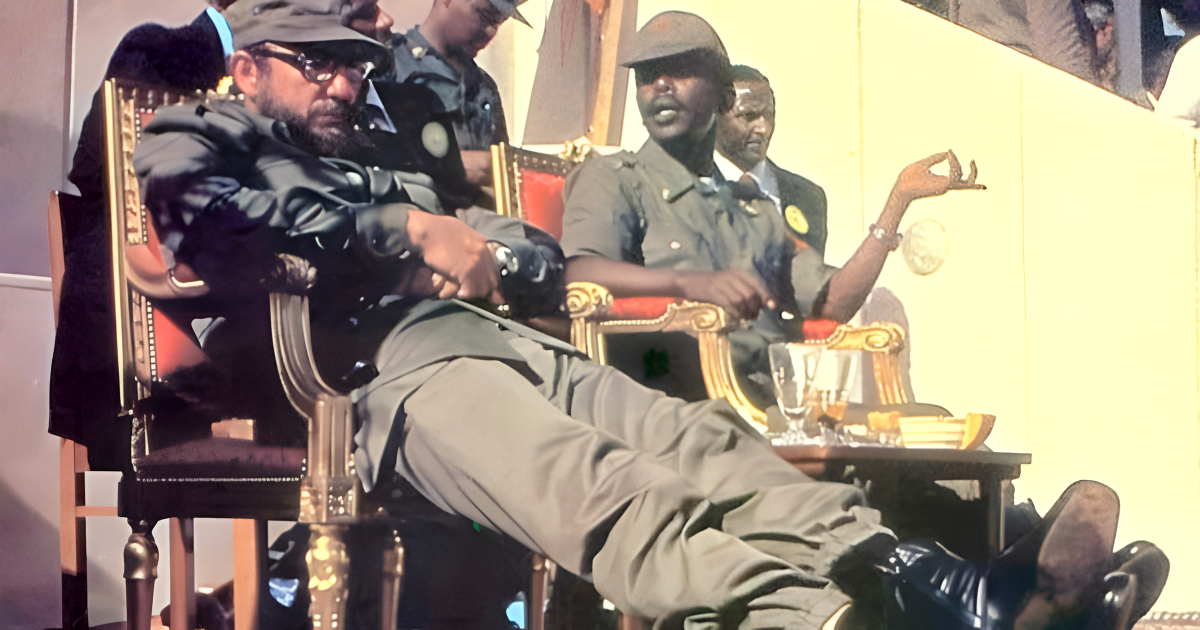
An opinion piece published by the American outlet The Hill has once again cast a critical eye on Cuba's regime, scrutinizing its involvement in international conflicts. It outlines what is described as a decades-long practice of dispatching guerrillas and mercenaries to various countries since 1959.
Authored by former Nicaraguan ambassador Arturo McFields, the article argues that the recent deaths of 32 Cubans in Venezuela—following the capture of Nicolás Maduro by U.S. forces on January 3—are not isolated incidents but part of a historical pattern of intervention orchestrated by Havana for over sixty years.
The analysis suggests that the regime's motivations behind these actions are threefold: to extend its political influence, strengthen its international power, and reap economic benefits.
Historical Context of Cuban Interventions
Within this framework, McFields reminds readers that in 1959, Fidel Castro's government launched armed expeditions to Panama, the Dominican Republic, Nicaragua, and Haiti. These efforts resulted in failures and considerable human costs.
Following these initial ventures in Latin America, Cuba shifted its focus to Africa in the 1960s, achieving greater presence. Notably, Angola stands out as a significant case, where Cuban intervention played a role in the country's independence in 1975, albeit at the cost of many Cuban lives.
Che Guevara's Role and Venezuela's Strategic Alliance
The piece underscores Ernesto Guevara's influence in spearheading these operations, portraying him as a pivotal figure in spreading insurgent movements across continents. However, it also acknowledges key failures, such as Guevara's demise in Bolivia in 1967.
Regarding Venezuela, the article highlights that the bilateral relationship solidified with Hugo Chávez's rise to power in 1999. Since then, the two nations have maintained a close alliance, with Caracas providing oil and Havana sending military personnel, intelligence advisors, and healthcare professionals.
Some estimates referenced in the article suggest that approximately 20,000 Cubans were rotating through Venezuelan territory.
Contradictions and Current Implications
The article points out a contradiction in Cuban law, which prohibits mercenary activities and imposes severe penalties, contrasting with the described practices.
In conclusion, McFields asserts that the recent events in Venezuela reignite the discussion about Cuba's regime as an active participant in international conflicts and its influence in the region.
Cuba's Influence and Mercenary Activities
What is the historical role of Cuba in international conflicts?
Cuba has been involved in dispatching guerrillas and mercenaries to various countries since 1959, with the aim of expanding political influence, consolidating power, and gaining economic benefits.
How did Cuba's strategy shift in the 1960s?
After initial efforts in Latin America, Cuba's strategy shifted towards Africa in the 1960s, where it achieved more substantial presence, notably in Angola, contributing to its independence in 1975.
What contradiction exists in Cuban legislation regarding mercenaries?
Cuban law prohibits mercenary activities and enforces severe penalties, yet the regime has been involved in practices that contradict this legislation, as highlighted by the article.