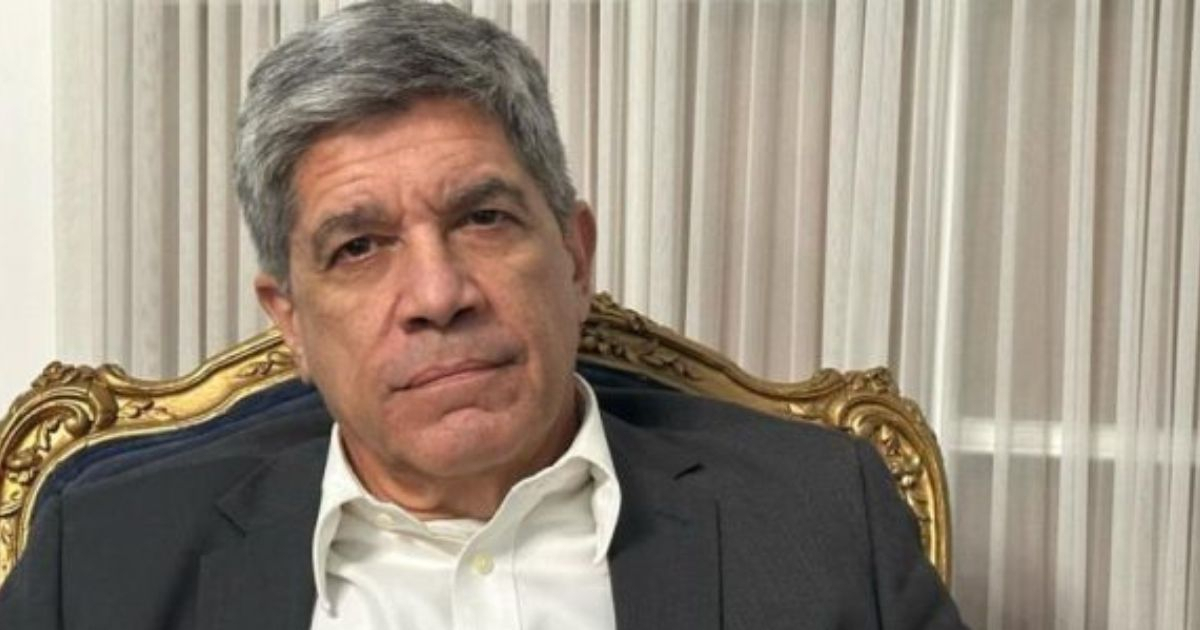
The Cuban Deputy Foreign Minister, Carlos Fernández de Cossío, stated on Monday that the executive order signed by Donald Trump on May 1 against the Cuban regime "removes any doubt about the real motives of domination behind years of aggression."
In a post on X, De Cossío emphasized that the measure confirms "the undeniable truth regarding the destructive impact of the blockade on Cuba's economy and society," using the term the regime employs to refer to the U.S. embargo.
Entitled "Imposing Sanctions on Those Responsible for Repression in Cuba," the executive order expands the sanctions program against the Cuban government, freezing all assets and interests of regime officials, state entities, and those providing them with material, financial, or technological support within the United States.
The measure targets strategic sectors of the Cuban economy: energy, defense, mining, financial services, and security, and it imposes secondary sanctions on foreign financial institutions that facilitate transactions with the designated entities.
De Cossío's response is part of a series of official reactions from the regime as Washington intensifies its pressure.
President Miguel Díaz-Canel described the measures as a "brutal genocidal blockade" and accused the U.S. of "moral poverty," while Foreign Minister Bruno Rodríguez Parrilla asserted that "Cubans will not be intimidated."
Trump declared that the U.S. "will take Cuba almost immediately," envisioning a scenario with the USS Abraham Lincoln aircraft carrier just 100 yards off the Cuban coast—claims that the regime flatly dismissed.
The Cuban Ambassador to the UN, Ernesto Soberón Guzmán, told Fox News that words like "surrender" or "capitulate" are not in the Cuban dictionary, delivering another defiant message from the leadership.
The narrative of "domination" presented by De Cossío contrasts with Washington's justification: a White House official warned Reuters that "Cuba provides a permissive environment for hostile foreign intelligence, military, and terrorist operations less than 100 miles from U.S. territory."
Since January 2025, the Trump administration has imposed over 240 sanctions against the regime and intercepted at least seven oil tankers, reducing the island's energy imports by 80% to 90%.
The impact on the Cuban population is severe: blackouts lasting up to 25 hours a day affect more than 55% of the territory, and the Economist Intelligence Unit projects a 7.2% economic contraction by 2026, a direct consequence of 67 years of communist dictatorship exacerbated by the collapse of the energy supply.
On March 30, Trump had already warned that "Cuba will fail shortly" and that the U.S. "will be there to help," a statement suggesting that the pressure on the regime is unlikely to ease.
Understanding U.S. Sanctions Against Cuba
What is the significance of the executive order signed by Trump?
The executive order extends sanctions against the Cuban regime, targeting key economic sectors and freezing assets, reflecting the U.S.'s intent to pressure Cuba's government into change.
How does the Cuban regime perceive these sanctions?
The Cuban regime sees the sanctions as acts of aggression and domination, claiming they have a destructive impact on the country's economy and society.
What are the consequences of these sanctions for the Cuban population?
The sanctions have led to severe blackouts and a projected economic contraction, exacerbating the challenges faced by the Cuban people under the long-standing communist regime.