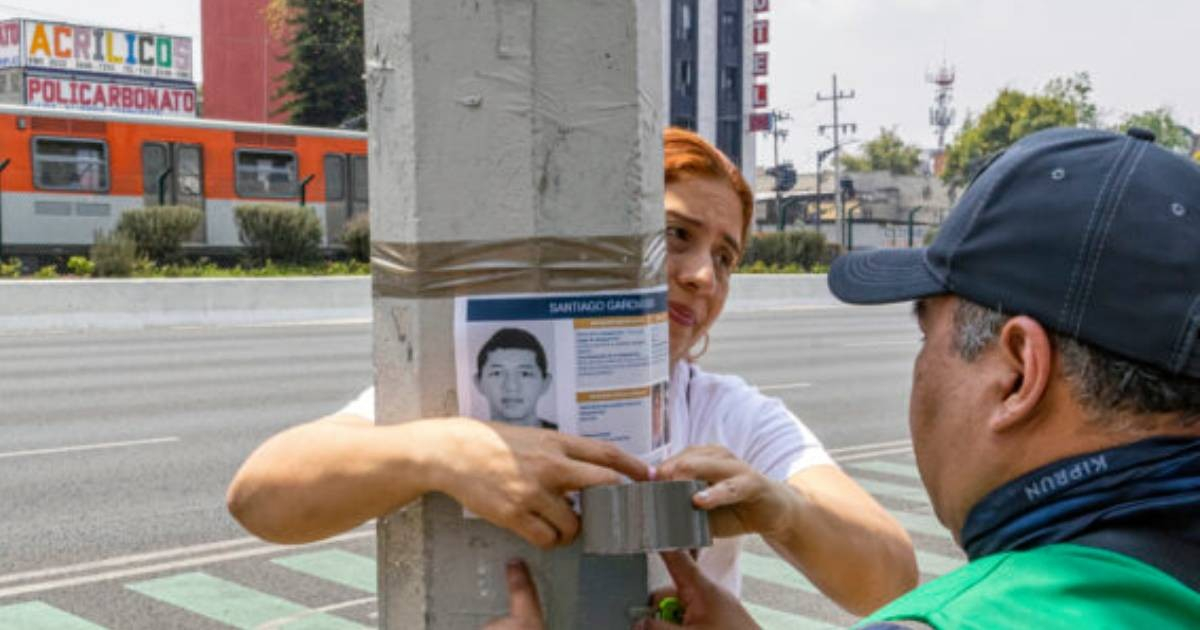
This Monday, mothers and grandmothers of six missing Cubans arrived in Chiapas, Mexico, to kick off a search mission for their loved ones, as reported by the alternative media outlet, Desinformémonos.
It's been 17 months since their last contact on December 21, 2024. The young individuals had called from San José Hueyate, Chiapas, informing that human smugglers would transport them by boat to Juchitán de Zaragoza, Oaxaca. That journey never happened.
These families, hailing from Matanzas, Havana, Camagüey, and Santiago de Cuba, have ventured off the island for the first time, driven by a single conviction: "they will not rest until they are found."
Among those identified in the group that boarded the boats that day are Elianis de la Caridad Morejón Pérez, aged 18-19; Dairanis Tan Ramos, 33; Jorge Alejandro Lozada Santos, 24; Meiling Álvarez Bravo, 40, and her son Samei Armando Reyes Álvarez, 14; Lorena Rozabal Guevara, 28, and Ricardo Hernández, 33.
The Disappearance of the Migrant Group
The missing group consisted of around 40 migrants from Cuba, Honduras, and Ecuador, who embarked on two boats from San José El Hueyate in Mazatán municipality. The GPS signal of the vessels vanished at 8:25 a.m. in the Pacific Ocean, just meters from the shore. Before boarding, several migrants sent messages: "We can't swim," "they're giving us life jackets," "there's gunfire nearby."
The migrants paid between $8,000 and $10,000 for the promised journey to Mexico City, a route under the control of the Jalisco New Generation Cartel (CJNG). San José El Hueyate has become a hotspot for mass disappearances, with at least three incidents recorded between September and December 2024, totaling 83 missing migrants.
Lack of Institutional Response
Despite complaints filed with Mexican authorities, there has been no official response. In June 2025, Yesenia Váldez, a lawyer with the Foundation for Justice, highlighted that six months later, there was still no trace of the 40 migrants: "There hasn't been a single effort to find them. It's as if the state erased them."
The Cuban families are part of the Regional Network of Migrant Families, which annually organizes international search brigades within Mexican territory. The organization was founded by Ana Enamorado, from Honduras, whose son, Oscar López Enamorado, disappeared 16 years ago in Mexico. She vowed, "I will not return to my country empty-handed" until she finds her son.
International Search Efforts
The 2026 international brigade includes families from Ecuador, Honduras, Colombia, and predominantly Cuba, along with supporters from Italy. It's divided into two groups: the Cuban families, who traverse Chiapas and Tapachula following their children's trail, and the family of a Colombian missing in Mexico City, collaborating with the "Until We Find Them" collective.
This tragedy is part of a broader migration crisis. On April 30, Yarissel Díaz Arcia, a 19-year-old Cuban from Cienfuegos, disappeared in Tapachula, where she had been stranded since November 2024. In March, eight Cuban rafters were reported missing after setting out for Mexican shores.
The mothers and grandmothers are working alongside Mexican authorities and remain hopeful despite their grief. "Their children left seeking work; they are young and sure they are alive," Desinformémonos noted.
Frequently Asked Questions about the Missing Cuban Migrants
What happened to the missing Cuban migrants in Mexico?
The Cuban migrants, along with others from Honduras and Ecuador, disappeared after embarking on boats from San José El Hueyate, Chiapas, intending to reach Juchitán de Zaragoza, Oaxaca. Their whereabouts remain unknown.
How are the families of the missing migrants responding?
The families have formed a search brigade and are actively looking for their loved ones in Mexico, collaborating with local authorities and organizations dedicated to finding missing persons.
Who is supporting the search efforts in Mexico?
The search is supported by the Regional Network of Migrant Families and other international allies, including participants from Italy and Colombia, who are aiding the families in their search.